 AIImageInsight
In the wild, wild west of digital content in 2026, the line between reality and fabrication has become so blurred it's practically a smudge on a high-resolution screen. 🎭 Gone are the days when a keen eye could spot a fake photo; today's hyper-realistic deepfakes and AI-generated masterpieces can fool even the most discerning experts. As AI image generators like DALL-E 4, Midjourney V7, and the latest iterations of Stable Diffusion have reached near-photorealistic perfection, the humble human eyeball has been officially dethroned as the primary tool for verification. The first, most crucial line of defense in this new era of visual misinformation is no longer biological—it's algorithmic. Enter the AI image detector, a digital bloodhound trained on millions of real and synthetic images to sniff out the subtle, often invisible artifacts that betray an image's artificial origins. While no single detector claims a flawless 100% success rate, their collective power is growing exponentially, forming an essential shield in our daily digital lives. But relying on technology alone is a fool's errand; the savvy netizen of 2026 knows to combine these powerful tools with a healthy dose of skepticism, especially when encountering the most dangerous hybrids—images that are a seamless blend of AI and the real.
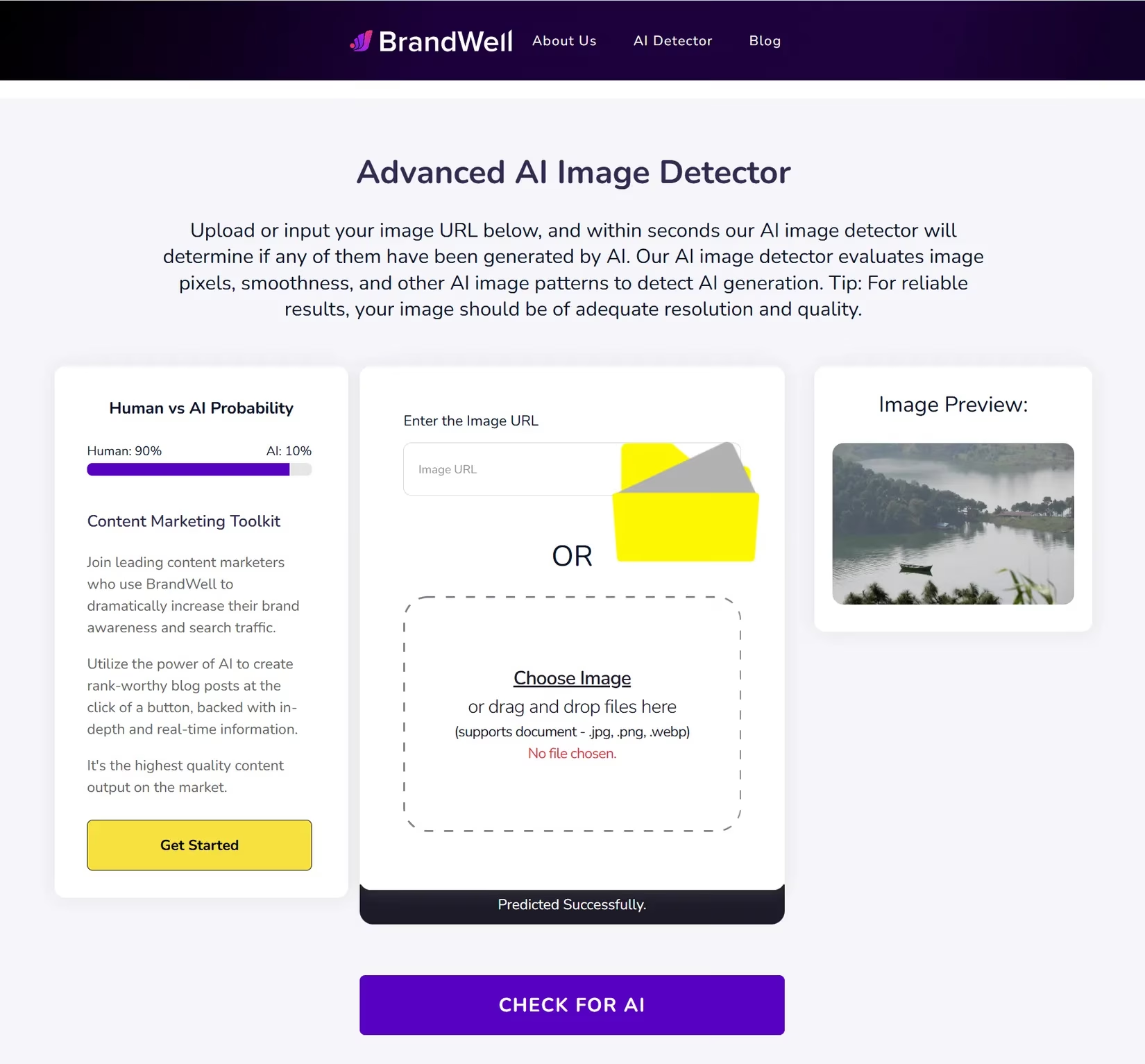
For the citizen detective who values speed and simplicity above all else, one free tool has consistently risen to the top of the recommendation lists. This no-nonsense detector, offered by a forward-thinking digital marketing agency, operates with a brutal, beautiful efficiency. Its interface is a masterclass in minimalism, stripping away all clutter to present a stark choice: upload a file or paste a URL. Within seconds, it delivers its verdict—a cold, hard percentage probability stating whether the image is the work of human hands or the product of a silicon brain. It's trained to recognize the fingerprints of all the major AI art models, from the pioneering DALL-E to the latest open-source variants. Its beauty lies in its straightforwardness; there are no confusing dials to turn, no arcane settings to decipher. For the vast majority of daily checks—verifying a suspicious meme, checking a potential catfish profile picture—this is the only digital scalpel you'll need. However, its precision isn't absolute. In rigorous testing, it has been known to detect a faint, ghostly percentage of 'AI-ness' in images that are, without a doubt, captured by a human photographer. This occasional over-sensitivity is a small price to pay for its blistering speed and accessibility.
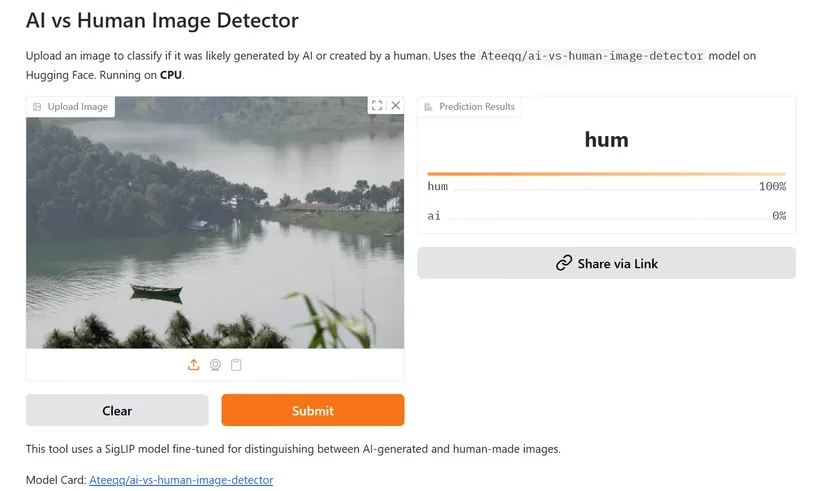
If the spirit of open-source collaboration gets your heart racing, then the next destination on our detection tour is non-negotiable. Imagine a bustling digital bazaar, a GitHub specifically for the AI avant-garde, where models and tools are shared freely. This is the realm of Hugging Face, a treasure trove that hosts a multitude of open-source AI image detectors. Every tool here is free, powered by the collective intelligence of the community. The interfaces are famously spartan—functional, not fancy. You'll need to use the search bar to find specific detection models with names that sound like they're from a sci-fi novel. The process is gloriously simple: upload, wait a few seconds, and receive a breakdown of 'human' versus 'artificial' likelihoods. While its accuracy might not always match the polished consistency of some premium, closed-source competitors, its value is undeniable. It's a powerful option for those who believe in the democratization of AI technology and need a rapid, no-strings-attached verification tool. It represents the people's army in the fight against digital deception.
Social media in 2026 is a carnival of potentially fabricated identities. For the specific task of unmasking fake avatars and suspicious profile composites, a specialist has emerged. Decopy AI is a free tool built with a singular, noble purpose: speed and social media vigilance. Its drag-and-drop interface is so intuitive a child could use it, and it demands nothing—no sign-up, no credits, no payment. It boasts an impressive pedigree, trained on a dataset of 10 million images to recognize the output of all major AI art generators. It handles common file formats with ease. A word of caution: while its core detection function is robust, one can safely ignore its more 'detailed' analysis reports, which often veer into the realm of creative fiction. Where it truly shines is in its intended use case—giving you a fighting chance to verify that charming stranger's picture or a viral image before you hit the share button and inadvertently spread a digital lie. It's the pocket-sized truth serum for the social media age.
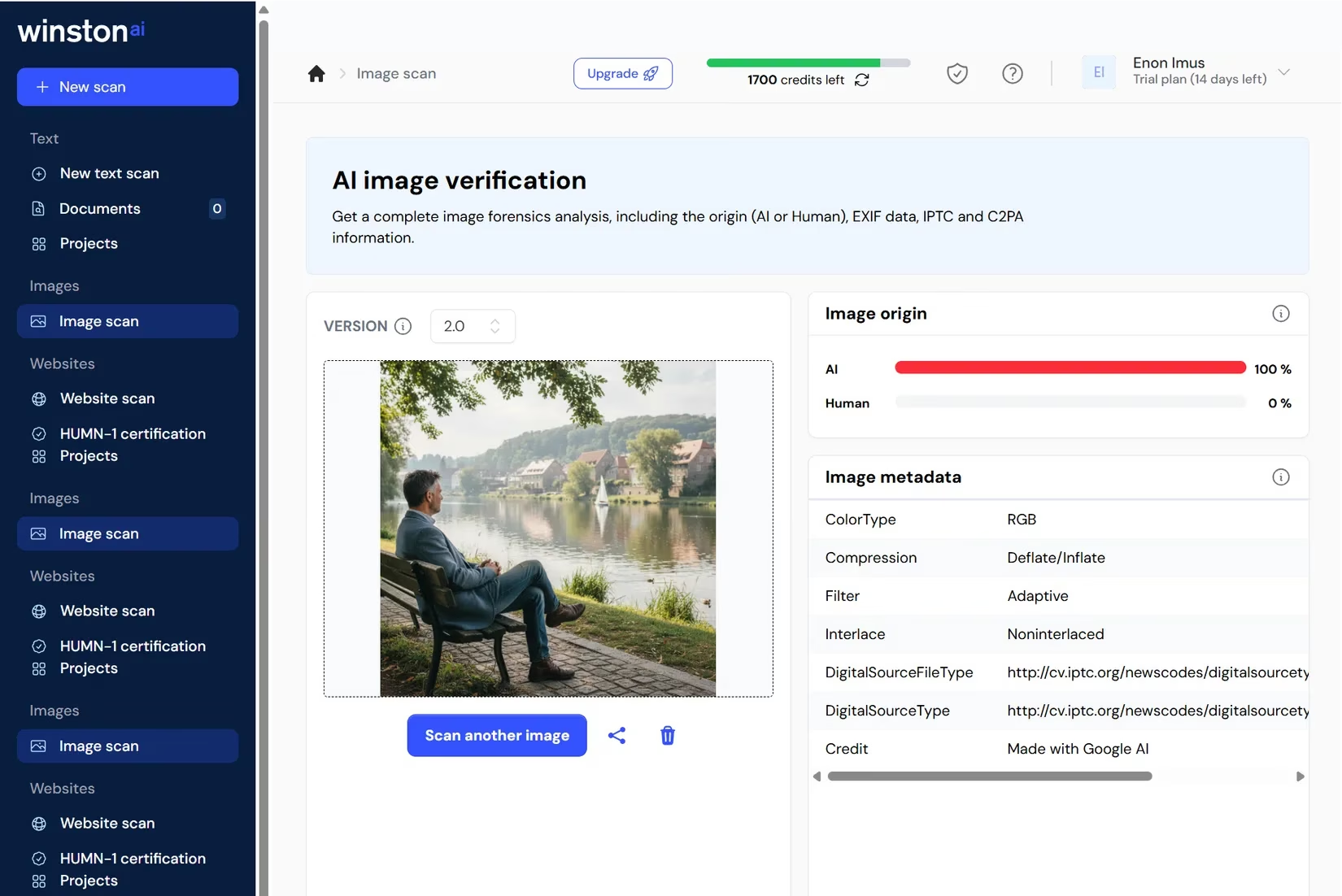
But what if your needs are more... forensic? What if a simple percentage isn't enough, and you need to know not just if, but how and by what? For the digital investigator who requires courtroom-level certainty, there is a reigning champion. Winston AI has cultivated a reputation as one of the most accurate detectors on the planet, and it graciously offers a substantial free trial to prove it. The free version is surprisingly powerful, offering a 14-day trial with enough credits for several serious investigations. Its interface is a guided tour, holding your hand through the upload and analysis process. The results, however, are anything but basic. They are presented as a full digital forensics report, complete with source analysis, EXIF data, IPTC, and C2PA information—all translated into beginner-friendly language. Its party trick? It doesn't just flag an image as AI; it often identifies the specific AI model likely responsible for its creation. For journalists, researchers, or anyone whose work depends on absolute visual integrity, Winston AI is the gold-plated, diamond-encrusted tool of choice. Casual users can dip into their free credits for those moments when a simple suspicion demands a definitive answer.
For the tinkerer, the analyst who wants to look under the hood, there exists a tool that offers unprecedented depth. Sightengine goes far beyond a binary verdict. Its free plan is staggeringly generous, packing features that rival paid enterprise software. You can perform a casual check without even creating an account, but its true power is revealed in its detailed analysis. This tool conducts a pixel-level interrogation of an image, making it formidable against sophisticated fakes where all identifying metadata has been scrubbed and no watermarks remain. It's like having a digital microscope that can examine the very DNA of each pixel. This level of granular insight is breathtaking for a free tool, allowing users to understand the 'why' behind the detector's conclusion. It is slightly more complex than its counterparts, requiring a bit more engagement from the user, but the payoff in understanding is immense. It's the tool for those who aren't satisfied with an answer—they need the proof.
The landscape of AI image detection is vast and constantly shifting. New tools emerge, and old ones are updated, but the core challenge remains. In extensive testing across all these platforms, a fascinating and concerning pattern emerges. These detectors are incredibly potent when faced with pure, unadulterated AI images or with genuine, untouched photographs. The danger zone, the Achilles' heel of even the most advanced system, is the hybrid. When AI-generated elements are seamlessly composited into a real photograph, or when a real image is subtly altered by AI, the detectors' confidence can waver, their potency dropping. This is the new frontier of digital fakery. Therefore, the most important lesson for 2026 is this: use these powerful AI detectors as your first line of defense, but never as your last. When they flash a warning, however faint, take a second look. Question the source. Corroborate with other information. In the battle for truth, the most effective weapon is a combination of cutting-edge technology and timeless human caution. 🔍🤖
Comments