 AIImageInsight
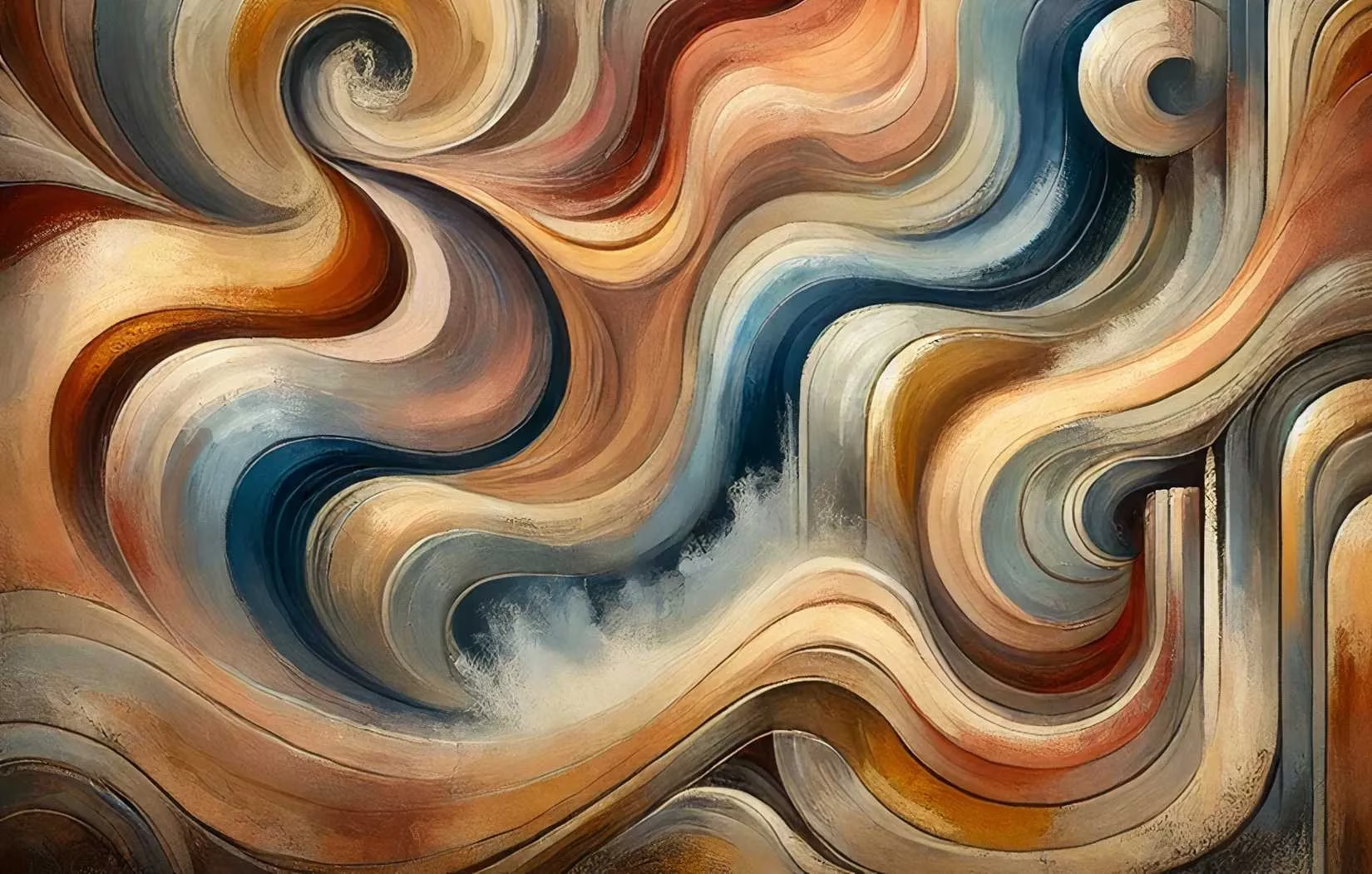
As a professional gamer constantly immersed in digital worlds, I'm constantly amazed by the visual feats AI art generators achieve. Tools like MidJourney, DALL·E, and Stable Diffusion have undeniably revolutionized image creation. The sheer speed and complexity are breathtaking – conjuring intricate, stunning visuals from a simple text prompt is no longer science fiction, it's everyday reality. An AI-generated piece winning first place at the Colorado State Fair’s digital arts competition back in 2022 was a definitive moment, silencing many skeptics about the raw visual power AI possesses. It’s fascinating, even thrilling, to see AI seamlessly blend artistic styles, experiment wildly with forms, and produce images that feel both comfortingly familiar and startlingly novel. Need a cyberpunk metropolis drenched in neon rain? Done. A melancholic still life echoing Van Gogh’s brushstrokes? Effortless. The technical mastery is undeniable and deeply impressive on a surface level. Yet, the more time I spend engaging with both digital art in games and AI outputs, the more I feel a profound hollowness beneath the dazzling surface of algorithmic creations. There's an essential ingredient absent, an element that separates captivating visual spectacle from truly resonant art: human intent.
The Surface Brilliance and Underlying Void
Let's be clear: the visual appeal generated by these AI tools is extraordinary. It always amazes me, pushing the boundaries of what I thought machines were capable of creatively. They operate at a speed and scale impossible for any single human artist, churning out variations and explorations in seconds. The complexity of textures, lighting, and compositional elements they can synthesize based purely on learned patterns from vast datasets is a marvel of modern technology. It democratizes visual creation in an unprecedented way, allowing anyone with an idea and a keyboard to generate professional-looking imagery. This accessibility is revolutionary. However, this very process reveals the core limitation. The AI doesn't choose. It doesn't decide what it wants to express. When Jason Allen used MidJourney to create his award-winning piece, the tool wasn't driven by a personal vision, a burning message, or a specific emotion it yearned to share. It simply processed his prompt, referenced its training data, and generated an image statistically likely to match the request. It followed instructions impeccably, but it lacked the why.
The Indispensable Spark: Human Intent
What transforms a technically proficient image into a piece of art that lingers in your mind, that stirs something deep within? It's intent. Intent is the lifeblood of human creation. It's the driving force – the story the artist desperately needs to tell, the raw emotion they are compelled to exorcise onto the canvas or screen, the political message they feel obligated to shout, or simply the profound sense of beauty they wish to share with the world. This intent is intrinsically tied to the human condition: our experiences, our struggles, our joys, our fears, our history, and our very consciousness. It's deeply personal and inherently communicative. AI, for all its dazzling computational brilliance, doesn't possess this. It doesn't feel. It doesn't reflect on lived experience. It doesn't grapple with purpose or meaning. It processes inputs and generates outputs based on correlations within its training data. It can mimic the aesthetics of meaning – creating visuals that superficially evoke sadness, joy, or grandeur because it has learned these associations – but it cannot originate meaning from a place of genuine internal conviction or lived understanding.
Why Intent Resonates: Beyond the Visual
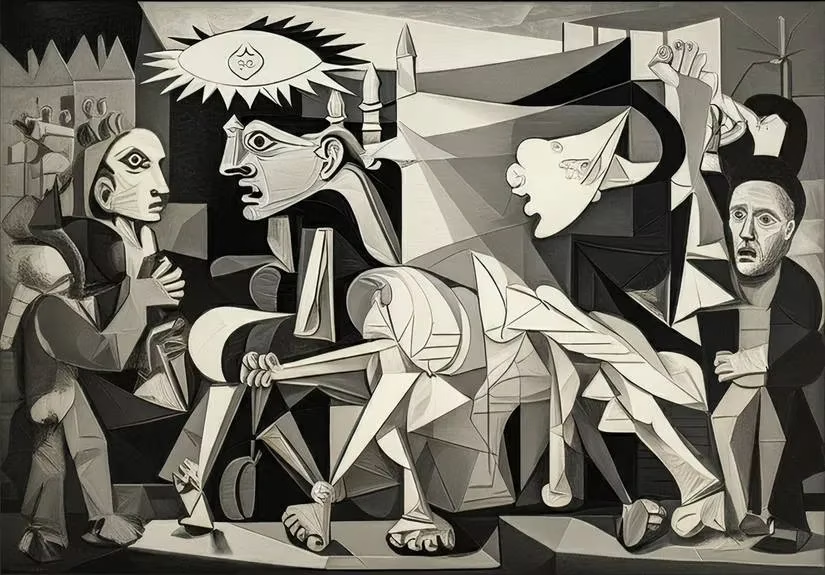
This lack of authentic intent is why AI art, no matter how visually stunning, often feels emotionally flat or intellectually shallow upon deeper engagement. It might look like art, but it struggles to be art in the deeply connective way human creations are. Intent bridges the chasm between the creator and the audience. It transforms the artwork from a mere object into a conduit for shared human experience. Consider Picasso's Guernica. Its power doesn't solely reside in its chaotic, haunting depiction of figures and animals. Its devastating impact comes from the knowledge of why it was created: as a visceral, anguished response to the horrific bombing of the Basque town during the Spanish Civil War. Picasso intended to condemn the brutality of war, to force viewers to confront its senseless suffering. That intent, born from outrage and empathy, infuses every fractured line and anguished face. An AI could generate a thousand images visually reminiscent of Guernica, perhaps even technically impressive variations. But they would lack:
-
Personal Conviction: The raw, personal anger and grief that fueled Picasso's creation.
-
Historical Context: The direct, lived connection to a specific, traumatic event.
-
Emotional Urgency: The desperate need to communicate a vital message against violence.
Without that core intent, it becomes a stylistic exercise, a pastiche devoid of the original's soul-shattering weight. The image might be complex, but it wouldn't resonate on that profound human level. Intent is what allows art to spark empathy, provoke thought, challenge perspectives, and offer solace. It's the difference between a beautifully rendered image of a sunset and Van Gogh's The Starry Night, pulsating with his turbulent inner world. It's the difference between a perfectly modeled 3D character and the expressive, intent-driven animation in a game like The Last of Us, designed to make you feel the characters' desperation and love.
The Irreplaceable Human Element
So, where does this leave us in 2025? AI art generators are incredible tools. They are powerful assistants for ideation, exploration, and even producing certain types of functional visuals. As a gamer, I see immense potential for rapid prototyping of environments or generating unique textures. But they are just that: sophisticated tools. The fundamental difference remains stark. Human art is an act of communication, imbued with the messy, beautiful, and often painful complexity of human consciousness and experience. It carries the weight of the artist's soul, their unique perspective shaped by life. AI art, no matter how advanced, remains a sophisticated product of pattern recognition and statistical generation, devoid of that inner spark, that authentic why. The dazzling surface it creates is undeniable, but it’s the missing heart of intent that keeps it fundamentally distinct and, ultimately, incapable of replacing the profound resonance of art born from genuine human purpose and passion. The algorithm can replicate the hand, but it cannot replicate the heart.
Comments