 AIImageInsight
In the year 2024, a digital artist named Dreamchild Obari embarked on a daring experiment, one that would peel back the veil on the meteoric ascent of artificial intelligence. Armed with a handful of old prompts—relics from a bygone era when DALL-E 2 roamed the Earth—he fed them into the freshly minted DALL-E 3, the gleaming successor built upon the very bones of its predecessor. The results? They weren’t just improvements; they were a seismic shockwave, a testament to how far generative AI art has catapulted in a mere twelve months. And now, in 2026, looking back, those leaps feel almost quaint, like comparing a flip phone to a holographic communicator. But let’s rewind and gasp at the transformation that unfolded.
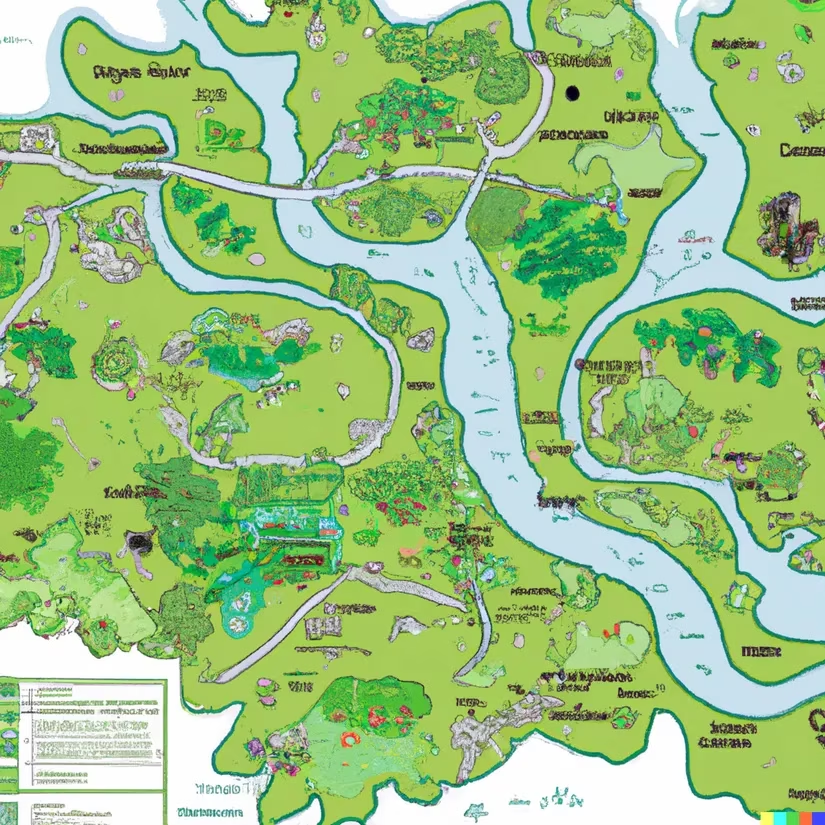
At the heart of this saga lies a simple rainforest map. Last year, DALL-E 2 was asked to conjure “A map of a rainforest land with details on trees, rivers, and signs of where animals and insects might be located.” What slithered onto the screen in 2023 was, frankly, laughable. A child’s crayon scrawl on a napkin—flat, lifeless, with trees that looked more like green lollipops stabbed into a brown smear. Rivers? Barely discernible blue squiggles. Animals? If you squinted, you might confuse a blob for a jaguar. It was the kind of thing you’d toss into the recycling bin before showing an editor.
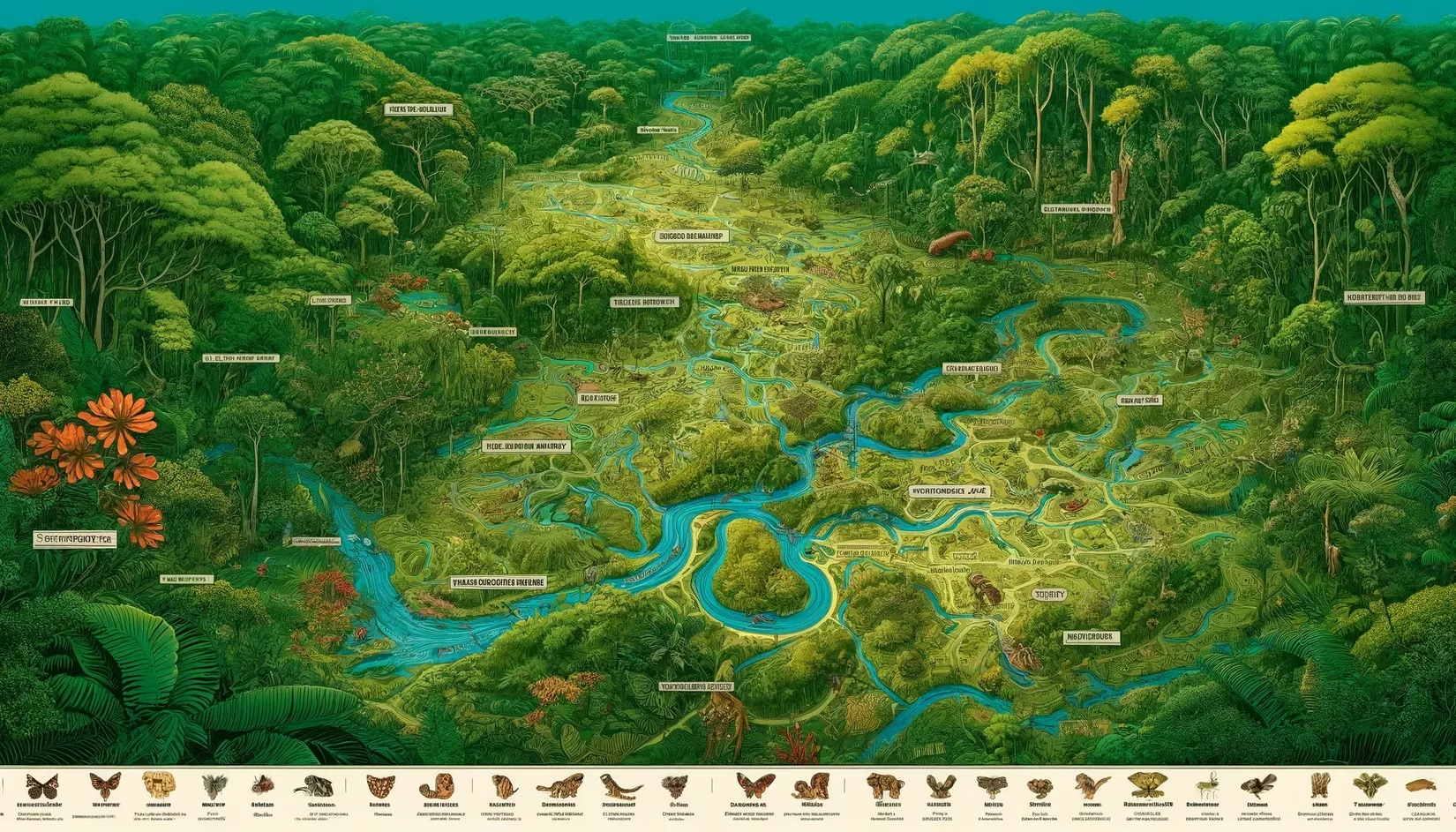
Fast-forward one year. DALL-E 3 received that same pathetic string of words and, in the blink of an eye, spat out a masterpiece. The new map burst with three-dimensional topography, reminiscent of a gilded page from a collector’s encyclopedia. Verdant canopies layered like meringue, serpentine rivers glinting with specular highlights, and—behold!—actual, identifiable creatures frolicking in labelled zones. The text, while still utterly nonsensical, dared to flirt with legibility. It was as if the AI had swallowed a National Geographic archive and then painted a love letter to cartography. The contrast? Overwhelming. Devastating. It left onlookers dizzy with disbelief.
Next came a whimsical request: “Pixel art of a red rose growing on a cloud high in the light blue sky.” In 2023, DALL-E 2 botched this delicate vision. It assembled the raw ingredients—a red blob resembling a rose, a misshapen cloud—but they stubbornly refused to mingle. The rose perched atop the cloud like an awkward party guest, unwilling to sink its roots into the fluffy soil. Repeated pleas yielded only variations of the same disjointed mess. It was pixel art in the way a pile of LEGO bricks is a castle: technically true but emotionally bankrupt.

Then came 2024. DALL-E 3 inhaled the challenge and exhaled a pixelated miracle. The rose now thrust its thorny stem deep into the cloud’s vaporous core, petals unfurling with exquisite detail. Shadows danced, depth whispered, the entire composition sang. But the AI, in its divine opulence, went further—it conjured tiny floating pixel hearts, little cupids of chromatic joy that weren’t requested but somehow belonged. This was no longer a wallpaper idea; this was a digital artifact worth of a museum’s NFT vault.

Faces have always been AI’s holy grail and its Achilles’ heel. When DALL-E 2 was challenged with “A photo of a black female American president” back in 2023, it delivered something breathtaking—almost. The image burst with uncanny realism: skin texture that whispered pores, eyes that held a nation’s hope, a subtle smirk that could launch a thousand think pieces. It was so believable that doubt slithered in; was this a synthetic creation or a leaked portrait of a future candidate? DALL-E 2 had flirted with perfection, sometimes producing scrambled horrors and other times, like here, photographic brilliance.

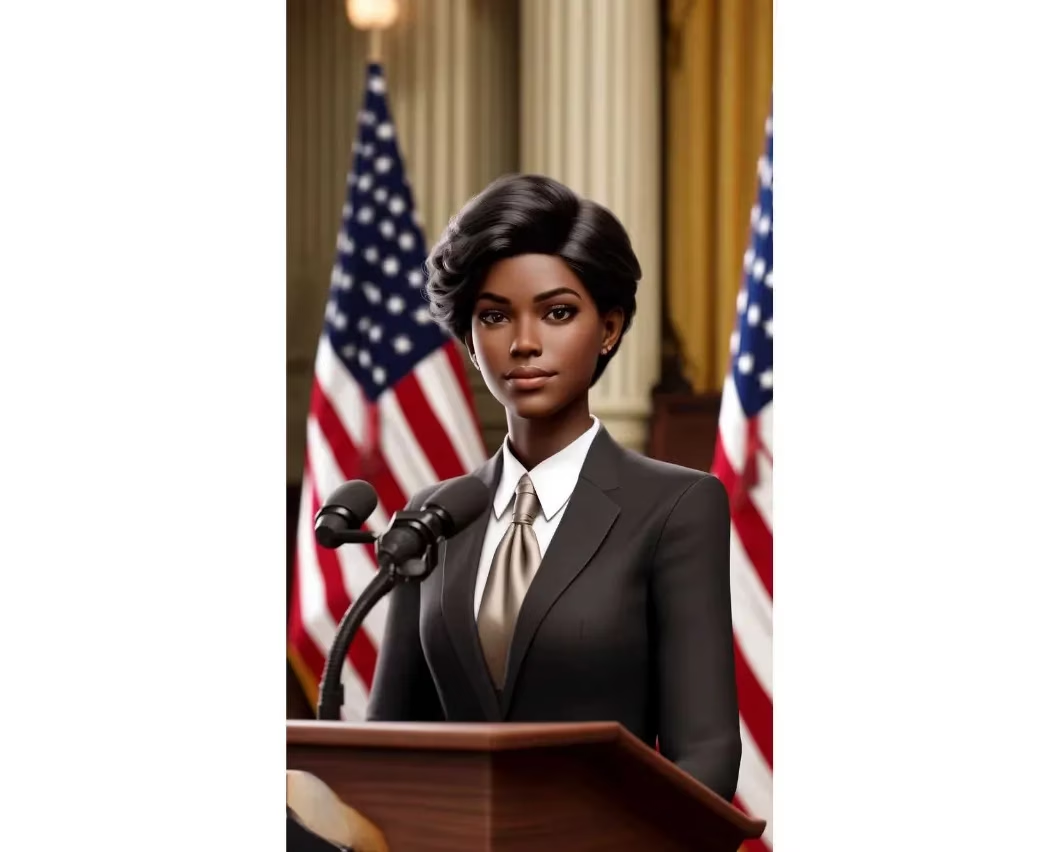
Enter DALL-E 3, that overpolished darling. The 2024 version eschewed gritty realism for a plasticky 3D animation style—yes, it looked like a character from a high-budget Pixar flick. But context! Oh, the context! It placed Madam President behind a podium, American flags billowing, White House columns framing her regal presence. The older image won the realism trophy hands down, but the newer one scored on narrative grandeur. A fascinating trade-off, proof that progress isn’t always linear; sometimes it pirouettes into a different dimension altogether.
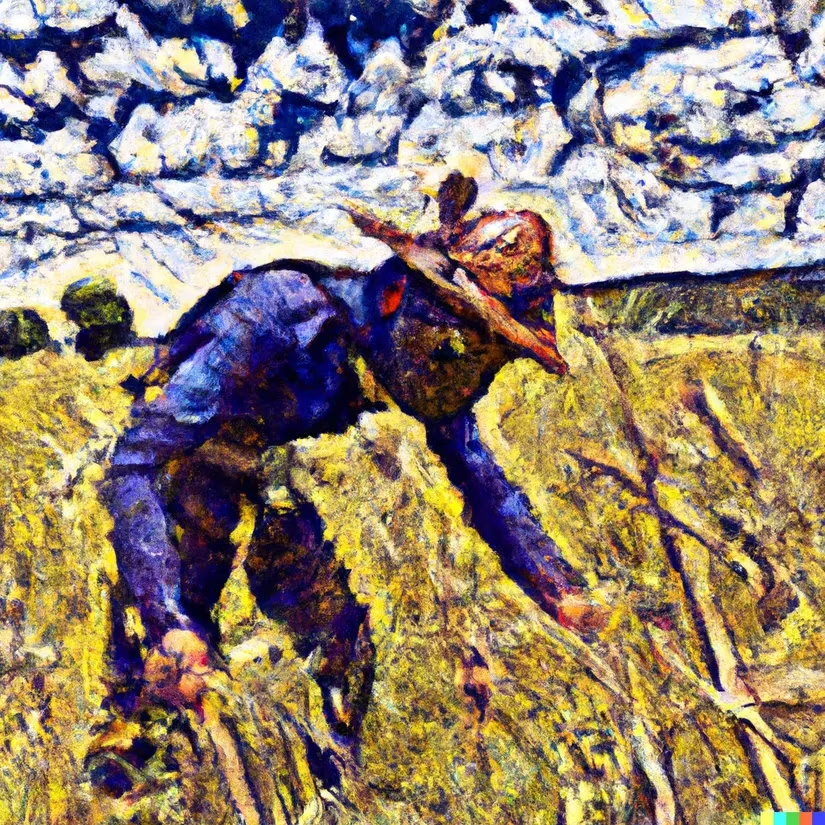
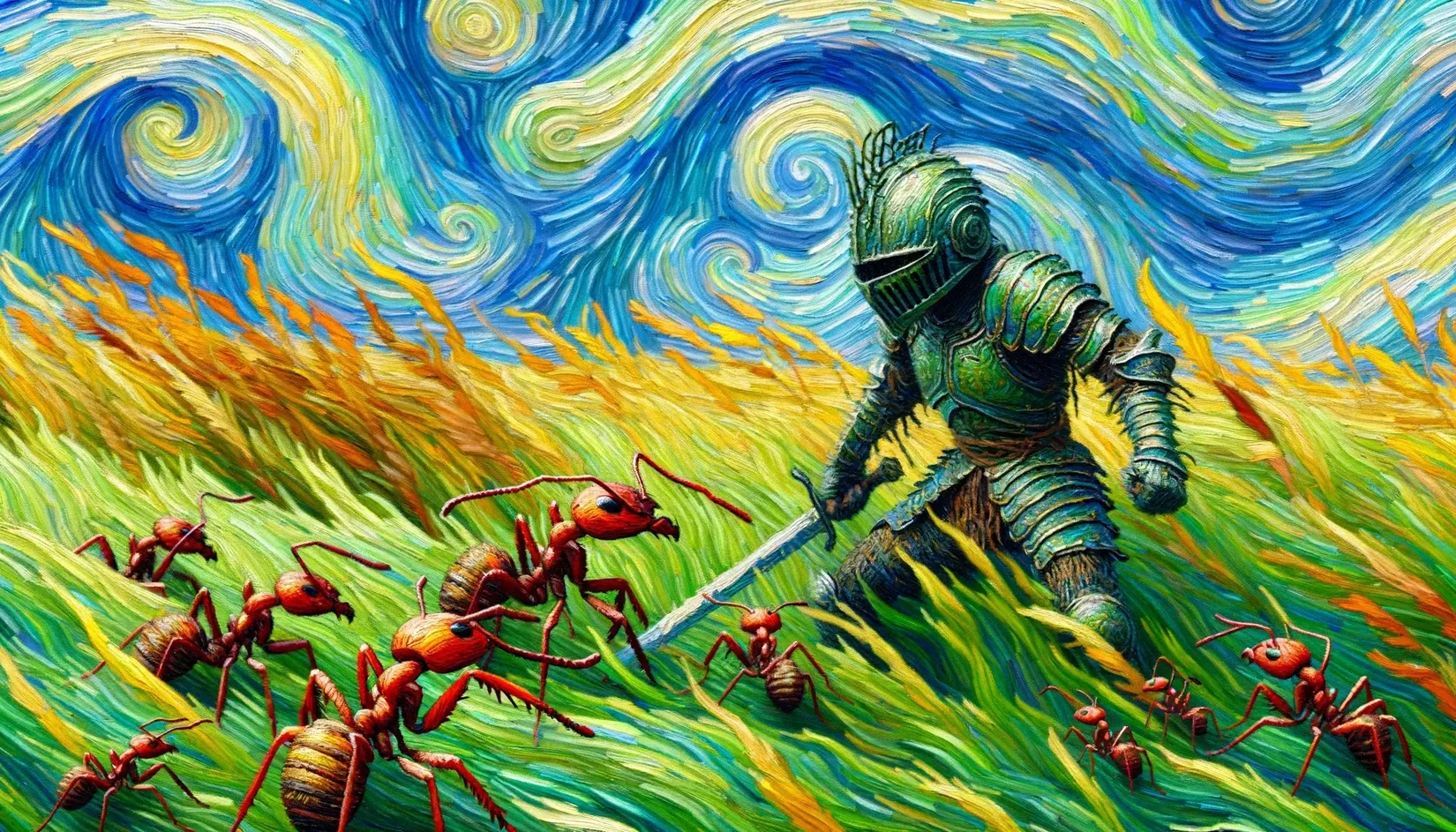
The final duel plunged into the realm of artistic homage. “Tiny man in carapace armor fighting fire ants in a field of grass in Van Gogh style.” DALL-E 2 in 2023 splashed a yellow-tinged canvas—clearly stealing from Van Gogh’s wheat-field palette—but the brushwork was chaotic, muddy, a frantic scribble. A viewer might guess “post-impressionist” but would be hard-pressed to name the Dutch master. And where was the epic ant battle? Buried under a disorganized jumble; it looked more like a farmer having a bad day in a hayfield.
DALL-E 3’s 2024 response? Crisp, crystalline, a visual feast where a miniature warrior brawled with monstrous fire ants under a swirling Starry Night sky. The subject matter snapped into focus with storybook clarity. Yet—and this is a colossal yet—the Van Gogh style was sanitized. Where were the thick, tortured impastos? The emotional turmoil in every stroke? DALL-E 3 had traded soul for polish, producing a piece that screamed “digital asset” rather than “oil-on-canvas masterpiece.” It was an ironic twist: DALL-E 2’s imperfections made it a better pretender of human artistry, while its successor’s sterile competence reeked of the machine.
As the curtain fell on this year-apart odyssey, one truth blazed like a supernova: DALL-E 3 was unequivocally superior at crafting comprehensive, high-quality images. Depth, coherence, and the audacity to add unsolicited yet delightful details—these were its battle-scarred trophies. But in the cracks of its perfectionism lurked debates about soul versus precision. In 2024, the world watched AI art shed its chrysalis of crude doodles and emerge as a glistening, if occasionally plastic, butterfly. And now? In 2026, DALL-E 3 is ancient history, its lineage fueling generators that can paint your dreams into 4D dioramas before you’ve finished your morning coffee. The only constant is this head-spinning, jaw-dropping, heart-stopping rate of change. Buckle up.
Comments