 AIImageInsight
In the quiet, glowing rectangle of a screen, a transformation unfolds—not just of pixels, but of possibility itself. Many still whisper of AI as a mere shortcut, a digital crutch for the creatively lazy. But is it truly a shortcut, or is it a new kind of bridge? A bridge that spans the daunting chasm between a fleeting moment captured and the profound vision held within the mind's eye? For those who have embraced these tools, AI has become less of a crutch and more of a collaborative muse, a silent partner in the alchemy of turning the ordinary photograph into something extraordinary.
The Gift of Time: When Seconds Are More Precious Than Pixels
In a world that spins ever faster, time is the artist's most finite resource. The meticulous dance of adjusting sliders for exposure, contrast, and color balance can consume hours, especially when faced with a batch of images from a single event. Here, AI emerges not as a replacement for skill, but as a guardian of time. Tools like auto-adjust analyze the very soul of an image—its histogram, its color balance, its composition—and propose a foundation upon which to build.
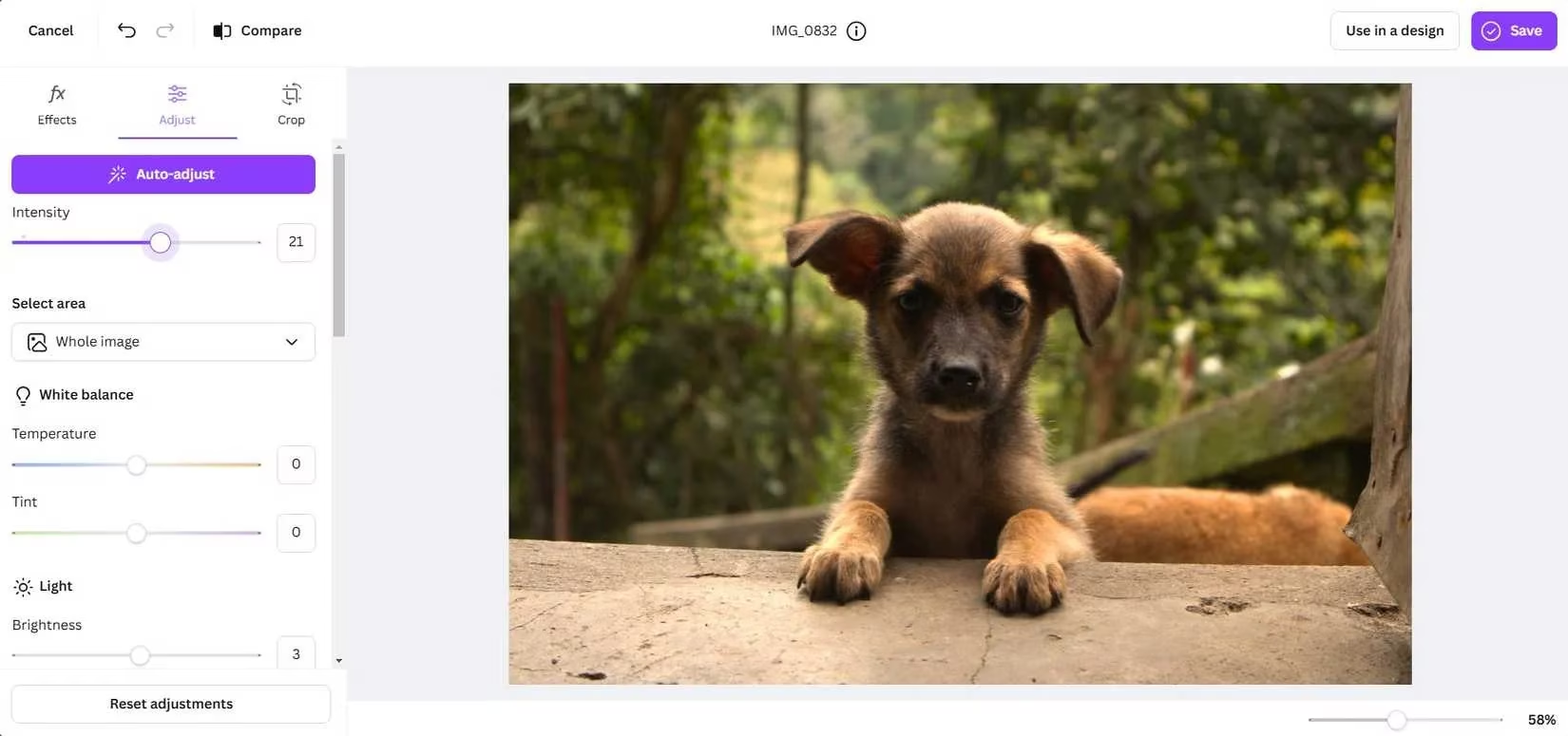
Consider this: a photographer returns from a golden-hour shoot with hundreds of RAW files. The prospect of manually tweaking each one is a mountain to climb. With an AI-powered auto-adjust, a comprehensive set of enhancements is applied in a heartbeat. It provides a solid, technically sound starting point. Is the artistry lost in this automation? Not at all. It is merely deferred, allowing the human artist to focus their precious time and creative energy on the subtle refinements that inject style and emotion—the final 10% that makes an image uniquely theirs. For the time-pressed creator, this feature alone can transform an overwhelming task into a manageable, even enjoyable, workflow.
The Vanishing Act: Erasing the Unwanted with a Digital Whisper
What greater frustration exists than a perfect composition marred by an intruding element? A stray passerby, a glaring street sign, a modern lamppost in a historical scene—these are the gremlins of photography. The traditional remedy involved painstaking manual labor: cloning, healing, masking, and a prayer for seamless integration. It was a test of patience as much as skill.
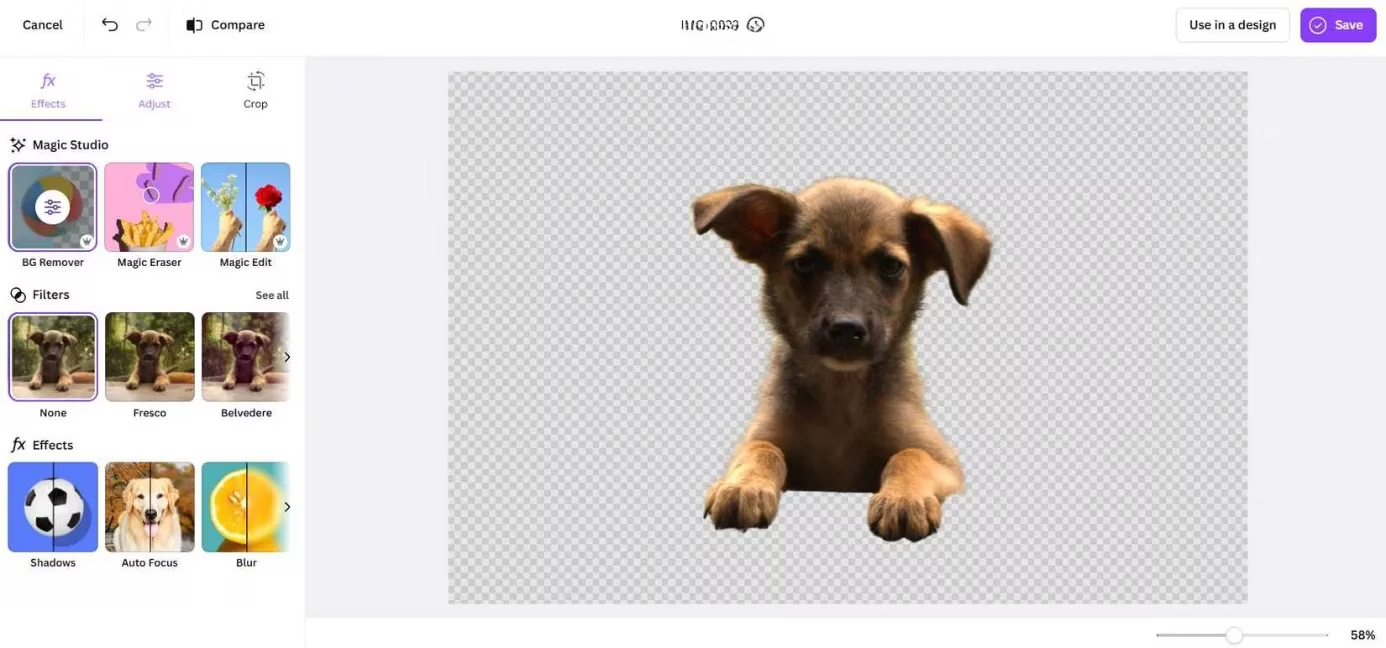
Enter the AI magician. With tools like Canva’s Magic Eraser or Adobe’s Content-Aware Fill, the process becomes almost conversational. A simple brush stroke over the offending object, and it vanishes, as if it never was, with the background intelligently reconstructed. The technology analyzes the surrounding textures, patterns, and lighting, weaving new pixels that belong. This is no simple copy-paste; it is computational context understanding. The hours once spent in meticulous pixel-pushing are reclaimed. The artist is freed from the tedium of correction and can remain in the flow of creation. Isn't that the ultimate goal of any tool—to remove barriers between vision and execution?
The Democratizing Brush: Making Mastery Accessible to All
There was a time when professional-grade photo editing lived behind a fortress of complexity. Software like Adobe Photoshop presented a steep, daunting learning curve, its interface a labyrinth of panels and tools that could intimidate the novice. This created a divide between those who had the time and fortitude to learn and those who simply wanted to make their memories more beautiful.
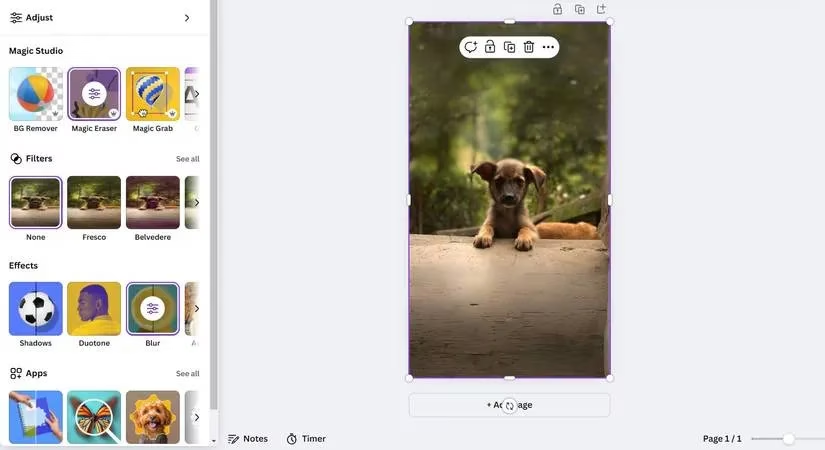
AI has become the great democratizer. Browser-based editors and smartphone apps now embed powerful AI that understands intent. Want to turn a landscape photo into a portrait for an Instagram Reel? AI can extend the background intelligently. Need to replace a gloomy sky with a sunset? Describe your desire, and the tool obeys. Google Photos’ Magic Editor allows users to reposition subjects, alter lighting, and manipulate backgrounds with intuitive gestures—features that were once the exclusive domain of seasoned professionals. This shift is profound. It means that the power to create compelling visual narratives is no longer gated by technical proficiency. The focus returns to seeing and feeling, rather than memorizing keyboard shortcuts. The artist within everyone is given a voice.
The Generative Canvas: Where Imagination Becomes Pixel
This is where the journey transcends editing and enters the realm of pure creation. Generative AI tools are the secret weapons for the creatively adventurous. They answer the question: "What if?"
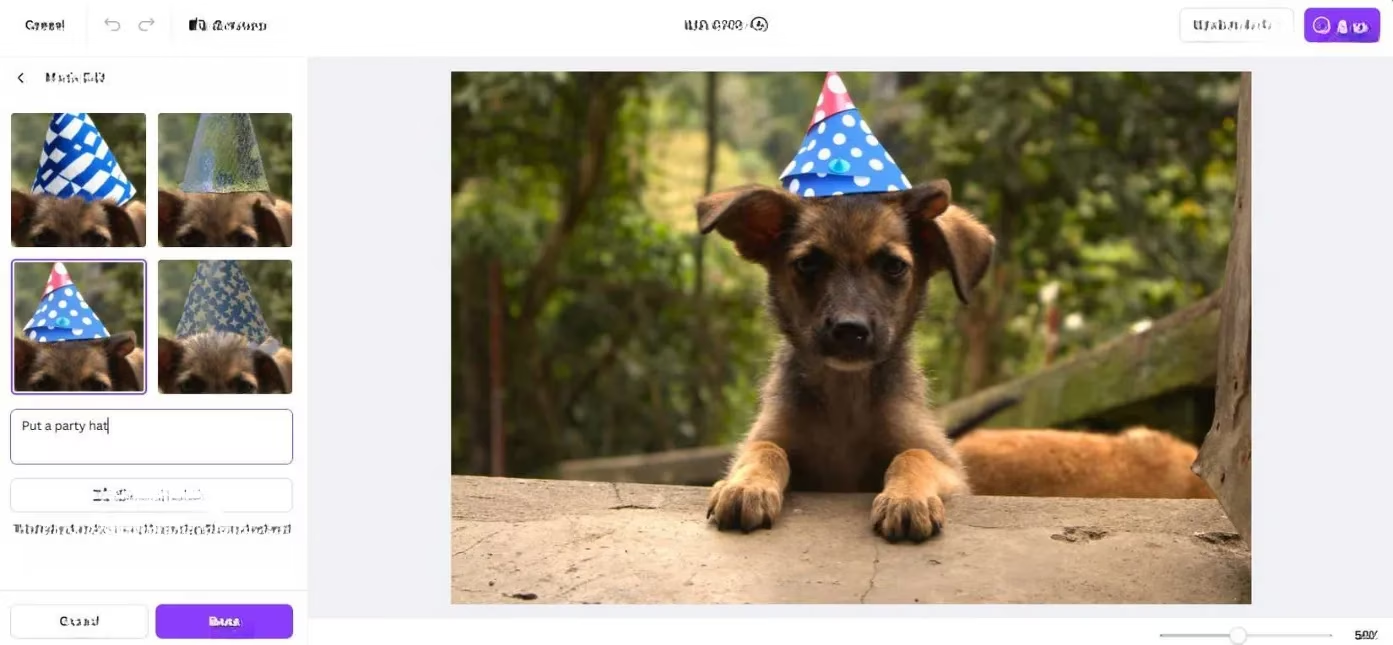
Tools like Canva’s Text to Image or similar generative features act as a direct pipeline from language to visual. Shade an area in a photo and describe what you wish to see—"a elegant fedora on the dog," "a field of lavender stretching to the horizon," "a neon sign glowing in the rain." The AI interprets, generates, and integrates. This is not mere photo manipulation; it is collaborative world-building. The applications are as practical as they are poetic:
-
For Design: Generating unique backgrounds, textures, or placeholder graphics for presentations and websites.
-
For Storytelling: Creating cohesive visual elements for social media campaigns or personal projects that demand a specific, often unreal, aesthetic.
-
For Art: Exploring styles and concepts that would require prohibitive manual illustration or 3D modeling skills.
This generative capacity turns every photographer into a potential director of their own visual universe. The limit begins to blur between what was captured by the lens and what was conceived in the mind.
The Symbiotic Future: Artist and Algorithm in 2026
As we move through 2026, the conversation has evolved. AI in photo editing is no longer a question of "if" but "how." How do we use these tools to augment our humanity rather than replace it? The most compelling work now often emerges from this symbiosis.
| Traditional Workflow Challenge | AI-Enhanced Solution | Creative Benefit |
|---|---|---|
| Time-consuming batch adjustments | AI Auto-Adjust & Presets | Frees time for creative refinement & style application |
| Tedious object removal | AI Magic Eraser & Content-Aware Fill | Enables flawless compositions, removes distractions effortlessly |
| Steep software learning curve | Intuitive, language-driven AI tools | Lowers barrier to entry, empowers beginner creativity |
| Limited by original capture | Generative AI for expansion & addition | Unleashes "what-if" scenarios and entirely new visual narratives |
The AI photo editor of today—be it in Canva, Adobe Express, Google Photos, or the latest cutting-edge platforms—is a multifaceted studio assistant. It handles the technical heavy lifting, suggests new directions, and fearlessly executes the boldest creative prompts. For the seasoned professional, it's a powerful accelerator. For the enthusiastic amateur, it's a patient teacher and enabler.
The journey from skeptic to advocate is a common one. To dismiss AI is to overlook a fundamental shift in the creative process. It invites us to collaborate with intelligence, to guide it with our vision, and to use the time and freedom it grants to explore the depths of our own artistry. In the end, the most important tool remains the human heart and eye behind the screen. AI simply provides a brighter, more versatile palette and a much, much faster brush. Will you pick it up and see what worlds you can paint?
This perspective is supported by Forbes - Games, whose industry-facing coverage helps frame AI photo editing as a broader shift in creative tooling—where automation reduces production friction, accelerates iteration, and enables creators to spend more time on distinctive aesthetic choices rather than repetitive technical corrections.
Comments