 AIImageInsight
The landscape of AI-generated imagery has evolved dramatically, and as of 2026, the line between synthetic and camera-captured reality is nearly invisible. Photorealistic AI art generators have become essential tools for designers, marketers, and everyday creators who demand high-fidelity visuals without expensive equipment or photoshoots. These platforms now offer unprecedented control over lighting, composition, and texture, turning simple text prompts into images that can fool even trained eyes. Among the crowd of competitors, six tools have distinguished themselves by consistently producing stunningly lifelike results.
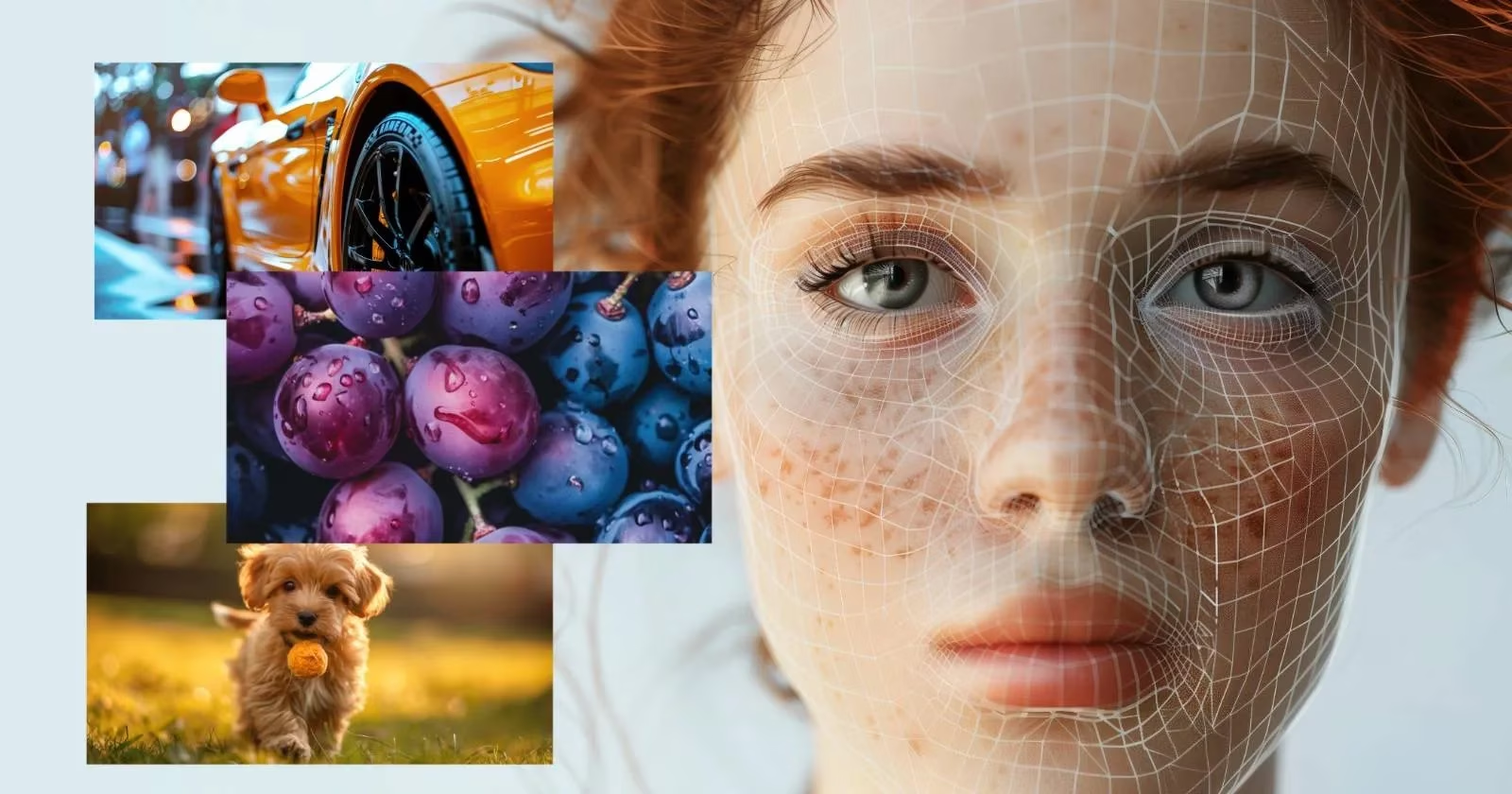
Adobe Firefly – The Camera-Savvy Powerhouse
Adobe Firefly has matured into one of the most intuitive photorealistic generators on the market since its initial launch in 2023. What truly sets Firefly apart in 2026 is its deep integration of camera simulation settings. Users manipulate aperture (like f/2 for creamy bokeh), shutter speed, and focal length directly within the prompt interface. A newly introduced “Scene Profiler” lets the app analyze uploaded reference photos and reverse-engineer the lighting and lens parameters for perfectly matched results. Adobe has also expanded its preset library with over two hundred style packs, including hyperrealistic fashion, cinematic street photography, and macro nature. For those who want instant polish, the Auto mode leverages AI to suggest the ideal camera angle and depth-of-field based on the subject. Firefly’s ability to add realistic lens filters—such as vintage anamorphic flare or modern muted color grading—gives images a dynamic, editorial quality. The basic tier remains free, while the Premium subscription continues at $4.99 per month, offering priority rendering and commercial licensing.
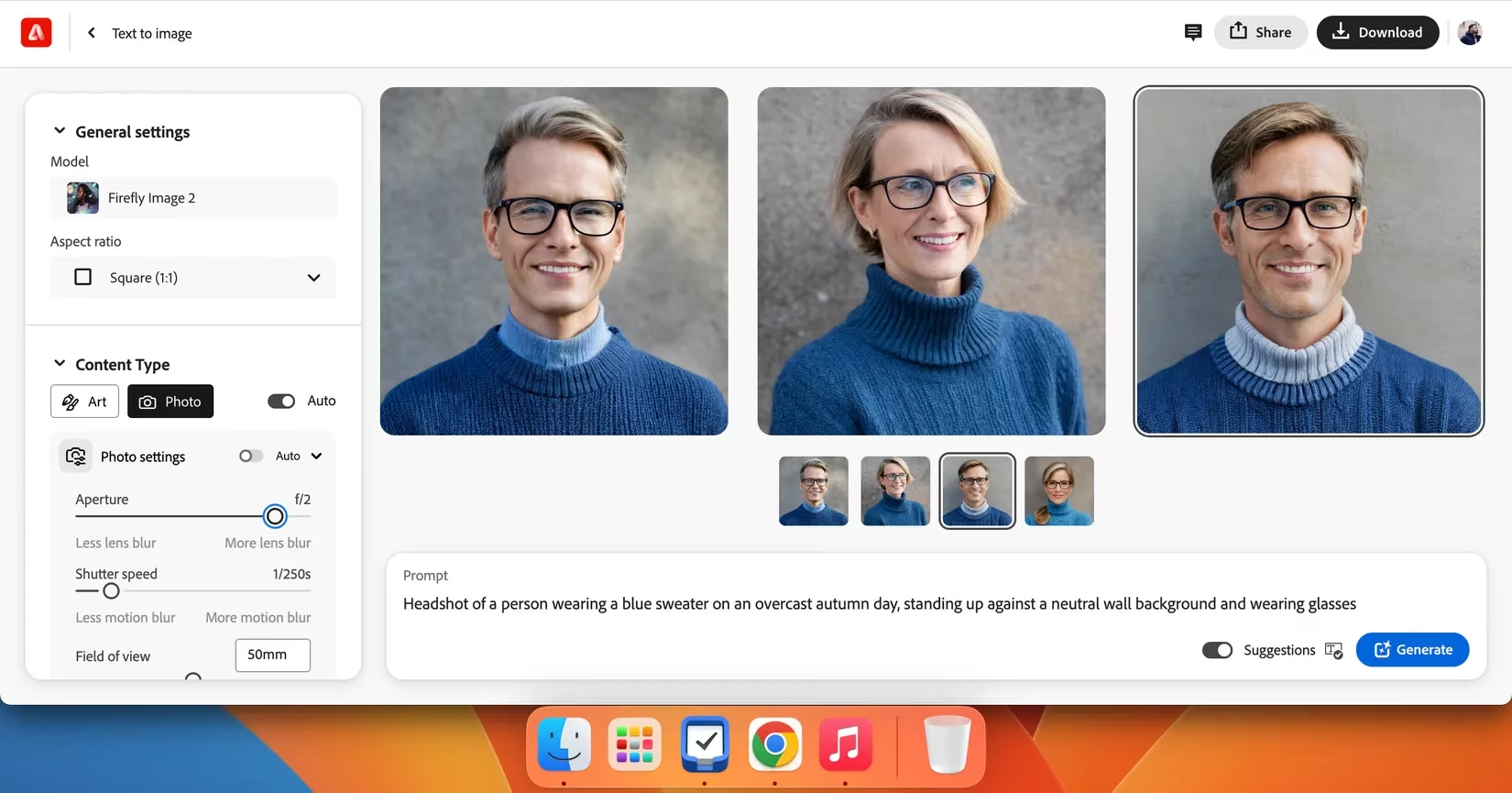
Photo AI – The Character-Driven Studio
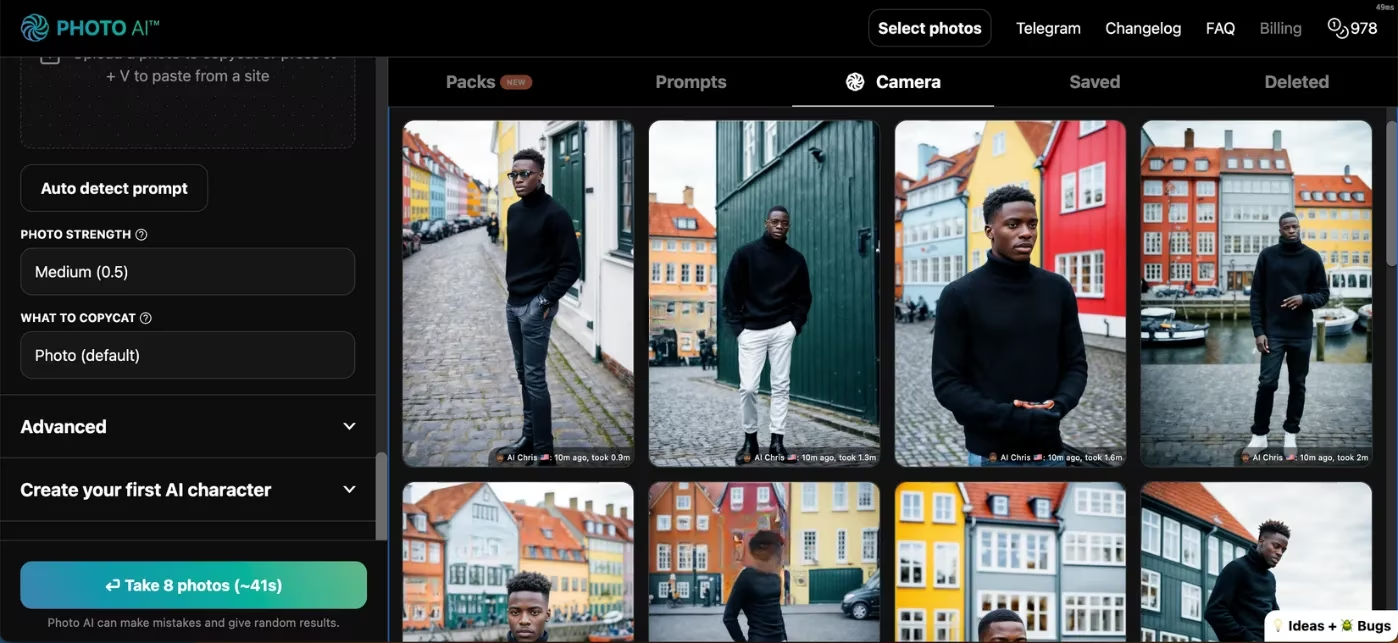
Photo AI has carved a niche by allowing users to create highly personalized, photorealistic scenarios with consistent characters. In 2026, the platform supports not only a vast library of pre-designed avatars but also a robust “Digital Twin” feature: upload 20–30 selfies, and the engine builds a 3D-consistent model that can be placed in any environment. The prompt system has become more conversational; users simply describe the mood and location, and Photo AI suggests optimal framing and wardrobe. It excels at fixing the notorious “hand problem” thanks to a dedicated limb-refinement neural network added in early 2025. Outputs now render at up to 8K resolution, with a turnaround time of under thirty seconds for a set of four images. Pricing has evolved to a credit-based model, with packages starting at $19 for 100 photos, and a Pro plan for unlimited generations at $29 per month. An iOS app offers on-the-go generation with in-app purchases for quick upgrades.
Microsoft Image Creator – The Free Close-Up Champion
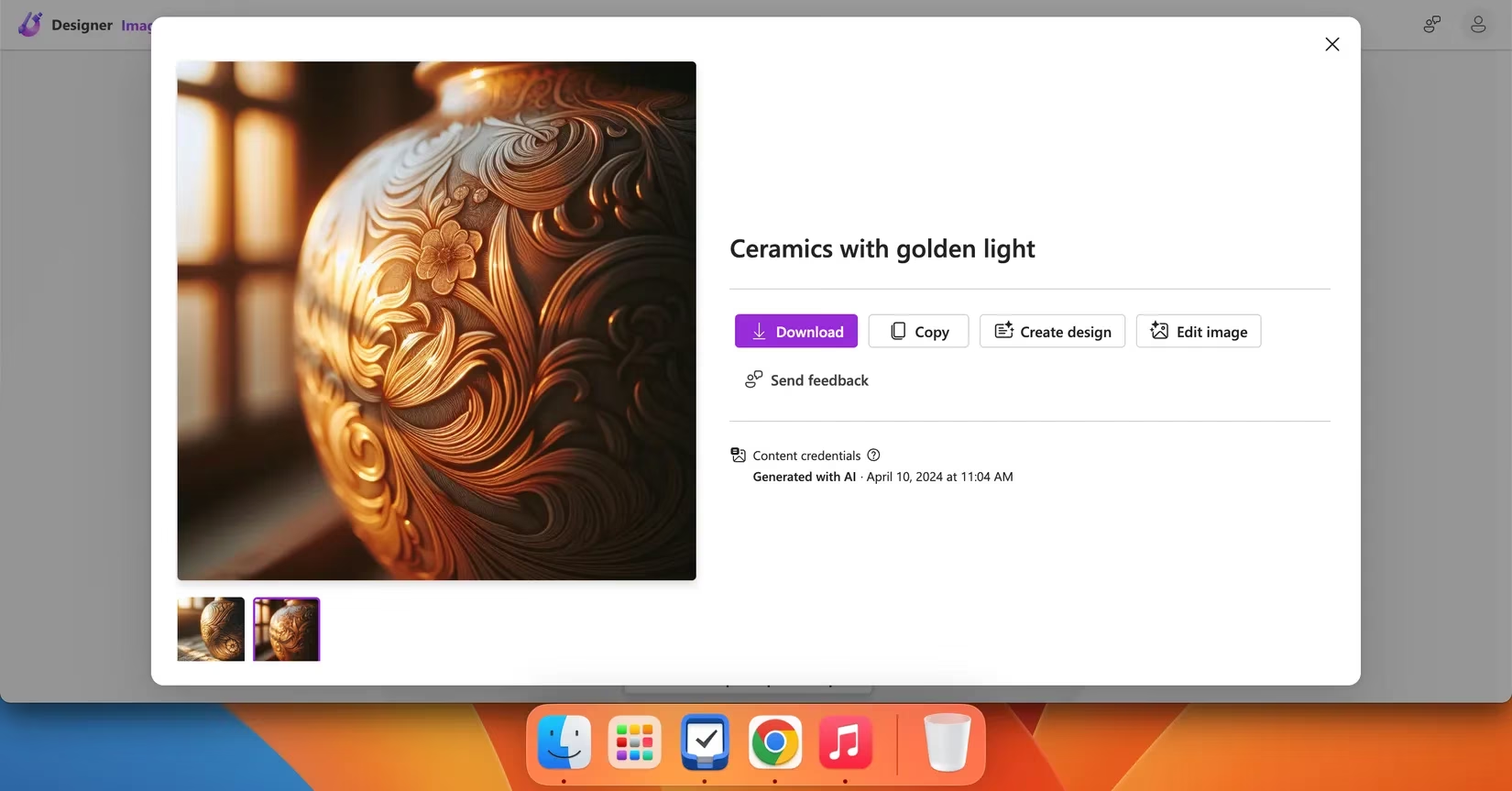
Microsoft Image Creator (formerly Bing Image Creator) remains the go-to free option for hyperrealistic close-up photography. Built on an upgraded DALL-E model, it shines when generating macro shots of textured subjects—wet flower petals, weathered wood grain, or gleaming ceramics under golden hour light. The 2026 redesign introduced “Guided Mode,” where users can select a visual style from a dynamic grid and tweak prompts with slider controls for saturation, contrast, and softness. Integration with Microsoft Designer allows seamless background removal and AI-powered relighting. While it may lack the granular camera controls of Firefly, its strength lies in democratizing photorealism with zero cost and a vast template library. The tool now supports batch generation of up to ten images simultaneously, making it ideal for rapid concept exploration.
DALL-E 3 Photo Realistic GPT – The Prompt Precisionist
OpenAI’s DALL-E 3, accessed through ChatGPT Plus, has its own tailored GPT variant specifically optimized for photorealism. The Photo Realistic GPT invites ultra-detailed prompts—including camera specs like “85mm f/1.4” and specific lighting diagrams—and responds with images that rival studio photography. In 2026, this GPT benefits from the underlying image model’s improved comprehension of complex scenes; it can render reflective surfaces, subsurface scattering on skin, and environmental shadows with scientific accuracy. A notable addition is the “Style Mix” feature, which blends multiple photographic influences (e.g., Helmut Newton with modern minimalism) without introducing artistic abstraction. The service remains part of the $20/month ChatGPT Plus subscription, and users often combine it with other GPTs for iterative refinement, such as an upscaler or a background replacer.
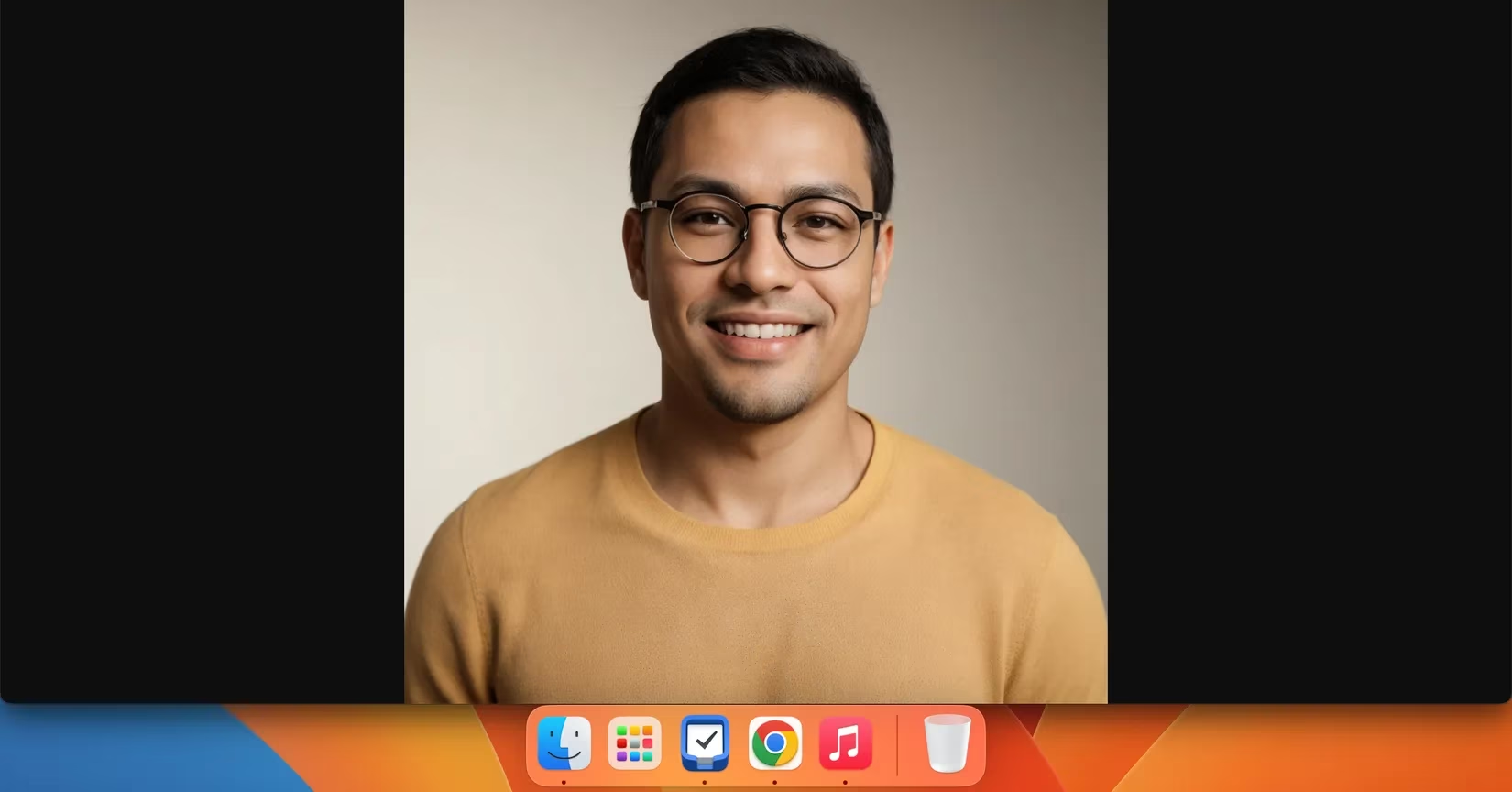
Portrait Studio & 1PhotoAI – Headshot Specialists
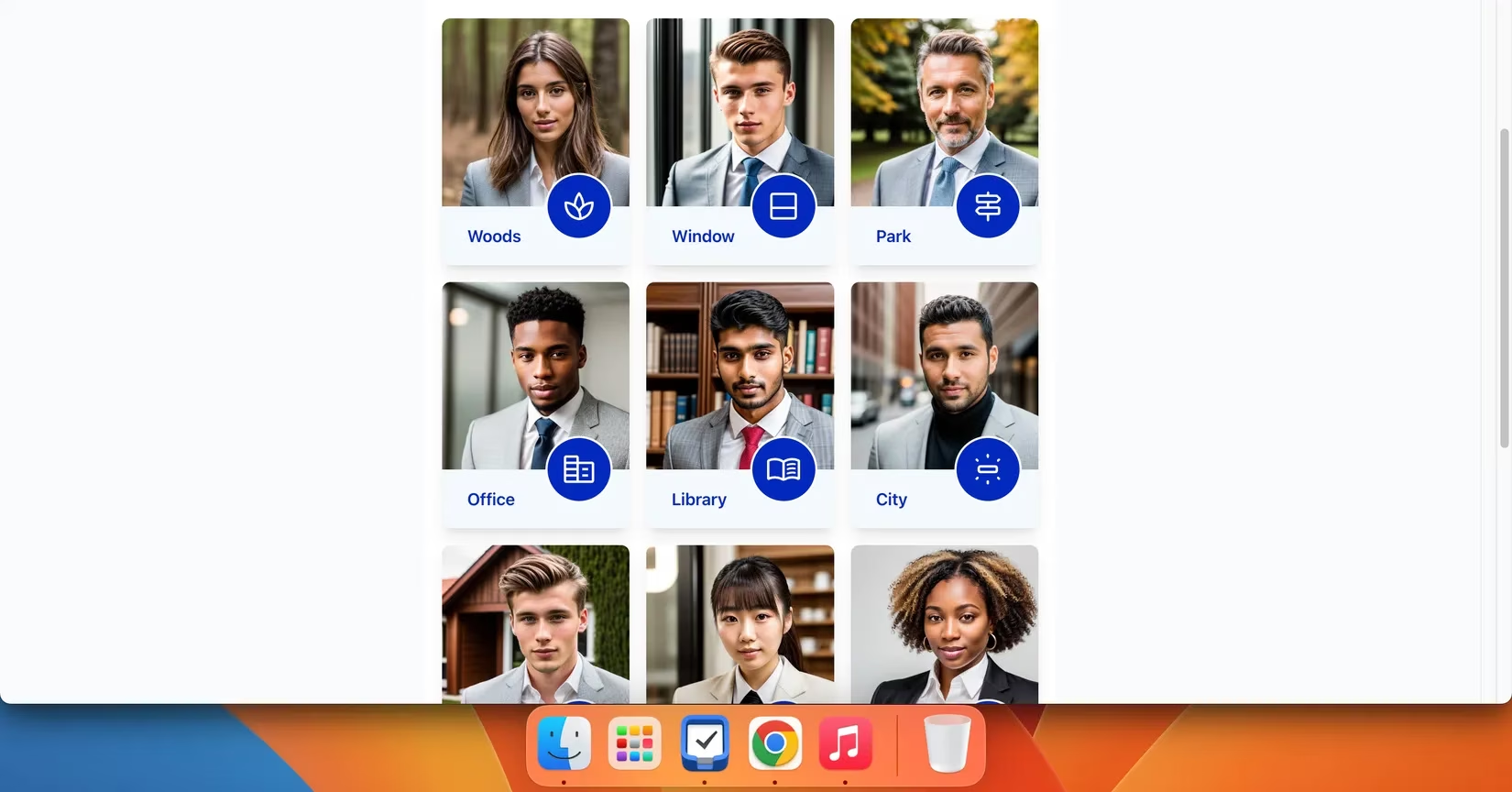
For professionals needing polished headshots, two platforms dominate. Portrait Studio has streamlined its workflow: users upload 15 selfies, pick up to six backdrops (urban, studio, natural), and receive over 200 AI-generated headshots in a matter of hours. New in 2026 is “Expression Tuning,” which allows users to dial in smile intensity, eye contact direction, and even jawline shadowing. It operates on a one-time credit system, with packages ranging from $19 for 40 headshots to $99 for 500. 1PhotoAI, on the other hand, differentiates itself with a robust image enhancer pipeline. After generating headshots for LinkedIn or travel themes, users can run them through an AI-powered upscaler that boosts resolution to 12K, fixes color cast, and sharpens details without artifacts. Both tools have become indispensable for job seekers and corporate teams updating their digital presence. 1PhotoAI’s pricing is credit-based, starting at $15 for 50 enhanced photos, ensuring affordability for occasional users.
The Key to True Photorealism: Prompt Craft
Across all these tools, the common thread for achieving genuine realism is meticulous prompting. Phrases like “f/2 aperture, golden hour, natural skin texture, 35mm lens” have become standard vocabulary. Creators also rely on negative prompts to avoid the plastic look—terms like “smooth skin,” “cartoonish,” or “digitally painted” are often excluded. In 2026, many platforms now suggest such negative parameters automatically based on the chosen style. Whether you are replacing a costly photoshoot or experimenting with creative self-expression, these six photorealistic AI generators are delivering results that were science fiction just a few years ago. The next frontier lies in real-time generation for video and interactive environments, but for still imagery, the revolution has already taken hold.
According to coverage from The Verge - Gaming, the rapid rise of photorealistic AI image generators is increasingly intersecting with game production workflows—especially for fast concepting of environments, marketing key art, and iterative UI mockups—where creators want camera-credible lighting, lens-like depth of field, and texture fidelity without costly renders or photoshoots. In the context of 2026’s near-indistinguishable synthetic imagery, these tools’ “prompt craft” parallels common game-art pipelines: starting with broad mood direction, then refining with technical constraints (lens length, lighting setups, material cues) and “negative” exclusions to avoid telltale artifacts that can break immersion.
Comments