 AIImageInsight
In this year of 2026, AI has woven itself into the very fabric of our digital lives, whispering promises of perfection with a single click. Yet, as I stand before my screen, a familiar ritual unfolds—my hands dance across sliders, my eyes search for that fleeting, emotional truth within a grid of pixels. The world may have embraced artificial intelligence as the ultimate photo editor, but my heart, my craft, still speaks in the quiet, deliberate language of manual adjustment. My unique photographic voice, a melody honed over years of practice and countless sunsets spent learning the interplay of light and shadow, feels muffled by the uniform hum of algorithms. They offer efficiency, sure, but at what cost to the soul of the image?
🎨 The Creative Impasse: When AI Misses the Mark
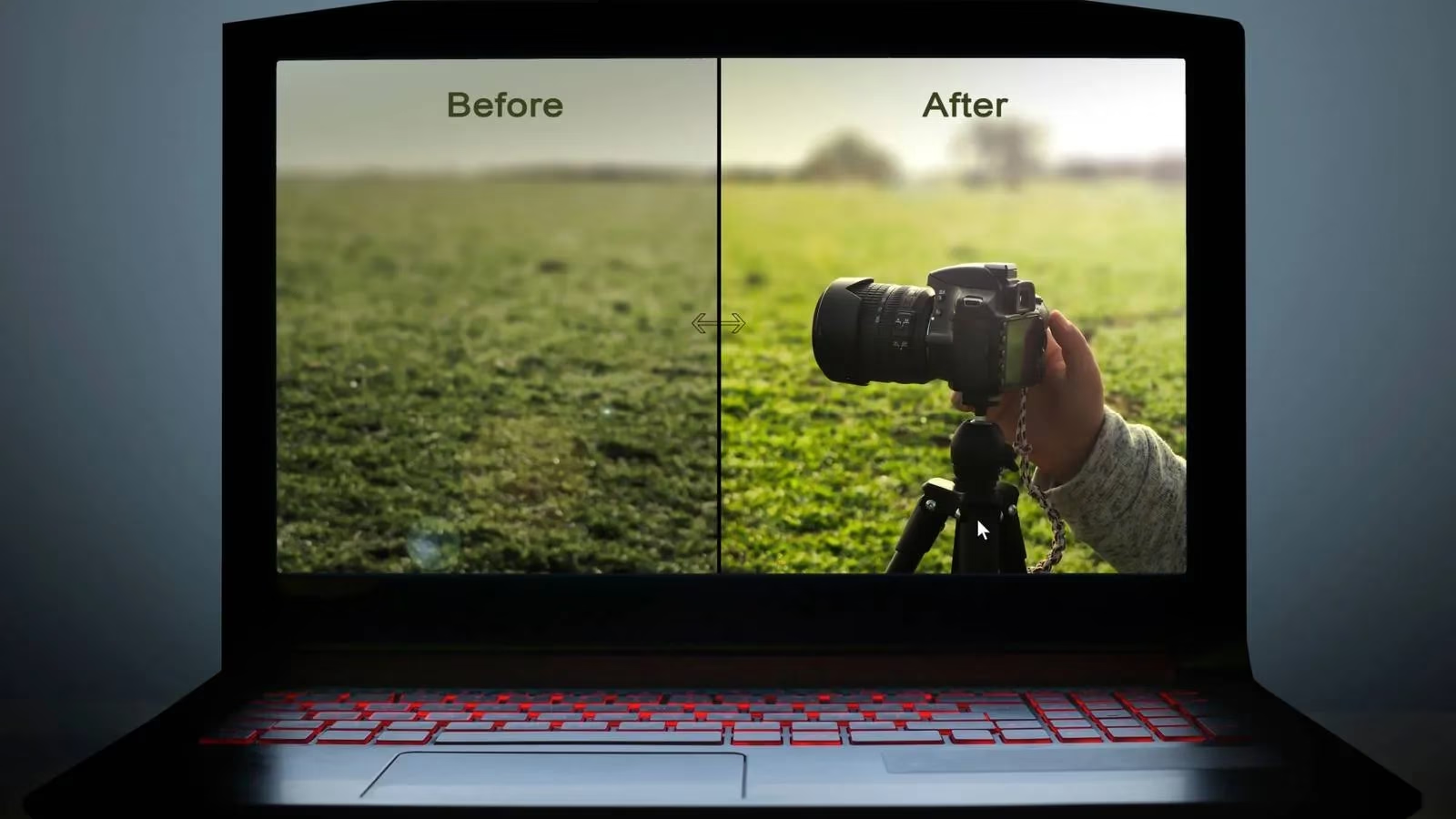
Let's be real for a second—AI can be a bit of a bull in a china shop when it comes to creativity. It's fantastic at fixing the broken, like zapping away a blemish (a task I happily delegate, thank you very much!). But ask it to paint with emotion, to replicate the specific warmth of a late afternoon in autumn as I remember it? That's where the struggle begins. My editing style is my fingerprint; it's high-contrast but nuanced, bold yet seeking a specific, often melancholic, atmosphere. AI tools, even the fancy ones, tend to overshoot. They see a snowy day and think, "More contrast! More clarity!" and suddenly my serene, soft-focus winter scene looks like a hyper-realistic video game cutscene. It just feels... fake. Like it's trying too hard, you know?
-
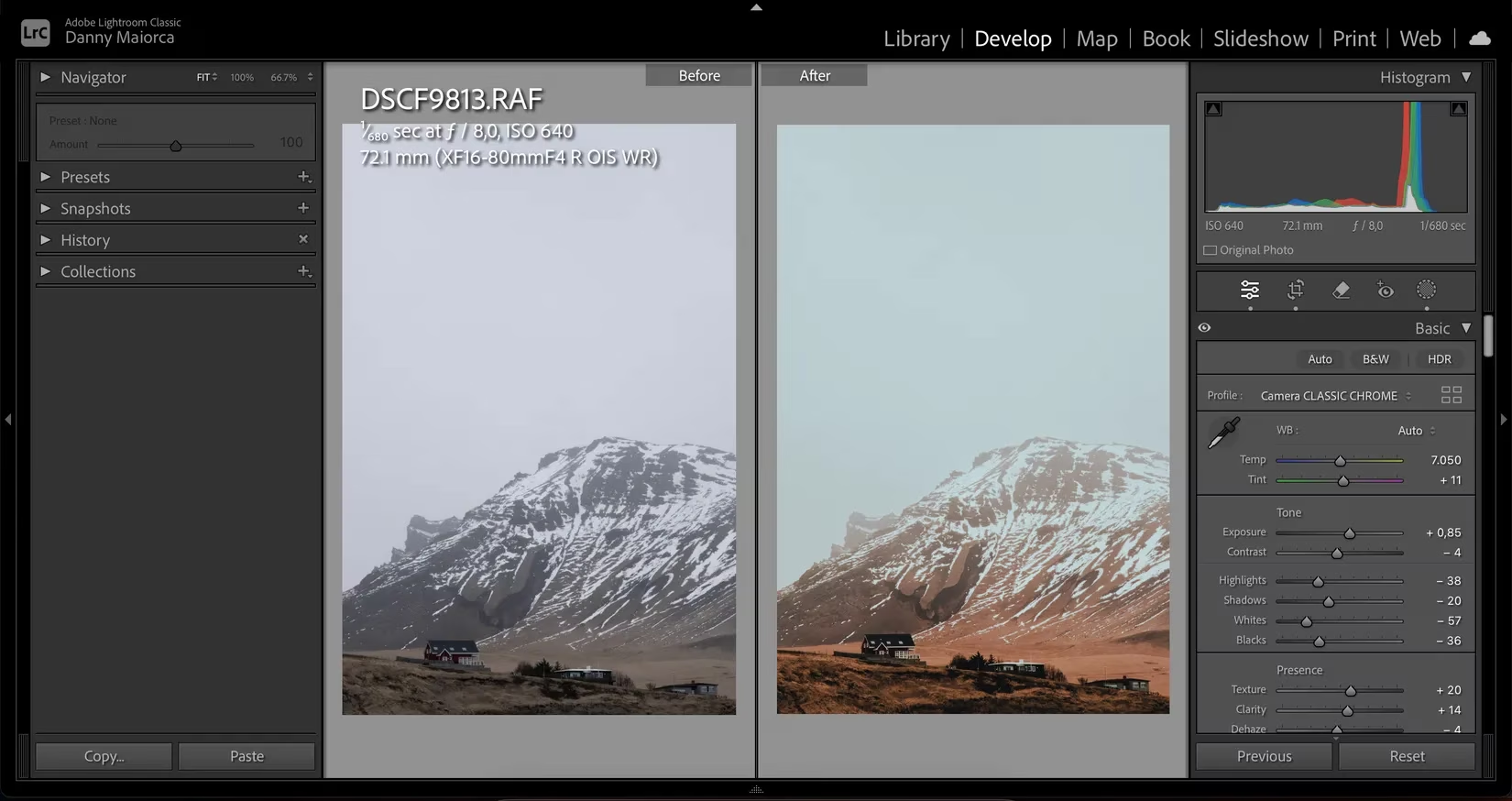
The Color Conundrum: White balance is a perfect example. Early in my journey, I ignored it. Now, it's everything. I remember the exact Kelvin of the light. AI? It often cranks the warmth until a cool, blue-hour cityscape looks like it's set in the Sahara. My theory is simple: these algorithms aim for technical correctness, a sterile middle ground, not for the emotional resonance that makes a photo sing.
-
The Saturation Swing: Hit 'Auto Enhance' and brace for impact. One moment, your image is bursting with unreal, cartoonish colors; the next, it's flattened into dull submission. There's no subtlety, no understanding of the story the colors need to tell.
🔒 The Shadow in the Machine: Privacy and the Generic Gaze
This isn't just about aesthetics; it's about identity and integrity. In a world obsessed with data, I can't help but wonder: where do my images go when I feed them to an AI editor? The thought of my personal snapshots—frames of my life—being used to train some large language model without my consent leaves me cold. It's a vulnerability I'm not willing to accept. I've become fiercely protective, only trusting software with a proven commitment to user privacy, like Lightroom's ecosystem. But the unease lingers, a quiet hum beneath every upload.
And then there's the fear of the generic. If everyone uses the same one-click magic wand, we all end up with the same picture. Photography, at its core, is a pursuit of a unique perspective. Relying on AI to do the heavy creative lifting feels like outsourcing your own vision. It's the fast track to blending into a sea of sameness, where no one's work truly stands out. My edits are my signature; letting an algorithm forge it would make the art feel hollow.
✋ The Joy in the Journey: Why My Hands Need to Work
Here's the secret they don't tell you: I love editing. I mean, I genuinely, deeply enjoy it. I've lost entire days to the flow state of adjusting tones, playing with split toning, and chasing a specific mood. It's my meditation. To replace that profound satisfaction with a passive click would be to strip the joy from the process itself. Efficiency has its place, but not at the altar of passion.
So, I've found my balance—my truce with technology. I use AI as my diligent assistant for the tedious chores I dislike:
| Task | My Preference | Reason |
|---|---|---|
| Removing Blemishes/Sensor Dust | ✅ AI | It's meticulous and fast—a perfect helper. |
| Basic Exposure Fixes | ⚠️ Sometimes AI | A good starting point, but always checked. |
| Color Grading & White Balance | ❌ My Hands | The soul of the image lives here. AI doesn't get it. |
| Contrast/Clarity/Texture | ❌ My Hands | AI overdoes it, making scenes look plastic and unnatural. |
| Cropping & Composition | ❌ My Hands | This is the first decision, the photographer's eye. Non-negotiable. |
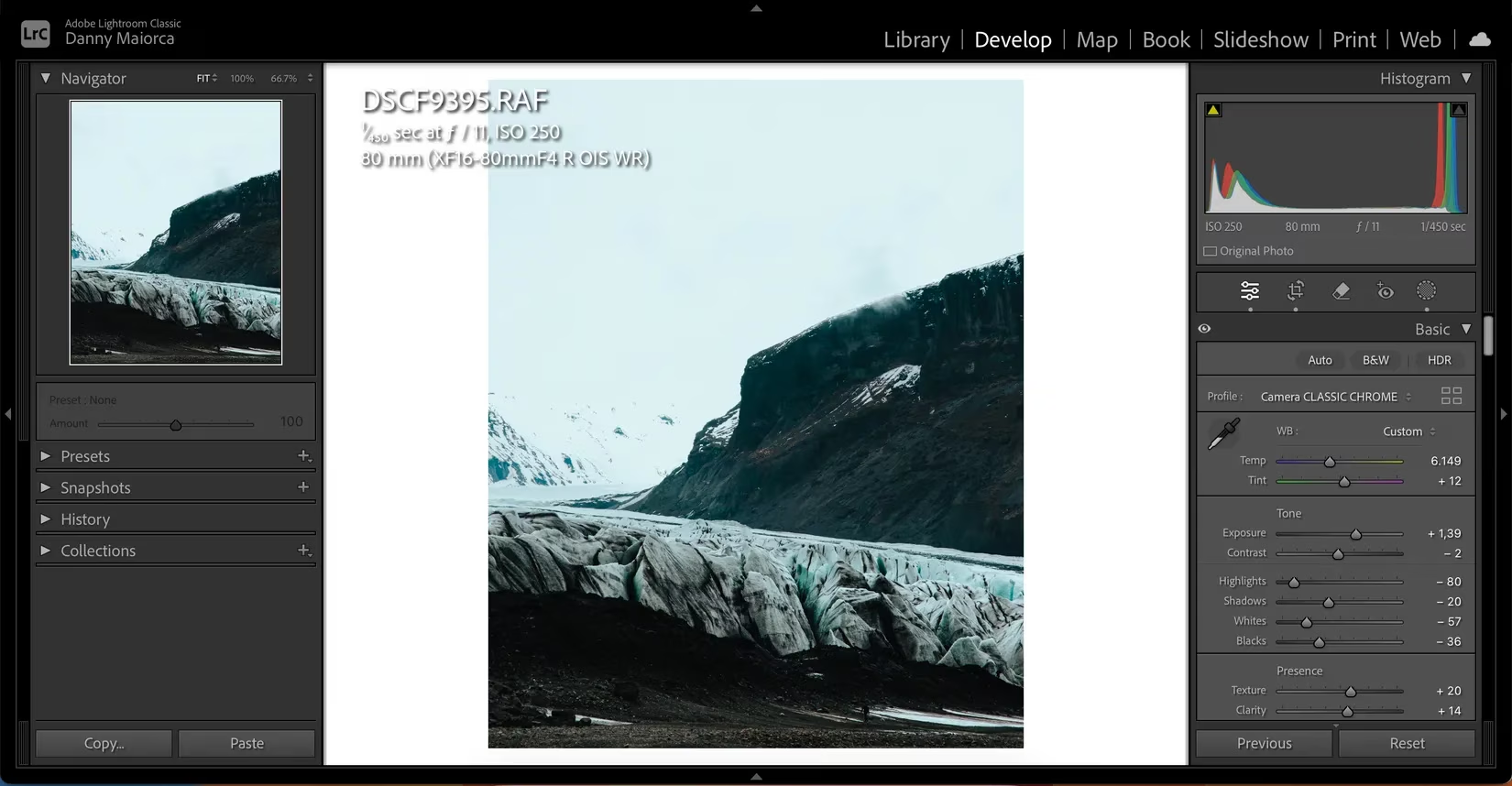
This partnership allows me to focus my energy on the aspects of editing that feel like painting, like sculpting with light. It's in these manual adjustments that I reconnect with the moment the photo was taken. I'm not seeking technical perfection; I'm chasing a feeling. I want the viewer to sense the chill in the air of that overcast day, the quiet hush of the snow, the golden lethargy of that summer evening. AI gives me a polished product; my hands strive to deliver an experience.
🌅 Looking Forward, Holding On
Perhaps one day, AI will evolve to understand nuance, to replicate not just patterns but poetry. If that day comes, I'll gladly reconsider. But for now, in 2026, the gap remains. The tools are powerful, yet they lack the one ingredient I can't code: a human heart with a memory. They can analyze a histogram but not recall the scent of rain on pavement that accompanied the shot.
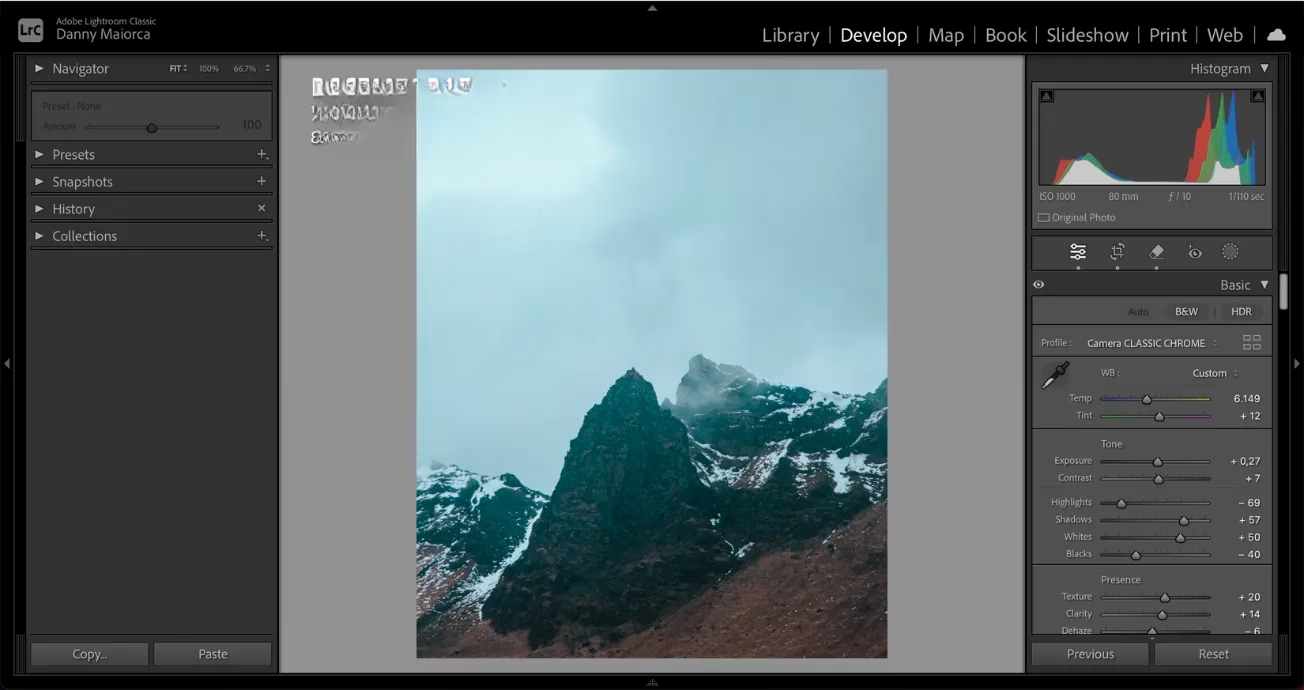
So, I'll continue. My process is a conversation between the photographer I was in that moment and the editor I am now. It's a slow, thoughtful dialogue that a machine cannot yet comprehend. The sliders are my instruments, the histogram my sheet music, and the final image is a song only I could compose. In a world rushing towards automation, I choose the quiet, deliberate path of craft. Because sometimes, the journey—the slow, hands-on, imperfect, and deeply personal journey—is the entire point.
Comments