 AIImageInsight
As a professional photographer who has been in the trenches since the early 2020s, I’ve seen the rise of AI photo editing tools with both excitement and a healthy dose of skepticism. By 2026, these tools have become more sophisticated, but that doesn't mean they’re all winners. In my daily workflow, I've tested countless AI features, and while some, like advanced denoise algorithms, are absolute game-changers, others feel as useful as a chocolate teapot. Today, I want to share my brutally honest opinions on the AI editing tools I find to be the most overhyped and, frankly, useless. This isn't about dismissing innovation; it's about understanding when AI genuinely enhances creativity and when it just adds unnecessary, often clunky, steps to a process that was already fine.
The Illusion of Perfection: AI Sky Replacement
Let’s start with the elephant in the room: AI sky replacement. I’ve never understood the obsession with this tool. Sure, the marketing makes it look like magic—transforming a dull, gray sky into a vibrant sunset with a single click. But in practice, it often feels as authentic as a plastic plant in a rainforest. The mood of a photograph is intrinsically tied to its environment; swapping a sky doesn't just change a backdrop, it rewrites the story, and rarely for the better.
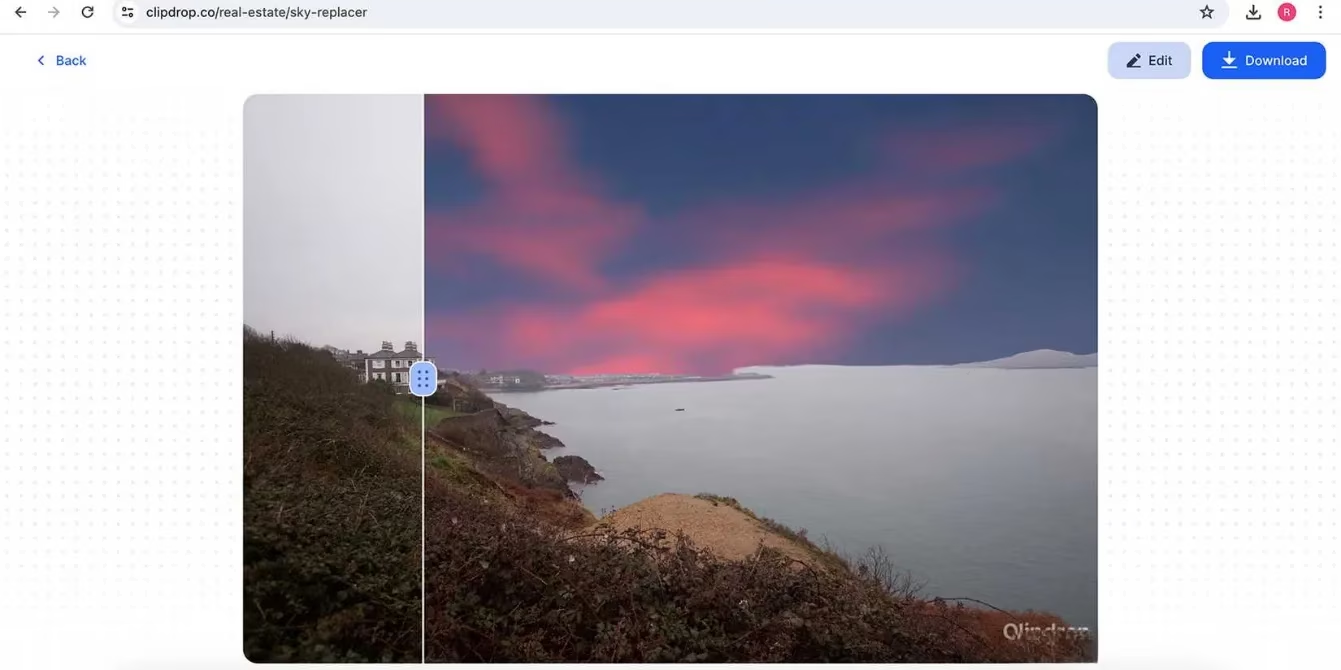
These replacements almost always look fake. The lighting never quite matches, the colors clash, and the overall composition feels off. It’s like trying to fit a square peg into a round hole—forceful and awkward. If you're just having fun with personal snapshots, go for it. But for any serious work, I’d argue it’s counterproductive. Interestingly, I do find value in AI that detects the sky to adjust exposure or highlights. That’s a helpful assistant, not a scene-stealing imposter. It’s all about understanding the line between enhancement and artificial fabrication.
The Deceptive Glow: AI Skin and Eye Brightening
Next up are AI skin and eye brightening tools. The promise is alluring: flawless, glowing skin and sparkling eyes with zero effort. The reality? It often leaves subjects looking like they’ve been dipped in radioactive glitter. The whole point of AI in software is to simplify workflows, but in my experience, these tools are about as efficient as a screen door on a submarine.
They’re almost always off the mark—over-brightening patches, creating unnatural highlights, or washing out details. I’ve found it’s consistently quicker and yields better results to make manual adjustments using curves, dodging, and burning. The only exception might be hitting an "Auto" button in a pinch, but even that is a hit-and-miss gamble. For genuine retouching, I’ll stick to the precision of manual tools in Photoshop or similar applications every single time.
The Artificial Blur: AI Background Blurring
Ah, AI background blurring, or as I like to call it, "The Bokeh Imposter." This was one of the first AI tools I tried years ago, and my opinion hasn’t changed: I’d rather just adjust the aperture on my camera. Creating a convincing shallow depth of field in post-production is incredibly difficult. AI-generated blur often looks obvious, with messy edges around subjects and a uniform, unnatural blur pattern that lacks the organic falloff of real lens bokeh.
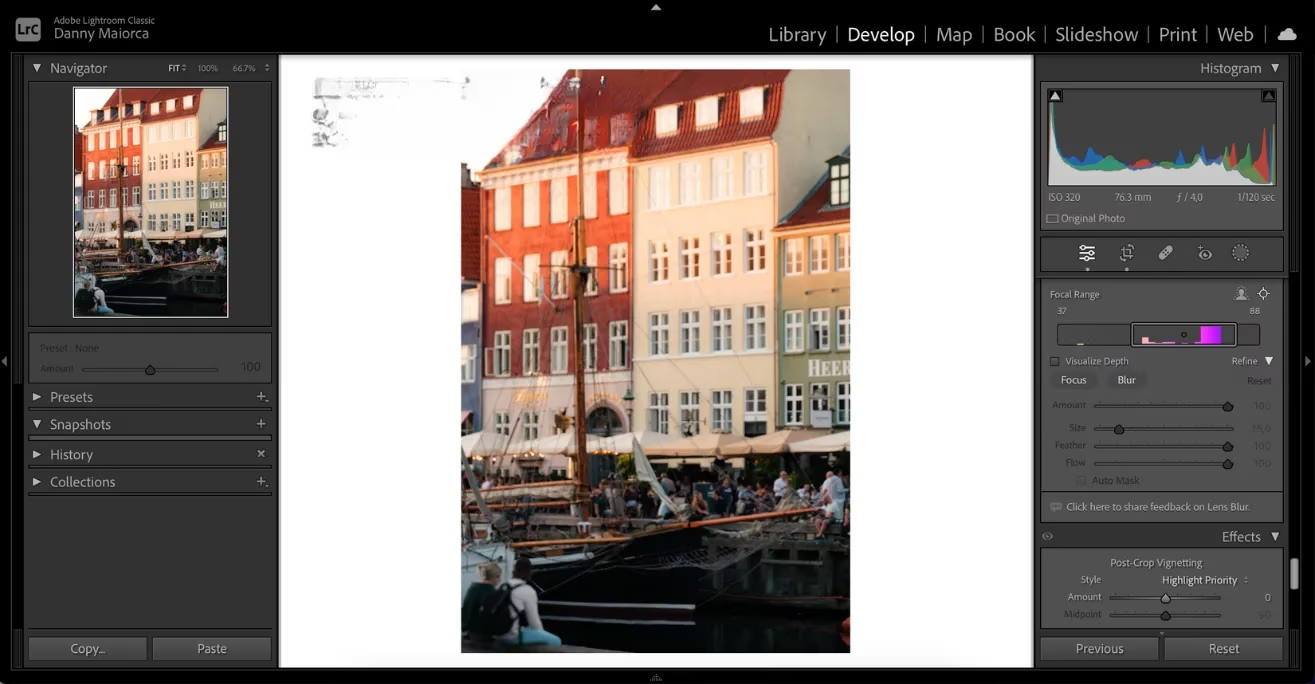
It can be useful if the AI is exceptionally good at detecting subject edges, but that’s a big "if." Often, it’s a crutch for not having the right gear or technique. Instead of relying on AI, you can achieve better results by:
-
Moving physically closer to your subject.
-
Using a longer focal length.
-
Ensuring more distance between your subject and the background.
These fundamental photographic techniques produce results that are as natural as a river carving its own path, unlike the forced, digital approximation.
The Ethical Quagmire: AI Body Reshaping
This is where we move from impractical to problematic. AI tools that allow you to change a person's body shape—slimming waists, enlarging features, etc.—are tools I am vehemently against. First, from a technical standpoint, it’s often easier and more realistic to achieve certain looks through posing, lighting, and lens choice. But more importantly, the ethical implications are profound.
Manipulating body shape to conform to unrealistic standards is deceptive, especially when such images are posted online without disclosure. While all editing alters reality to some degree, adjusting light, color, or composition is different from fundamentally changing a person's physical form. It crosses a line. It’s worth noting that by 2026, regulations like Norway’s photo retouching law, which mandates labeling for altered body shapes and skin, are becoming more common globally, and for good reason.
My Final Verdict
Look, if you find these tools useful for your creative expression, that’s your prerogative. Art is subjective. But for my professional workflow, these particular AI features remain as relevant as a floppy disk in a cloud storage world. I’m always open to new technology—the denoise and object removal tools of 2026 are genuinely miraculous. However, I believe in using tools that serve the art, not replace the artist's judgment. When an AI tool feels more like a gimmick than a genuine aid, I’m happy to ditch it and stick with the timeless principles of photography and careful, intentional editing. After all, the best tool is the one that helps you tell your story authentically, not the one that rewrites it for you.
Comments