 AIImageInsight
Let me tell you, as someone who thought they could outsmart a machine with a few clever words, I embarked on a grand, slightly delusional experiment in 2026. My goal? To see if the supposedly magical, all-powerful AI of today could truly capture the soul, the grit, and the sheer historical weight of the most legendary photographs from the last century. Spoiler alert: it was a rollercoaster of near-misses, uncanny valley horrors, and moments where the AI seemed to have the historical awareness of a goldfish. Modern models promise the moon, but asking them to document a reality they've never lived? That's where the comedy—and the profound limitations—truly begin.
I chose my weapon: Fotor AI. It's not the king of the hill—that throne is still held by Midjourney and DALL-E—but it's accessible and often delivers solid, if not always spectacular, results. My hypothesis was simple: if AI is so brilliant, it should be able to mimic not just the look of a Dorothea Lange or an Ansel Adams, but the feeling. Oh, how naive I was! I quickly learned that while AI can generate a picture, capturing cultural resonance is a whole other ball game. It's like asking a synthesizer to perfectly replicate the emotion of a live orchestra during a historic moment; you might get the notes, but you'll miss the heartbeat.
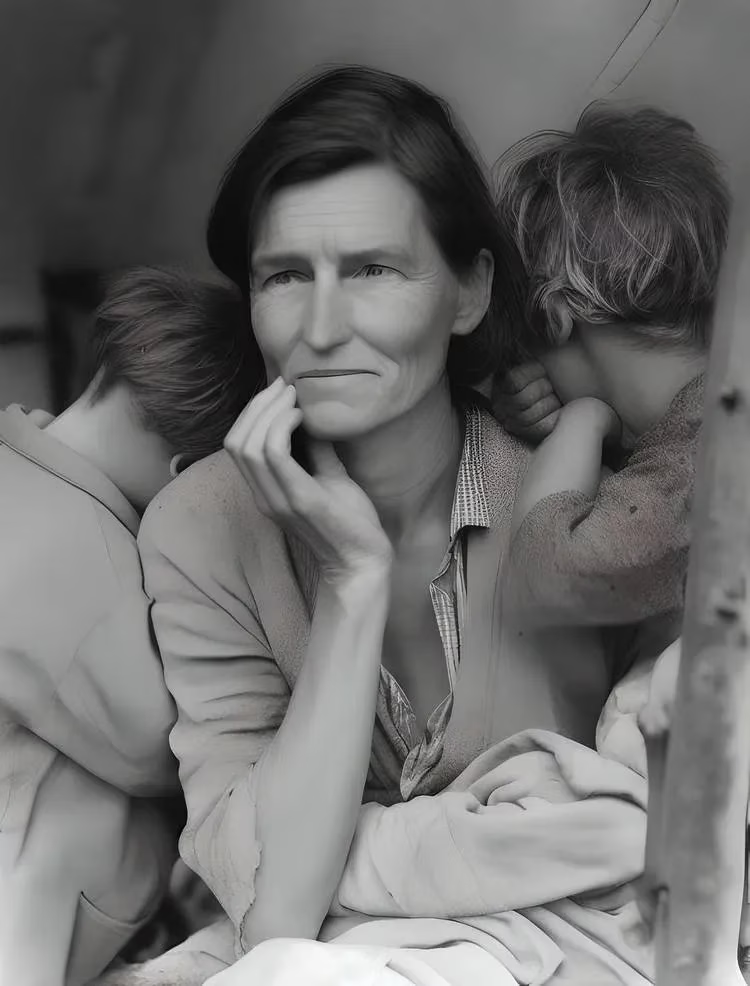
First up was the legend herself, Dorothea Lange, and her immortal "Migrant Mother." I arrogantly assumed Fotor would know this image by name. I typed in the title with the confidence of a maestro. The AI blinked back at me with digital ignorance. So, I became a human prompt engineer, painstakingly describing the worn face, the worried children, the Great Depression-era setting. After much coaxing, it produced something.
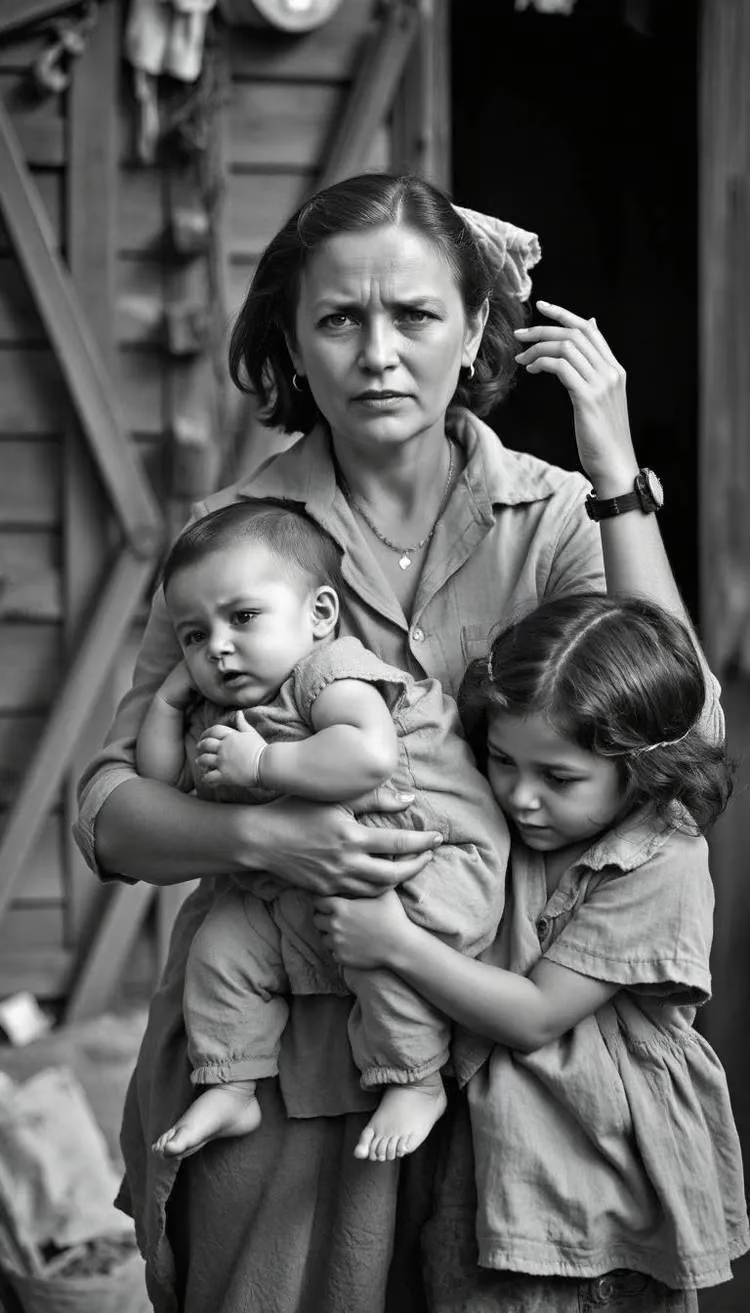
The result was... solidly fine. But that's the problem! Lange's masterpiece is not fine; it's a raw, devastating portal into human struggle. My AI-generated mother looked like she'd just stepped out of a modern studio with perfect, soft lighting, ready for a portrait session, not fleeing the Dust Bowl. The composition was a generic "woman with kids" instead of Lange's carefully framed narrative of despair and resilience. The AI, bless its circuits, completely missed the subtext. It gave me aesthetics where I needed anthropology.
I then tried the image-to-image feature, feeding it the original. This got closer in layout, but then it slapped a cheap, low-quality "beautify" filter on the subject's face. It felt disrespectful, like putting Instagram makeup on a historical monument.
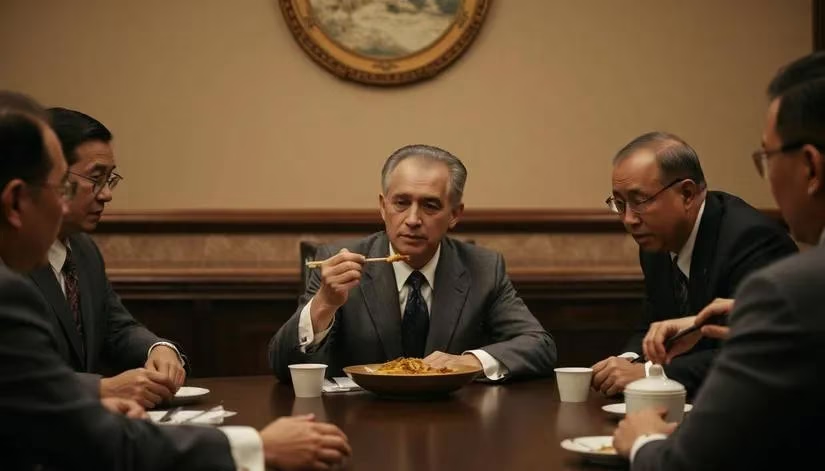
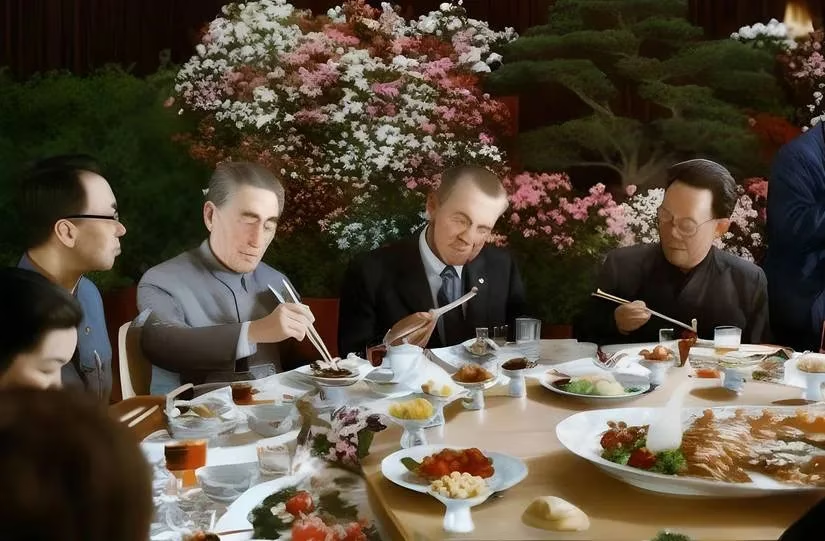
Emboldened by failure, I jumped decades ahead to the surreal political theater of "Nixon in China" by Oliver F. Atkins. This is a complex scene: a specific historical figure, a specific moment in diplomatic history, a specific bewildered expression as Nixon fumbles with chopsticks. I prompted carefully. The AI's response? A generic photo of a man in a suit at a banquet looking confused. The gist was there—the bewilderment was actually pretty good—but the setting was wrong, the other figures were wrong, and most hilariously, the AI clearly had no idea who Richard Nixon was. If I'd prompted "Watergate," I'm convinced the server would have crashed.
The image-to-image attempt for this was a disaster. The faces melted into Picasso-esque nightmares, a classic tell of an AI struggling beyond its depth. It was less "Nixon in China" and more "Alien Diplomacy Gone Wrong."
Then, I went for the ultimate test of chaos and composition: Sam Shere's "The Hindenburg Disaster." This is a once-in-a-lifetime shot of sheer, explosive tragedy. The prompt was a challenge: a giant zeppelin, engulfed in flames, crashing. Fotor listened. It gave me a zeppelin. It gave me flames. But in a logic-defying twist, it gave me a zeppelin that was both on fire and perfectly structurally intact, hovering implausibly close to the ground. It captured the idea of disaster but none of the physics, gravity, or terrifying scale of the original. It was a cartoon tragedy.
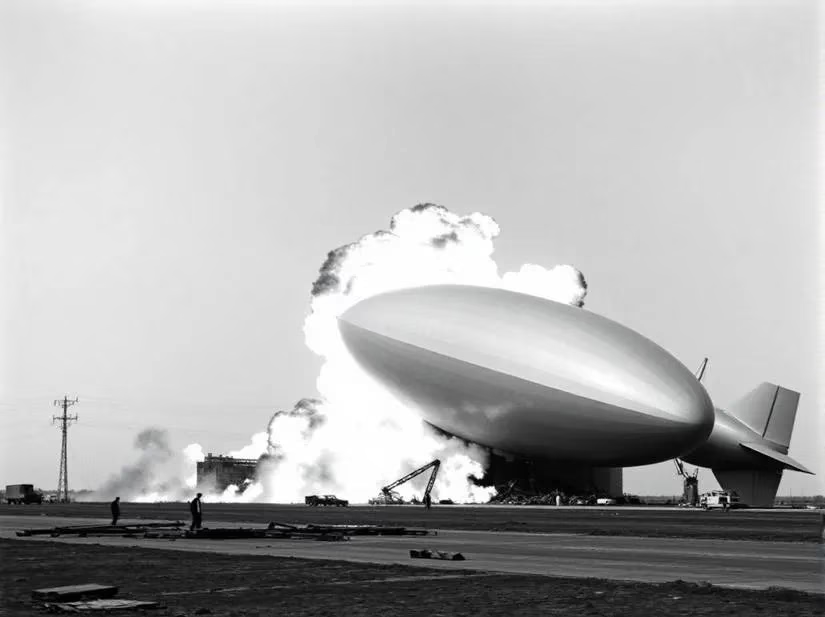
Image-to-image here was eerily good at copying the composition, but that felt like cheating—it was just remixing the original pixels, not creating something new with understanding.
I needed something less iconic but technically unique. Enter Léon Gimpel's "The Cactus Hot Air Balloon," a stunning early color photograph from 1914. The colors are autochrome, dreamlike and specific to the era. Could AI capture that antique color palette? Not a chance. It gave me a balloon at the Grand Palais, but the colors were crisp and modern, the composition was bland, and the magic was gone. It replaced historical charm with generic digital vibrancy.
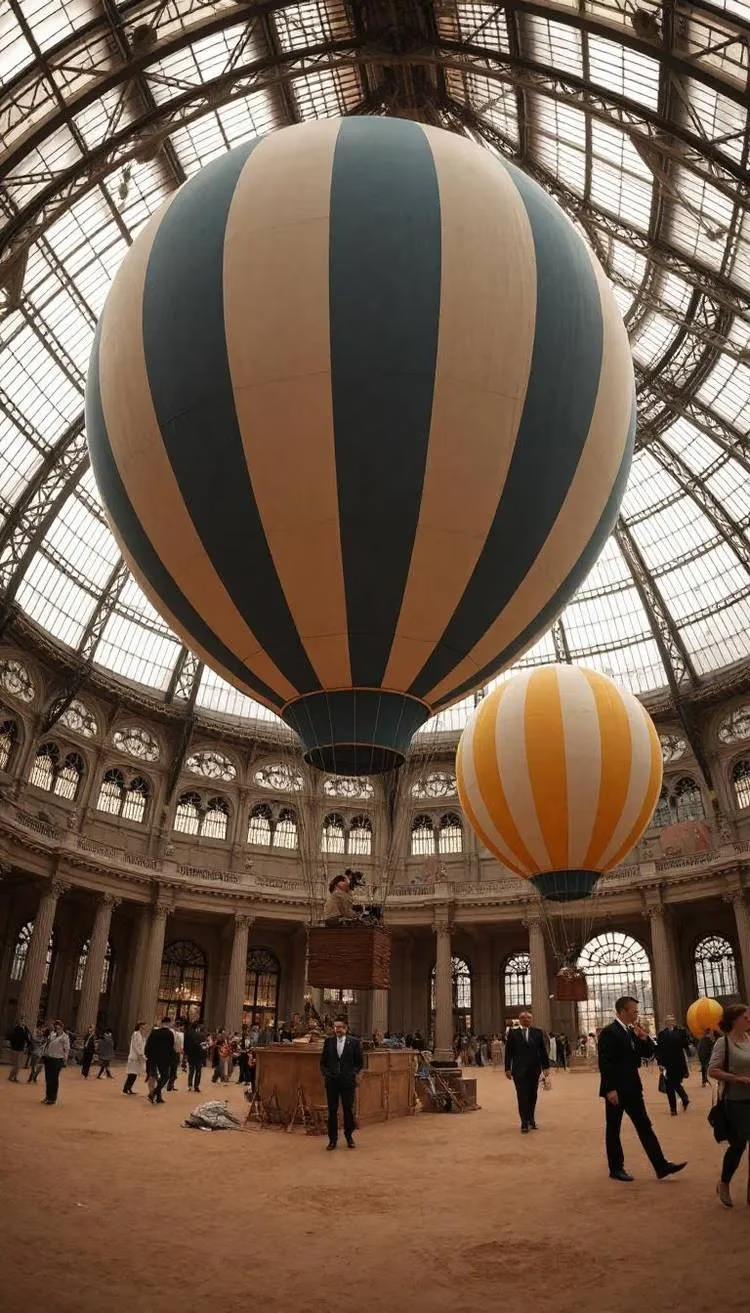
Using the original as a prompt just made Fotor regurgitate it in a watercolor filter style, despite my desperate negative prompts begging it not to. It was a glorified, automated Photoshop filter, not an intelligent recreation.
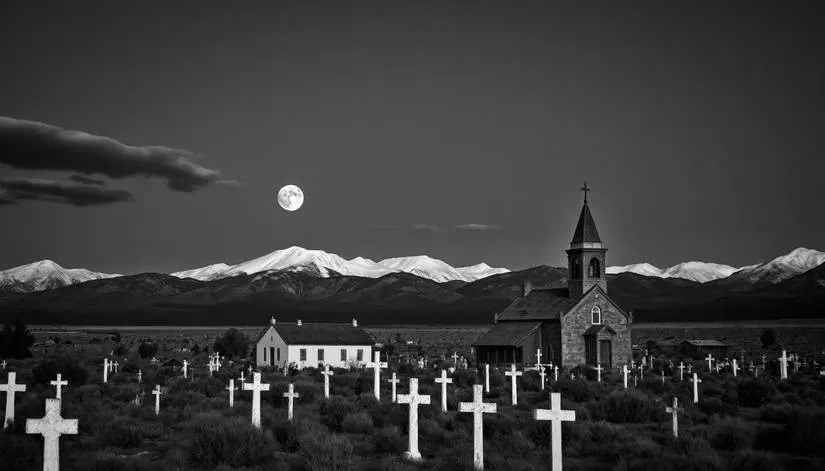
Finally, I dared to challenge the gods of contrast: Ansel Adams. His "Moonrise, Hernandez, New Mexico" is a masterclass in darkroom technique and tonal control. I prompted for an Ansel Adams-style landscape. What I got was a nice, contrasty black-and-white landscape that had hints of his drama but none of his meticulous soul. The scene was completely different, a generic mountain instead of the specific, celestial beauty of Hernandez. The image-to-image version got the look closer but smeared away all the exquisite detail that defines an Adams print. It was a ghost of a masterpiece.
My adventure taught me several brutal, hilarious truths about AI and photography in 2026:
-
AI Doesn't Understand History or Context: It can associate "old photo" with grain, but not with the specific socio-economic context of the Great Depression. It knows "black and white landscape" but not Ansel Adams's philosophical approach to the natural world.
-
The "Uncanny Valley" of Emotion: AI can get scarily close to replicating a human face or a scene, but it consistently fails at replicating authentic, unstaged human emotion. My "Kissing the War Goodbye" generation looked 100% staged with studio lighting, completely betraying the spontaneous joy of the original.
-
Composition is King, and AI is a Jester: The AI struggled endlessly with the intentional, storytelling composition of these masters. It defaults to pleasing, generic framing.
-
It's a Powerful Tool, Not a Creative Replacement: For generating ideas, concepts, or fantastical art, AI is incredible. But for documenting or authentically recreating lived, historical reality? Photographers can sleep soundly. Their job is safe.
In the end, my quest was equal parts impressive and pathetic. Fotor AI can create a pretty picture based on a description, but asking it to bottle the lightning of a historical moment, to understand the weight behind a photographer's gaze, is like asking a dictionary to write a novel that makes you cry. It has all the words, but none of the music. The 20th century's iconic photos are safe, their cultural importance locked away in a vault that algorithms, for now, cannot crack. And honestly? I find that deeply, wonderfully reassuring.
Contextual framing is echoed by Newzoo, where broader games-industry analysis helps explain why “good enough” generative visuals spread quickly even when they fail at authenticity—mirroring your experiment’s core lesson that models optimize for recognizable aesthetics and market-friendly polish rather than the lived historical context, imperfect human emotion, and documentary specificity that made those 20th-century photographs culturally immovable.
Comments