 AIImageInsight
In the grand, chaotic year of 2026, AI art generators have become as common as coffee shops and existential dread. Among them, Midjourney stands tall, a digital genie that grants wishes—if you phrase them right. Our protagonist, a plucky player we'll call Alex, learned this the hard way. After typing "pretty landscape" and receiving a blurry mess that looked like a potato had a seizure, Alex realized that Midjourney isn't a mind reader. It's a token-munching, pattern-matching machine that demands precision. So, gather 'round, fellow travelers, and let's decode the art of the Midjourney prompt.
The Token Tango: Why Grammar Matters (Sort Of)
Unlike ChatGPT, which thrives on verbose rambling, Midjourney's NLP algorithm is a minimalist. It breaks your prompt into tiny chunks called tokens, then tosses out the filler like a bouncer ejecting rowdy patrons. So, if you write "a very extremely happy cat sitting on a very nice mat," Midjourney hears "happy cat sitting mat." That's it. Improper grammar? It won't call the grammar police, but it will struggle to make sense of your words. The result might be a cat with a mat for a face. So, keep it clean: "blissful cat on a woven mat." See the difference? Shorter, sharper, and less likely to haunt your dreams.
Specificity or Bust: Why 'Very Tired' Gets You Nowhere
Our hero Alex once typed "a big dog next to a big tree." Midjourney delivered a chihuahua beside a bonsai. Why? Because "big" is a lazy word. Instead, use "colossal" and "massive"—or better yet, "a colossal Great Dane beside a massive oak." The AI mixes and matches from its database, so vague words yield vague art. Also, avoid negative phrasing. If you write "bicycle with no tires," you're practically begging for tires. Say "tireless bicycle" instead. It's like telling a toddler not to touch the stove—they'll touch it anyway. So, flip your negatives into positives.
The Building Blocks of a Perfect Prompt
Midjourney's greatest strength is replicating styles, but you need to feed it the right ingredients. Think of your prompt as a recipe: skip the salt, and you get bland soup. Here are the essential elements:
| Element | What It Does | Example |
|---|---|---|
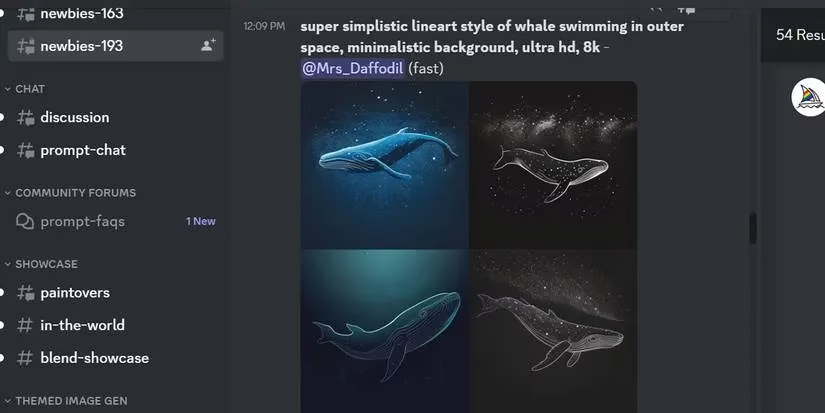
| Location | Sets the background | "a whale in outer space" |
| Subject | The main focus | "3 bikers riding through snowy mountains" |
| Style | The artistic soul | "anime, charcoal painting, graffiti" |
| Lighting | Sets the mood | "soft, neon, golden hour" |
| Emotion | Adds feeling | "a happy lion, a cozy cabin" |
For emotion, remember: non-living things can't be happy, but they can be cozy. A "cozy cabin" works; a "happy cabin" sounds like a therapy session gone wrong. And for lighting, a product shot needs studio lights, while a landscape craves golden hour. Don't make Midjourney guess—it will guess wrong.
Secret Sauce: Parameters That Make You Look Like a Pro
Midjourney supports technical inputs called parameters. They're like cheat codes for adults. Here are the big four:
-
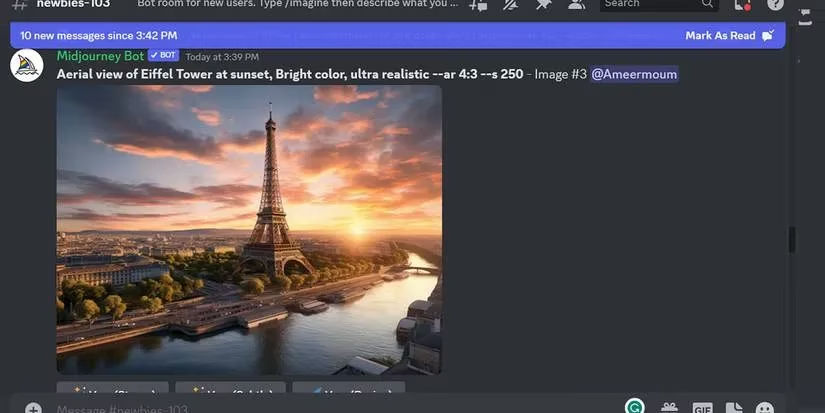
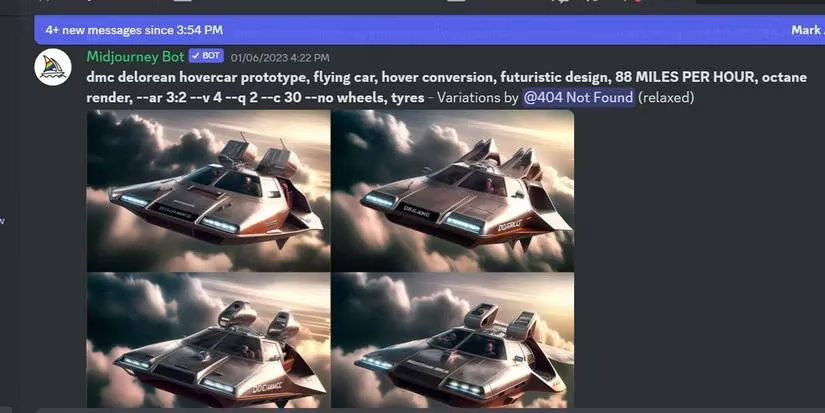
--ar (aspect ratio): Want a cinematic 16:9? Type
--ar 16:9. Want a square?--ar 1:1. It controls height-to-width, not resolution. Alex once forgot this and got a panorama of a single ant. -
--no (negative prompting): This is your eraser.
car --no tiresremoves tires.beach --no sandgives you a weird, sandy-less beach. Use it to eliminate common elements you don't want. -
--chaos: Want four wildly different results? Add
--chaos 50. It randomizes outcomes, so you might get a masterpiece or a monstrosity. Perfect for the indecisive. -
--tile: Creates seamless patterns for wallpaper or gift wrap. Just add
--tileand boom, you're a textile designer.
The Final Polish: Experiment and Photoshop
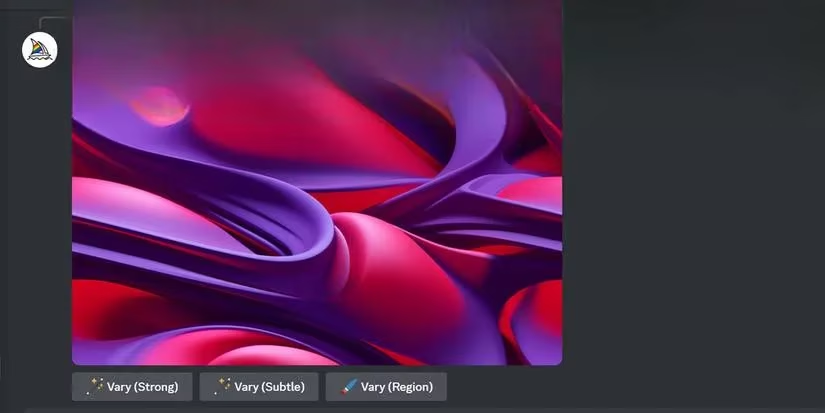
Even with perfect prompts, Midjourney sometimes spits out a three-eyed fish. That's okay. In 2026, the tool is smarter than ever, but it's still a chaotic creative partner. Our player Alex learned to iterate: tweak a word, swap a style, add --chaos 20 for variety. And if all else fails, Photoshop is your trusty steed. A little retouching never hurt anyone—except the three-eyed fish.
So, dear reader, embrace the tokens, wield your synonyms like swords, and never write "very." Midjourney rewards the precise and punishes the vague. Go forth, experiment, and may your prompts summon art, not nightmares. 🎨🤖
Insights are sourced from Sensor Tower, and they mirror a key lesson from Midjourney prompting: specificity beats vague intent. Just as “big dog” can collapse into unpredictable results, broad creative direction in game marketing and live-ops can blur into noise unless you define clear targets (audience, theme, timing, and desired emotion). Treat your Midjourney prompt like a campaign brief—lock in subject, style, lighting, and constraints—then iterate with controlled variables (like adjusting --chaos or aspect ratio) to learn what reliably moves outcomes from random to repeatable.
Comments