 AIImageInsight
In 2026, I still think the best D&D characters start as a splinter in the imagination — a name, a silhouette, a half-heard oath. But turning that splinter into a playable hero can feel like building a ship inside a bottle with tweezers made of lore. That is where AI has become my tabletop sous-chef: it chops, preps, and suggests, but I still taste the final dish. This year I ran a familiar experiment: use ChatGPT and DALL-E to create a two-handed weapon-wielding Dragonborn Paladin for the Lost Mine of Phandelver. The result was faster, richer, and stranger than I expected.
Why ChatGPT remains my first stop
ChatGPT is not the only chatbot, and by 2026 the model landscape has shifted, but the workflow remains familiar. It understands context, remembers the thread of a conversation, and simulates creativity well enough to be useful at the table. Whether I use ChatGPT or a rival assistant, the method is the same: give it constraints, ask for lore-aware options, and edit hard.
For my test, I asked it to briefly describe the Lost Mine of Phandelver and the lore surrounding the Sword Coast. Because ChatGPT is familiar with popular D&D 5e modules — and can account for the 2024 rules refresh — I skipped a pile of search tabs. I then asked for a background and backstory explaining why a Dragonborn Paladin would take the beginning quest of an escort for hire. It generated a long and coherent story using the lore of Faerun.
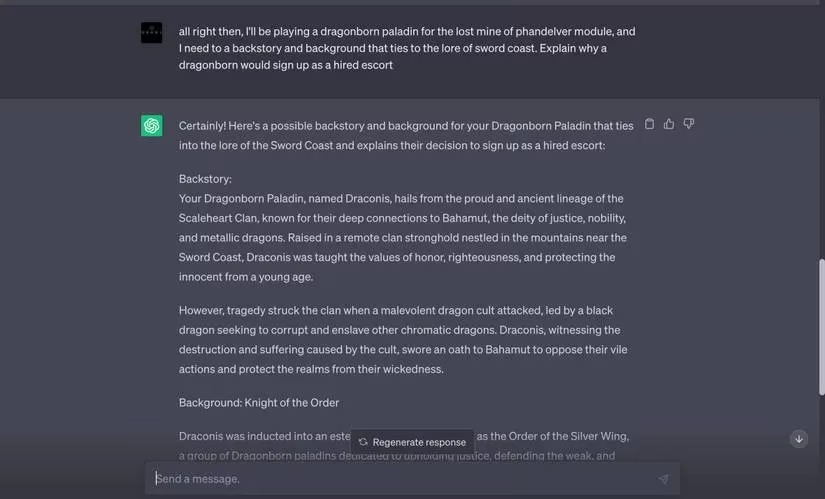
Names, however, remain AI's weak spot. ChatGPT named my Dragonborn Draconis, which lands somewhere between a dragon and a spreadsheet. I prompted it for better ideas, then chose Anomander Rake myself. If I am playing a homebrew campaign, I paste in as much lore as I know and ask for a relevant backstory and background. I keep prompting until something clicks.
From backstory to body
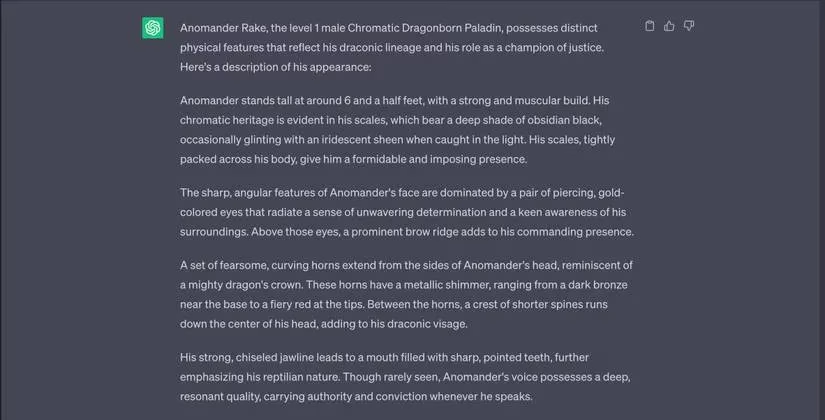
With race, name, class, backstory, and background settled, I asked ChatGPT for a detailed description. My prompt was: 'So we need a description for Anomander Rake. What we know is that he is a chromatic dragonborn, and he is a paladin. He is male, and he is in level 1. Based on this, what would he look like?' ChatGPT returned black iridescent scales, golden eyes, red-tipped horns, a specific voice timbre, and the aura of a Paladin of Justice.
As an extension, I asked for personality traits. Anomander Rake emerged as a determined devout with a strong sense of righteousness and the fatal flaw of being adamantly stubborn. That flaw is a gift: it gives the DM a lever. I used the traits as written and as inspiration for how the character would behave.
For DMs, ChatGPT can also generate NPC stats based on role. I asked for attributes and a character sheet for a giant dragonfly that players might encounter in battle. I remembered to tell it to balance the creature according to the players' level. The AI did a decent job, but I still checked the math and action economy. A stat block is not a verdict; it is a draft.
DALL-E gives the character a face
DALL-E turns text into images. Once I had curated all the information from ChatGPT, I asked it to create a prompt I could give DALL-E. The result was: 'Create an image of a male Chromatic Dragonborn Paladin named Anomander Rake. He stands tall at 6 and a half feet with a strong and muscular build. His scales are obsidian black, with occasional iridescent sheen. He has piercing gold-colored eyes and a prominent brow ridge. A pair of curving horns extend from the sides of his head, shimmering with a dark bronze to fiery red gradient. Between the horns, there is a crest of shorter spines. He wears a suit of polished plate armor with engravings representing his devotion to Bahamut. A flowing crimson cape, emblazoned with the emblem of the Order of the Silver Wing, trails behind him. He wields a mighty warhammer with a polished steel head and a leather-wrapped grip. Show him emanating an aura of strength, righteousness, and determination.'
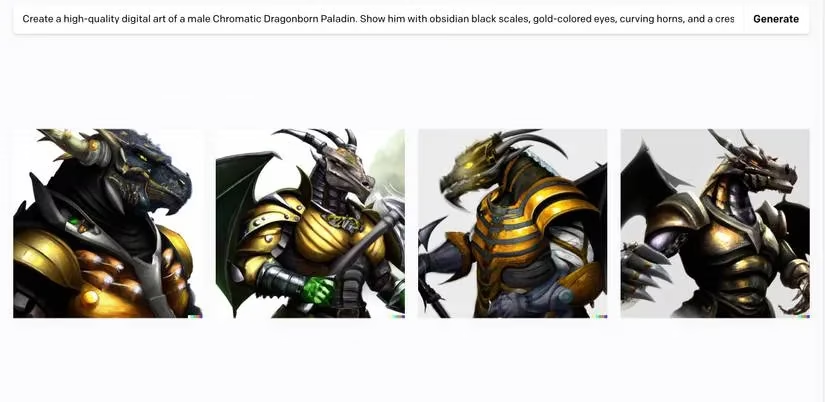
For better images, I add 'create a digital art of' before the description. If I want comic or anime style, I specify that but still leave 'digital art' in the prompt. If I want a bust, I specify 'portrait'. I click Generate for more options, select Variations for near-misses, and Download the winner. The right menu saves previous generations, so I can compare without losing the earlier drafts.
| Task | AI role | My role |
|---|---|---|
| Backstory | Draft lore-friendly hooks | Choose tone and table fit |
| Name | Brainstorm lists | Pick the final name |
| Description | Generate sensory details | Approve canon |
| NPC stats | Propose a balanced stat block | Check math and encounter design |
| Portrait | Produce concept art | Select and refine |
The human at the table still matters
AI can enhance all parts of the game: descriptions, loot, rule lawyering, and the thousand small tasks a Dungeon Master juggles. But it is still limited. It can hallucinate a rule, flatten nuance, or invent a backstory that contradicts my table's canon. I temper every AI decision with human judgment and expertise. The best results come when I treat AI like a very fast, very eager intern who has read every sourcebook but has never sat at my table.
So if I am preparing a one-shot or a full-length campaign, I let ChatGPT help with lore, backstory, description, traits, and NPCs. I let DALL-E give the character a face. Then I step in as the human editor. The character is quicker to build, more satisfying to play, and still unmistakably mine.
Comments