 AIImageInsight
The line between human artistry and machine-generated sound has never been blurrier. In 2026, artificial intelligence composes everything from ambient background tracks to chart-topping pop songs in seconds. The viral sensation of “Heart on My Sleeve” — a track that convincingly cloned the voices of Drake and The Weeknd — was just an early tremor in an earthquake that continues to reshape the music industry. While generative tools have existed for decades, their accessibility today means anyone can create a polished song with minimal effort. Identifying whether a track emerged from a human throat or a neural network is no longer a niche curiosity; it is a necessity for platform integrity, copyright protection, and listener trust. Fortunately, a growing arsenal of detection methods and software can help.

The Clues Hidden in the Sound
Before turning to dedicated tools, trained ears can sometimes catch the fingerprints of synthetic audio. AI-generated vocals, when played at normal speed, may exhibit subtle mechanical rigidity. Consonants can glitch, vibrato may feel unnaturally consistent, and breaths might appear in odd places or not at all. Playback manipulation is a simple DIY test: if a listener slows down a track using a tool like TimeStretch, synthetic voices often reveal jagged transitions or lose coherence in ways that a human performance does not. Conversely, speeding up a song may introduce high-frequency artifacts unique to neural synthesis.
However, these anomalies are not foolproof evidence. Overzealous pitch correction, lossy compression, or genuine editing mistakes can produce similar quirks. As voice cloning models become more sophisticated — diffusion-based generators in 2026 can replicate micro-timing and emotional nuance — manual detection alone is increasingly unreliable. This is why both streaming services and standalone applications have stepped in.
How Platforms Battle Invisible Impostors
Major music services have embraced detection as a safeguard. Deezer announced its tracking project back in 2023, and by 2026 the platform automatically flags suspected AI uploads and routes them for human review. Spotify and Apple Music reportedly integrate acoustic fingerprinting algorithms that compare new tracks against databases of known synthetic signatures. These systems scan for consistent sample-level artifacts, metadata inconsistencies, and rhythmic patterns that deviate from human performance norms. When listeners suspect an AI-generated track is passing as original, they can now use one-click reporting features that trigger deep analysis, putting pressure on distributors to verify authenticity.
Dedicated AI Music Detection Tools
A handful of specialized detectors have emerged, each with its own approach to separating the real from the replicated.
AI Voice Detector
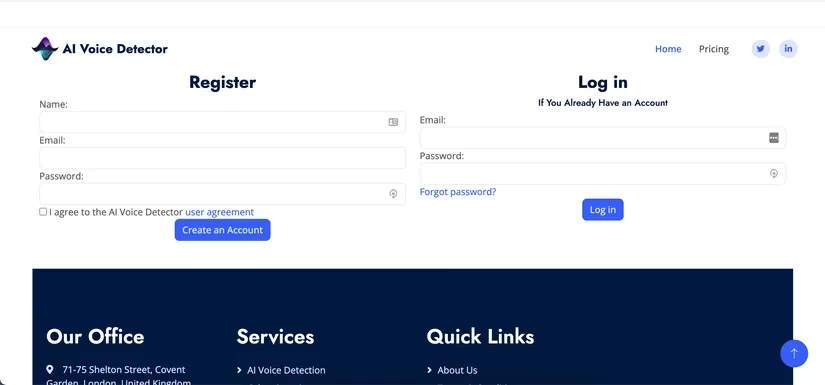
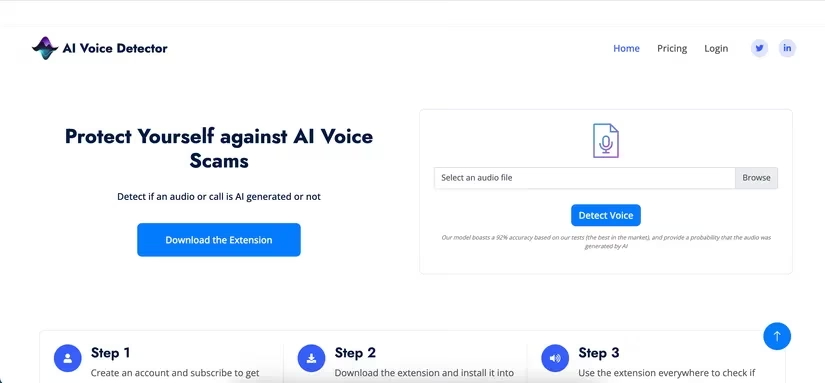
Widely regarded as one of the most precise commercial solutions, AI Voice Detector analyzes uploaded files for subtle markers left by speech synthesis engines. Users can submit recordings in various formats — MP3, WAV, FLAC — and receive a probability score within seconds. The service operates on a subscription model (currently around $24.99 per month, with annual plans available) and also offers a browser extension for rapid checking while browsing platforms. Its strength lies in recognizing telltale spectral patterns that even advanced voice cloners struggle to mask completely.

To use the tool, one simply navigates to the website, uploads the audio file, and waits a few moments while the algorithm dissects the waveform. Results display clearly whether the voice is likely human or machine-made, accompanied by confidence metrics.
PlayHT AI Voice Classifier
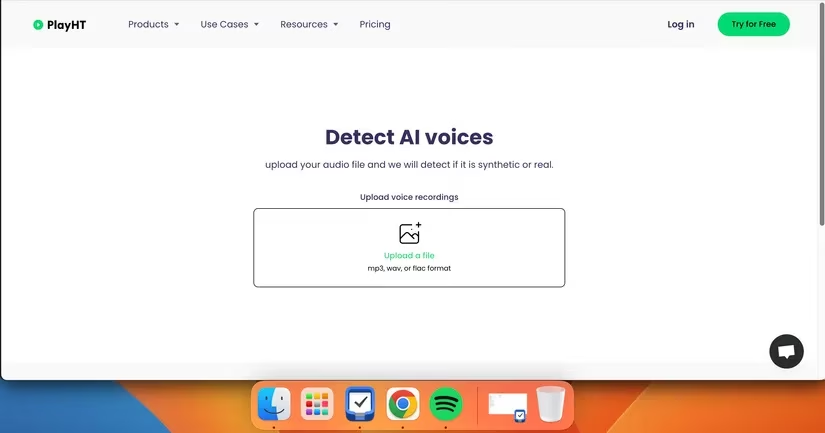
Originally a platform for generating synthetic speech, PlayHT has expanded into detection with a free, no-login tool. By dragging and dropping an MP3, WAV, or FLAC file onto the webpage, users can quickly determine whether a recording contains AI-generated audio. The analysis takes only a few moments and delivers a straightforward verdict. This accessibility makes it a popular first stop for casual listeners or content creators who want to verify voiceovers without committing to a subscription.
TimeStretch: The Speed‑Shifting Detective
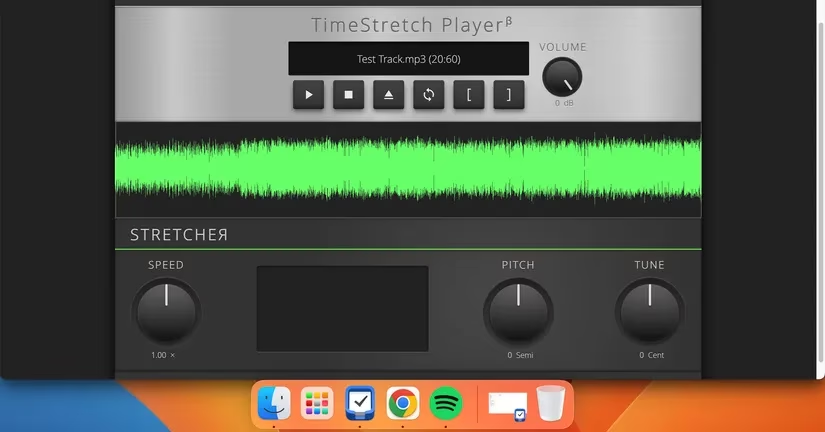
Because dedicated detection tools are still relatively scarce in 2026, creative workarounds persist. TimeStretch is a free web application originally designed for tempo adjustment, but it has become a valuable ally in uncovering synthetic vocals. By dramatically slowing or accelerating a track and listening for inconsistencies, users can often expose the characteristic fractures of AI-generated singing — harsh formant jumps, unnatural sustain decay, or timing jitter. The tool features intuitive sliders for speed, pitch, and tuning, allowing real‑time auditory inspection. While not a classifier in the traditional sense, it empowers listeners to perform manual diagnosis with a level of control that simple media players lack.
Comparative Overview
| Tool | Pricing | Key Mechanism | Best For |
|---|---|---|---|
| AI Voice Detector | $24.99/mo or $200/yr | Spectral pattern analysis | Professional verification |
| PlayHT Classifier | Free | Neural artifact detection | Quick, no‑signup checks |
| TimeStretch | Free | Manual speed/pitch inspection | DIY audio forensics |
Looking Ahead
As synthetic music generation continues its exponential improvement, detection will evolve into a deeper layer of digital watermarking and provenance tracking. Initiatives like the Coalition for Content Provenance and Authenticity (C2PA) are already embedding cryptographically secure metadata into media files, which could eventually allow platforms to verify a track's origin instantly. For now, the combination of automated analysis tools, platform-level monitoring, and old‑fashioned critical listening remains the best defense against being deceived by a machine’s song. Anyone who values the human touch in music should keep these resources within reach — because in 2026, not every voice that moves you comes from a beating heart. 🎵🔍
Comments