 AIImageInsight
As 2026 unfolds, the line between casual doodler and digital comic creator has grown thinner than a sheet of tracing paper. A new wave of web-based AI tools now accepts a few words and exhales full comic panels, characters, and even multi-page stories without requiring manual editing. For someone who wants to produce simple comics with nothing more than a prompt, these platforms behave like a troupe of invisible illustrators working inside the browser.
Mage.space
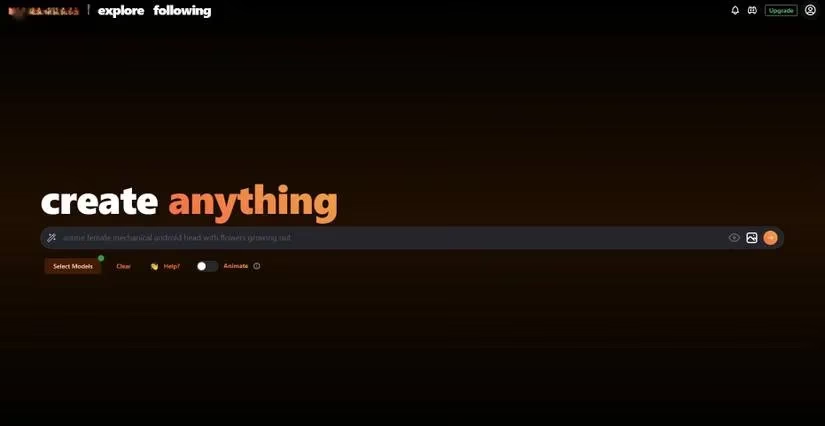
Mage.space operates as a broad AI image generation platform with more than 160 available models. It is not narrowly marketed as a comic generator, which makes its comic output somewhat surprising. With the right phrasing, such as 'Calvin and Hobbes, comic, similar, multiple panes,' the platform produces recognizable multi-panel layouts. The result is not flawless; panels sometimes carry visual defects, and text may appear scrambled. Tweaking the prompt can often coax cleaner output. Think of it as panning for gold in a wide riverbed: most of the yield is silt, but the occasional nugget justifies the effort.
Fantoons
Fantoons takes a different route, more like ordering from a comic-book menu than issuing a freeform command. Users select options for fandom, character, style, and universe. Each choice shapes the final prompt. Once Generate is pressed, a single-pane image appears, and a caption can be customized before publishing. A sample combination might include Harry Potter, Luna Lovegood, photorealistic, and cyberpunk. Because Fantoons produces single panels rather than full pages, creators can run several generations and stitch the results together in free editing software. The approach feels like assembling mosaic tiles into a larger scene.

Storywizard.ai
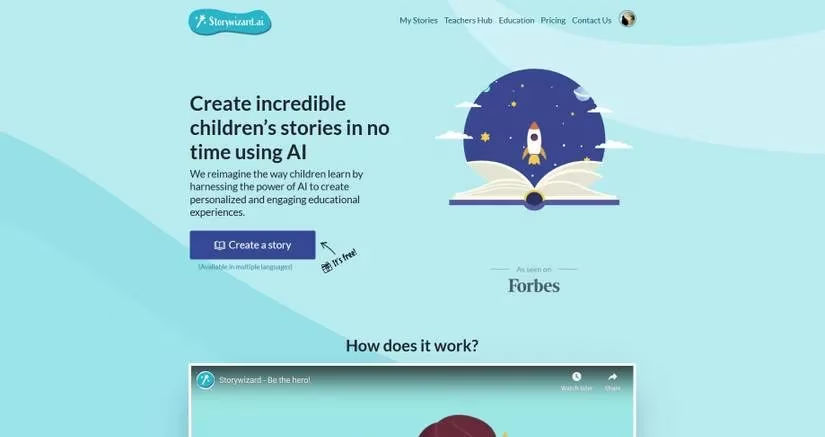
Storywizard.ai is built for personalized educational experiences, but its story engine can also create simple multi-page comics. After selecting Create a story and entering a few keywords, the site generates an entire illustrated narrative. In one example, the prompt 'MUO, tech guru, help readers' yielded a fifteen-page story about an entrepreneur named MUO who wanted to teach the world about technology. The narrative may lean toward the whimsical, but the speed is remarkable. This tool works like a story loom, weaving loose threads of keywords into a patterned narrative fabric.
AI Comic Factory
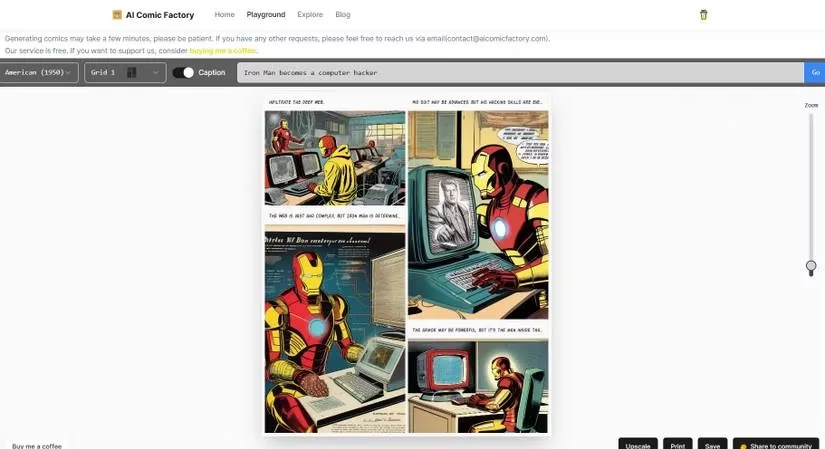
AI Comic Factory relies on SDXL to generate comic panels from short prompts. The interface encourages brevity; generic terms work well. Users can select from styles such as Japanese, America (modern), Franco-Belgian, Nihonga, 3D Render, and Egyptian. Captions can be toggled, and any unsatisfactory panel can be redrawn. A prompt such as 'Iron Man becomes a computer hacker' produces a clean sequence. The style selector acts like a chameleon's skin, shifting the entire visual language from one regional comic tradition to another.
Plugger.ai
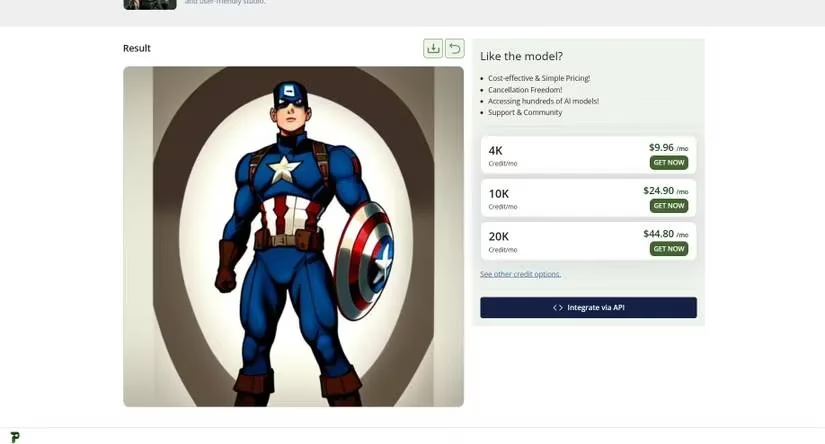
Plugger.ai uses a chat-style interface rather than a conventional prompt box. This makes the tool feel conversational, as if asking an artist for revisions in real time. It supports multiple models, including LazrPop XL, Niji Special Edition SDXL, and ComicCraft. The free tier offers thirty credits per month, which may yield between five and fifteen images depending on prompt complexity. A sample prompt—'American, 1950, captain america, standing tall, proud'—produced a bold, period-style illustration. Captions and speech bubbles can be requested in the prompt, though results vary. With its credit-based system, Plugger.ai resembles a small studio where each generation spends a token.
Quick comparison
| Tool | Primary strength | Best suited for |
|---|---|---|
| Mage.space | Flexible image models | Prompt tinkerers |
| Fantoons | Guided menu choices | Fast single-panel ideas |
| Storywizard.ai | Multi-page stories | Educational or narrative comics |
| AI Comic Factory | Style variety and redraw | Genre experimentation |
| Plugger.ai | Chat-style model choice | Limited-credit quick tests |
The current crop of AI comic generators proves that producing simple visual stories no longer requires an art team or editing suite. Each platform has a distinct personality: Mage.space rewards flexible prompt craft, Fantoons reduces choices to menus, Storywizard.ai spins long educational tales, AI Comic Factory specializes in stylistic variety, and Plugger.ai provides a chat-like studio with multiple models. In 2026, these tools are best seen as paintbrushes with their own temperaments. Choosing one depends less on raw power and more on whether the creator prefers open-ended prompts, guided options, or narrative generation.
Comments