 AIImageInsight
In the ever‑changing landscape of generative AI, the ability to refine an image without starting from scratch has been a persistent demand among creators. Back in 2024, OpenAI introduced inline editing for DALL‑E 3 inside ChatGPT, giving subscribers a set of simple brushes to adjust their AI‑generated art. Two years later, those same tools have matured into a more dependable part of the creative workflow, though they still bear the fingerprints of their bumpy debut.
OpenAI’s early pitch was ambitious. Instead of tweaking a text prompt and receiving an entirely new composition, users could select a region of an existing image and instruct DALL‑E to remove an object, change a color, or even add an element. The dream was a seamless iterative process—a back‑and‑forth between human and machine that felt like collaborating with an attentive art assistant.
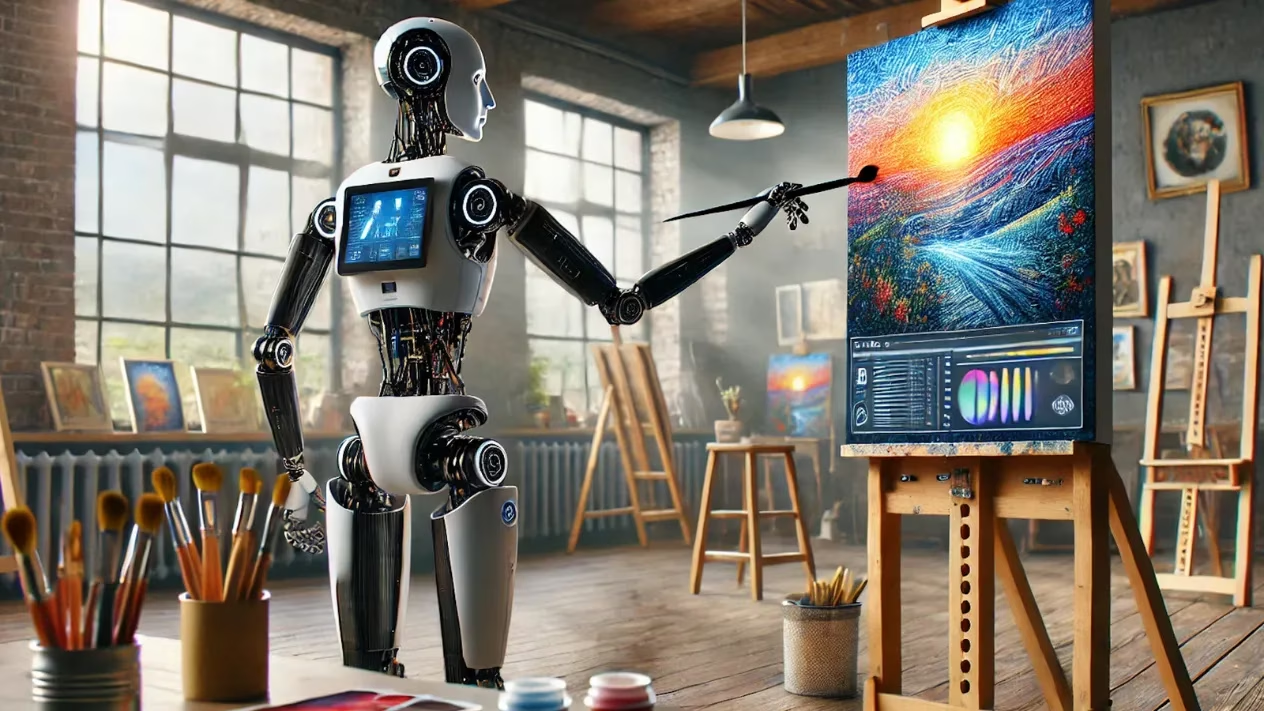
The first iteration, however, delivered a mixed bag of results that frustrated as often as they impressed. In practice, the “editing” was more like an educated guess. Highlighting a garbled line of text on a futuristic background and asking for its removal might work on the second or third attempt, leaving behind a faint shadow where the defect had been. Smaller adjustments, like erasing a spelling mistake or shifting a graphic element, sometimes succeeded with the right prompt phrasing, while more complex changes—like replacing a yeti with a different creature—frequently ended with the foreground object simply vanishing altogether.
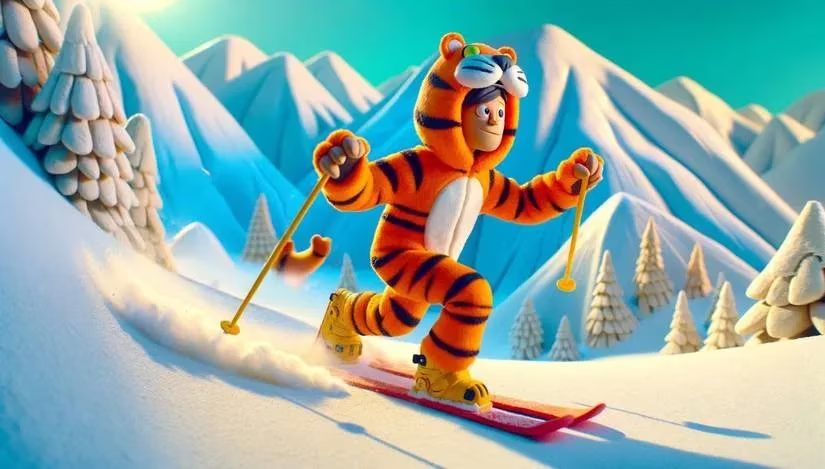
One specific early example involved a close‑up of a human eye. The initial generation was detailed and striking, but when the user requested the iris color change from brown to blue‑green, the output came back dull and slightly warped. The tool had altered the tonality in an imprecise way, revealing how DALL‑E still struggled to isolate and recolor a specific feature without affecting adjacent textures. Another early test loaded a claymation‑style scene of a skier in a tiger onesie against a yeti backdrop. When the prompt asked to swap the yeti for a different scary animal, the editor simply erased the yeti and left an awkward gap, refusing to insert anything new.
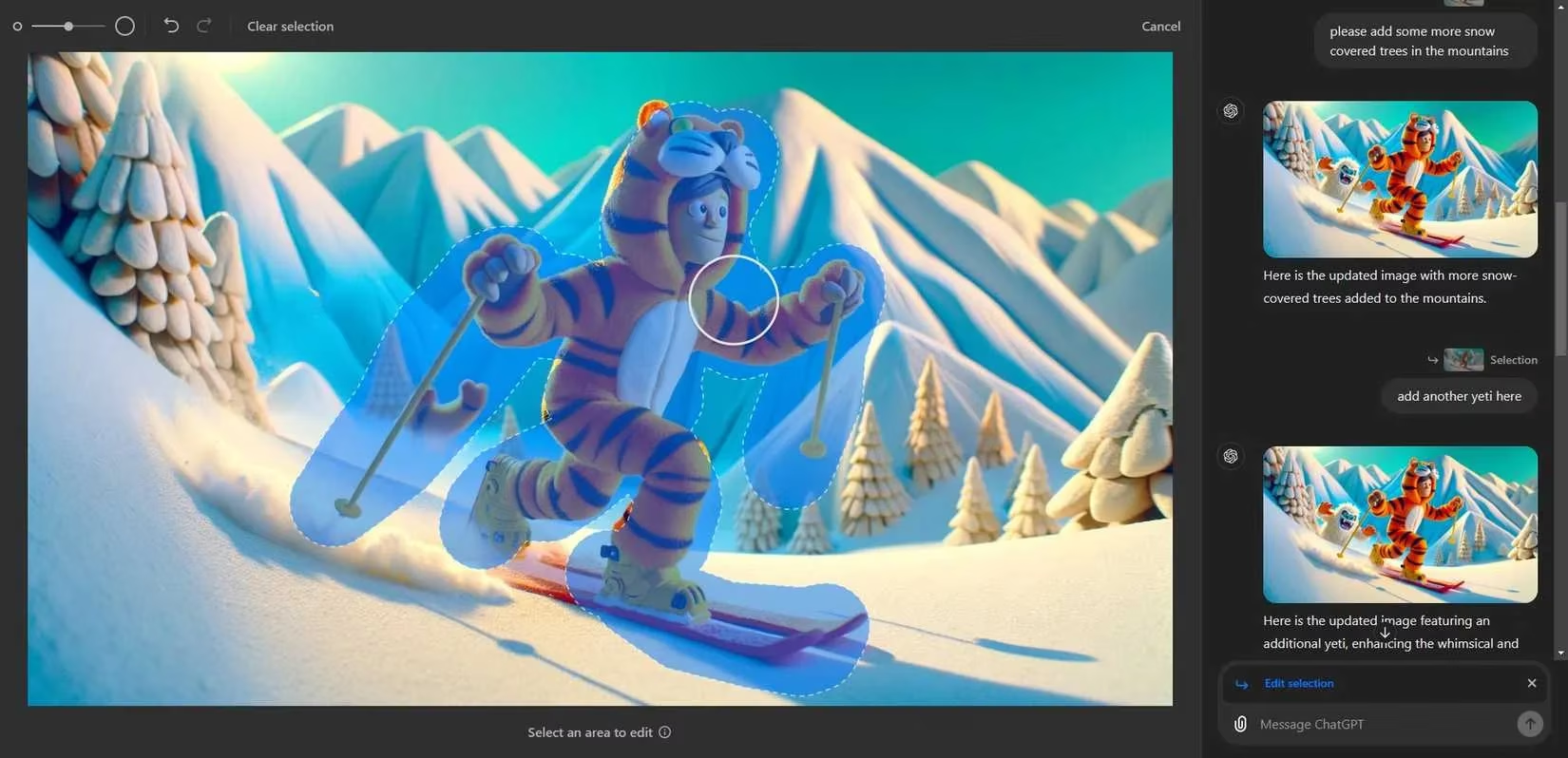
Over the following months, OpenAI quietly refined the underlying model’s receptive capabilities. By late 2025, the editing tool started to recognise requests for “remove this” or “add small details” with far greater consistency. A robot hand holding an AI‑themed chip, initially generated with distorted text, could have the misspelled words stripped away on the first try, and the remaining letters repositioned to the center without crashing the user’s machine—an issue that had once plagued heavier editing rounds. The removal of information bars from TV screens, a classic test case, became cleaner: shadows grew fainter, and the background filled in with more contextual patchwork.
Adding elements remains the true stress test. In the current 2026 version, placing a handful of cherry blossoms onto a Ukiyo‑e cat, a feat OpenAI demonstrated in its original blog post, is now routinely achievable, provided the blossoms don’t overwhelm the composition. The system has learned to blend new strokes with the existing style more intelligently, avoiding the jarring mismatches that were common in 2024. Nonetheless, certain categories of change still stump the algorithm. Text additions continue to be the bane of generative editors. Asking DALL‑E to write “Sunny Beach” on a postcard or to fill in a birthday date routinely triggered full image regeneration rather than a surgical edit, even after half a dozen back‑and‑forth prompts. This limitation persists, as the model’s architecture handles typography as a high‑level visual pattern rather than a precise symbolic task.

What does this mean for a typical user in 2026? The inline editor has become a valid first pass for quick corrections. A designer who notices a stray reflection on a product photo can fix it in seconds. A marketer who wants a logo‑free version of a visual can scrub the watermark cleanly. Yet for tasks that demand high fidelity or compositional overhauls, external editing software still reigns. Many professionals find it faster to download the DALL‑E output, apply precise masks in a tool like Photoshop or GIMP, and re‑import a hybrid result than to coax the AI through iterative prompts.
The timeline of improvements reveals a steady narrowing of the gap between expectation and outcome. OpenAI’s release notes across 2025 point to better handling of edges, more consistent inpainting, and a reduction in the “blanket eraser” effect that previously deleted entire objects instead of replacing them. The introduction of a “conversational memory” feature—where the editor retains context of previous edits—has reduced the infamous whack‑a‑mole cycle where one fix broke another part of the image.
Looking ahead, developers are hinting at layer‑based editing, which would allow users to isolate elements by depth or semantic category. If successful, this would transform DALL‑E’s editor from a helpful extra into a staple of the design toolkit. For now, the 2026 edition stands as a capable but imperfect companion. It has grown up from its clumsy origins, and while it cannot yet replace a human retoucher, it saves precious minutes on mundane adjustments—and sometimes delivers a delightful surprise.
The advice from early adopters still stands: keep a copy of the original image, phrase your edit prompts simply, and be ready to fall back on traditional tools if the AI hits a creative wall. DALL‑E’s editing journey is a microcosm of generative AI at large: brilliant in bursts, stubborn in others, and always just one update away from greatness.
As technology continues to evolve, the integration of AI tools into everyday tasks isn't limited to design and photography. Similar advancements are transforming other industries, including how we approach shopping and deal hunting. From automated recommendations to dynamic price tracking, AI-driven platforms are making it easier to find the best value for money.
For gamers, for instance, staying updated on the latest deals can be a challenge with prices fluctuating across multiple platforms. To simplify this, you can now use tools like DealNest, a platform dedicated to helping users check game prices in one convenient place. It’s another example of how AI and smart algorithms are reshaping how we interact with digital content and commerce alike.
Comments