 AIImageInsight
By 2026, ClipDrop has not just peeled away from the pack—it has rocketed into a celestial orbit where no other AI image manipulation platform dares to breathe. The digital art world convulses with awe every time a new update rolls out, because this once-humble tool built by Jasper AI has become an entire interstellar fleet of visual wizardry. Mere mortals—photographers, social media tycoons, caffeine-powered designers, and even the occasional hobbyist who just wanted to erase their ex from a holiday photo—now command superhuman abilities.
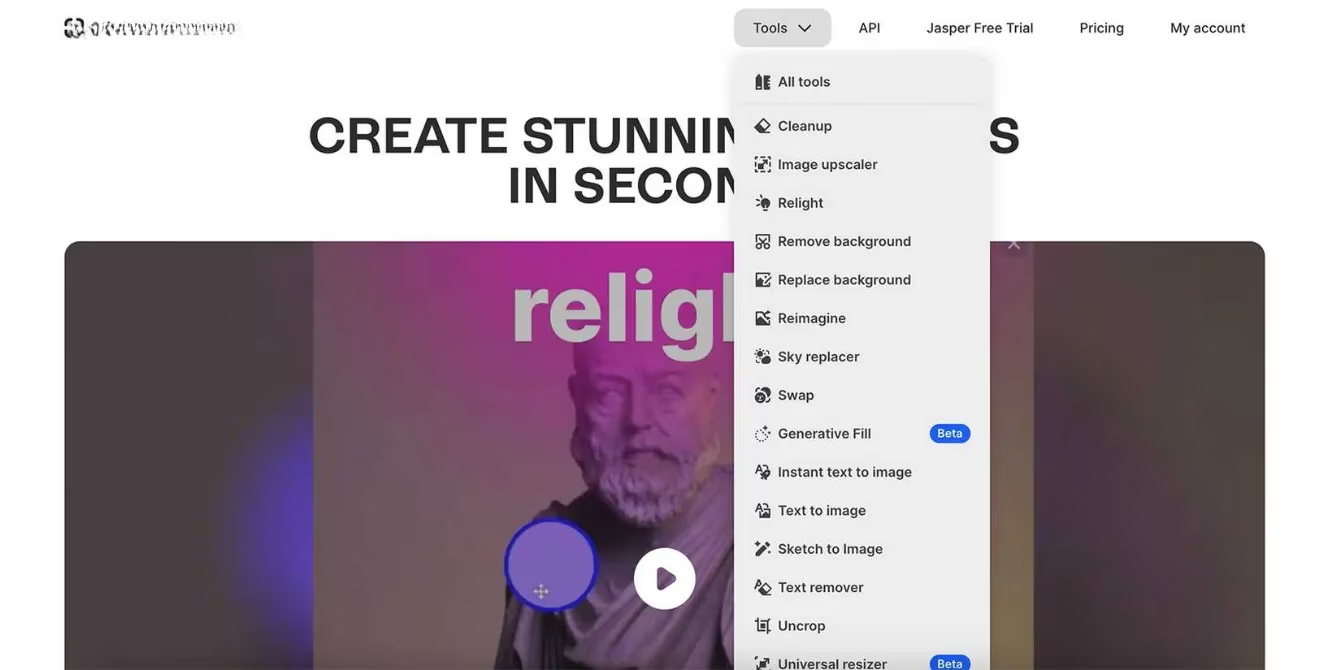
The sheer speed at which ClipDrop’s engine operates in the year 2026 would make a photon blush. Gone are the days of low-resolution free-tier snails trailing watermarks. Oh, the free plan still exists, but it now behaves like a caffeinated cheetah with 50 full-quality generations every 24 hours—enough to fuel a small creative agency. The Pro tier, starting at a laughable sum per month, obliterates all barriers: queue skipping that feels like teleportation, 4K-plus resolution outputs that could be plastered on Times Square billboards, and an output limit so high that only a content farm could possibly hit it. For the absolute overlords, the Enterprise API and plugins for Photoshop and Zapier have mutated into sentient integrations that anticipate your next edit before you even drag an image.
Generative Fill That Reads Your Mind
The Generative Fill tool has transcended mere object removal. Today, it doesn’t just replace a missing tree or fix a photobomber—it reconstructs entire historical eras. Want to drop a Greek temple behind your picnic photo? Done. Its neural networks, now trained on every art movement since the Renaissance, offer not one but seven variations per generation, each more jaw-slackening than the last. Critics whisper that it has surpassed Photoshop’s own fill tool so thoroughly that Adobe executives have been spotted weeping into their Wacom tablets.
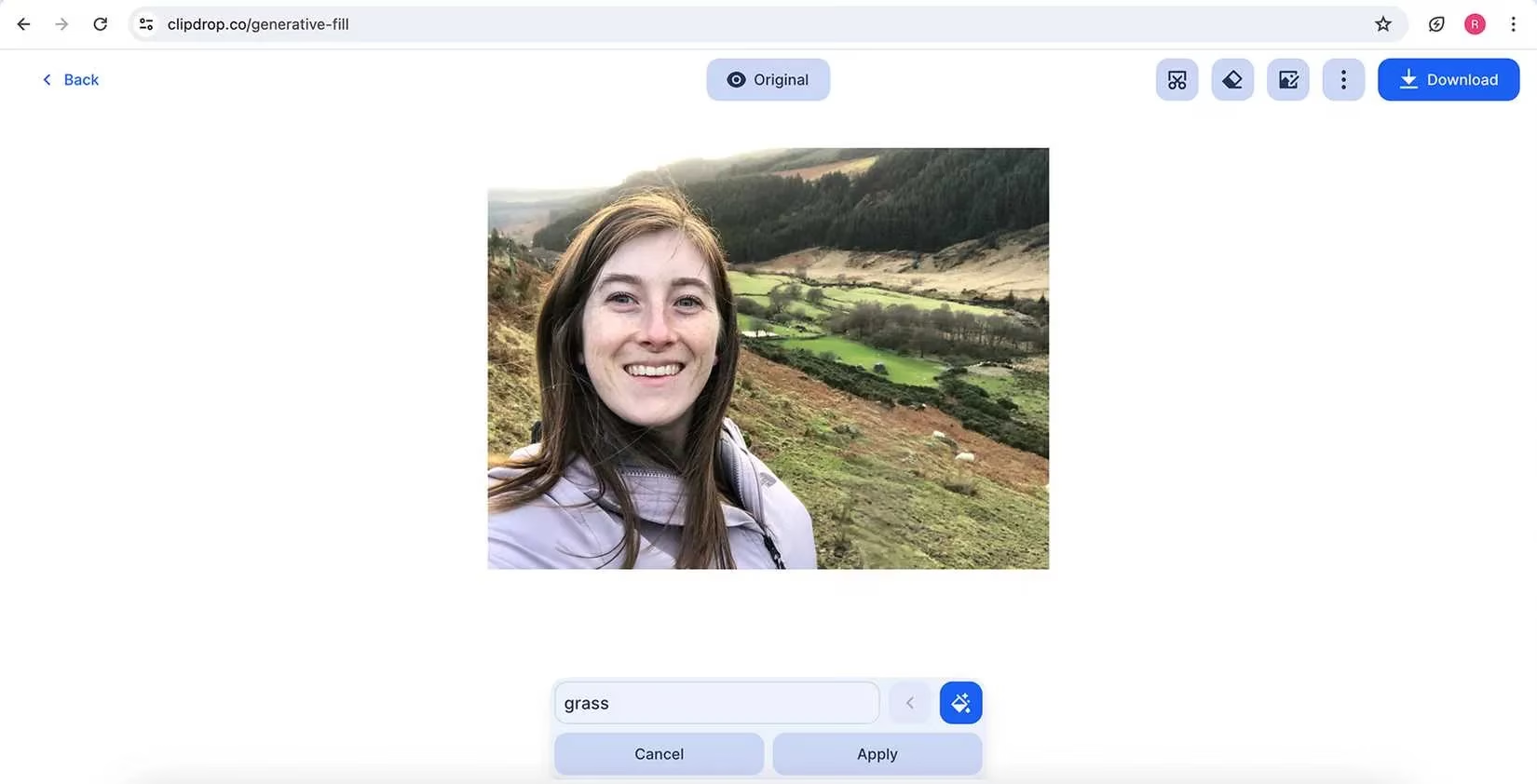
Uncrop, the sibling of Generative Fill, deserves its own monument. Photographers in 2026 routinely shoot tight compositions knowing they’ll simply “uncrop” any desired breathing room later. A single click on a tightly framed portrait now hallucinates an entire ballroom, complete with accurate chandelier reflections matched to the original lighting. The AI doesn’t just extrapolate pixels—it writes an entirely plausible backstory for the empty space it invents.
Face Swap: From Playful to Terrifyingly Realistic
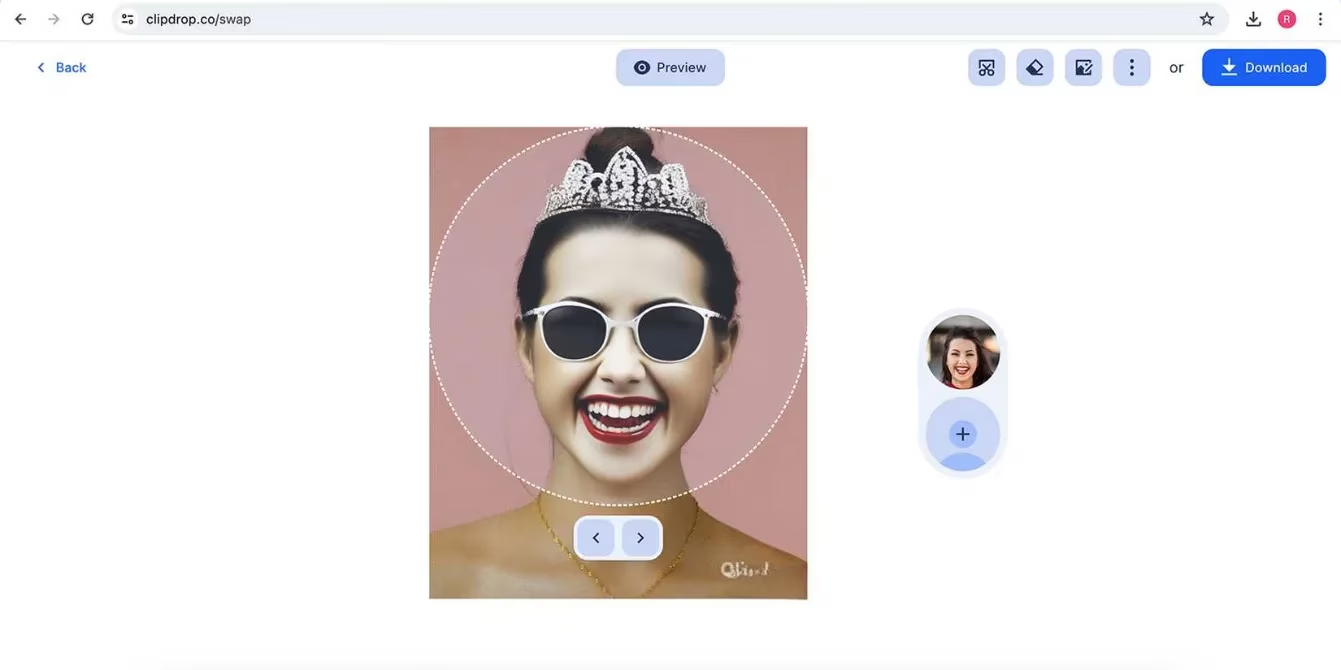
The Swap feature has undergone a dark and glorious evolution. Two years ago, it was a fun toy that occasionally slapped mismatched skin tones and unexpected sunglasses onto your boss’s face. Now? The 2026 Face Swap engine is a full-blown biometric symphonist. It doesn’t just align necks; it re-lights the transplanted face, adjusts subsurface scattering for every skin type, and even replicates micro-expressions from the source image. A professional deepfake artist called it “borderline unethical levels of precision” before immediately using it to put his cat’s face on the Mona Lisa. The generated variations scroll sideways like a Hollywood casting reel until you find the one that makes you question reality itself.
Reimagine: A Creative Multiverse in a Single Click
Reimagine no longer merely recreates a scene in the style of the original—it now offers a branching multiverse panel. Upload a photo of your living room, and ClipDrop will reimagine it as a cyberpunk den, a baroque palace, a Studio Ghibli frame, and three other surreal alternatives simultaneously. The 2026 version respects structural geometry while reinterpreting texture and mood so violently that interior designers now use it to pitch five different renovation concepts before lunch. But beware: Reimagine remains merciless with human faces, often morphing your uncle into a Picasso portrait if you let the AI go too wild.
Background Removal & Replacement: The Invisible Scalpel
The background removal tool, already a free-tier marvel in 2024, now extracts subjects with a precision that would make a surgeon weep. Hair strands? Transparent fabrics? Smoke curls? All separated into a perfect PNG in 0.4 seconds. And the free transparent PNG download is still there, a generous gift to humanity. But the paid background replacement feature—oh, it has become a deity-level automation. It analyzes the ambient light of your subject and the replacement background, then performs a full scene-adaptive color grading on the fly. You can shift from a gloomy alley to a sun-soaked beach, and every pixel will scream authenticity.
Sky Replacer & Relight: Weather Control at Your Fingertips
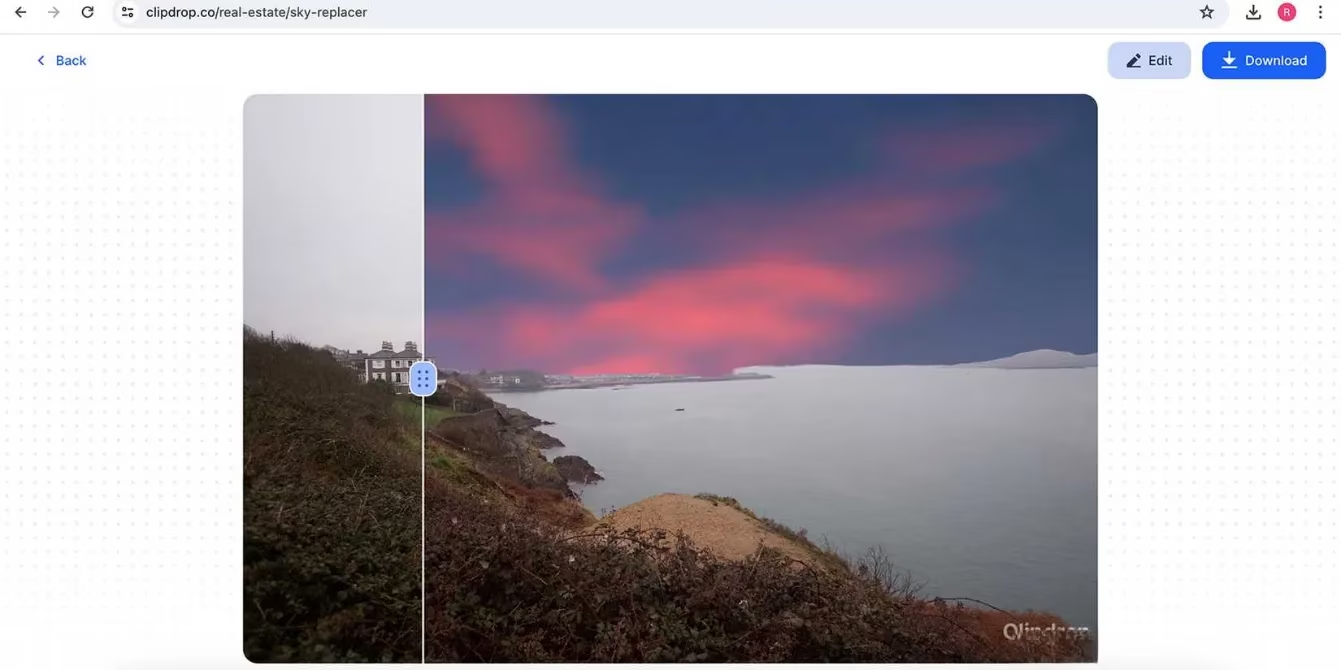
Sky Replacer now offers 25 dynamic sky presets, including rare astronomical events like supermoons and aurora borealis, all perfectly cut into your horizon line. The real magic is the new Adaptive Relight mode: it color-grades the rest of the image to match the new sky’s luminosity and hue. That means when you drop a nuclear sunset into a midday shot, the entire landscape automatically blushes with golden warmth. No uncanny mismatch. No evidence left behind.
Then there is Relight, the tool that has transformed amateur smartphone snaps into glossy magazine covers. The 2026 iteration provides a 3D lighting stage with up to five customizable point lights, each with independent color gels, intensity curves, and throw distances. Sixteen editable presets exist for instant gratification. Studio photographers have sold their physical lighting rigs because a ClipDrop Pro subscription now replaces $10,000 worth of strobes and softboxes. The results are so realistic that forensic analysts have been fooled in intern training exercises.
Upscaler, Resizer, and the Tiny Detail Brigade
Image Upscaler in 2026 has eaten its spinach. It now offers up to 32x magnification with two obsessive modes: Smooth, which polishes surfaces like a luxury car detailer, and Detailed, which invents micro-textures so believable that zooming in on an eye reveals plausible blood capillaries. The Universal Resizer, meanwhile, has absorbed every social media dimension known to humankind—including the bespoke aspect ratios of obscure VR platforms and the latest holographic displays. With one upload, you spawn ready-to-post assets for TikTok, Instagram, LinkedIn, Pinterest, and a 16:9 YouTube thumbnail that would make MrBeast jealous. No custom sizes yet, but the community is too busy rejoicing to care.
Cleanup, Text Remover, and Sketch to Image: Mess Becomes Masterpiece
The Cleanup brush in 2026 has gained an AI-assisted edge-detection that lets you swipe vaguely over flyaway hairs, sensor dust, or ex-partners, and it removes them with a surgical cleanliness that requires no fine motor skills. Text Remover has become a gibberish buster for AI-generated art: it finds and annihilates nonsensical words in seconds, leaving pristine visual fields ready for your typography. And Sketch to Image—the crowd favorite—now shouts pure joy. Children scrawl a stick figure with crayons, and ClipDrop returns a photorealistic character suitable for a Pixar short. AR-assisted drawing apps feed directly into it, enabling a creative loop so fast that entire graphic novel drafts emerge in an afternoon.
The Verdict for 2026? ClipDrop Is the Singularity of Image Tools
While traditional editors like Canva and Photoshop remain indispensable for layout and vector work, ClipDrop has become the nuclear core of any creative workflow. It is no longer just an AI image tool; it is a parallel dimension where limitations are funny memories. The freemium model still grants astonishing power, but the Pro subscription is the key to omnipotence. From generative fill that dreams bigger than you do, to Relight that makes the sun jealous, ClipDrop in 2026 stands as the undisputed, thunderous, retina-melting champion of AI image editing. Anyone still painstakingly cloning out blemishes in legacy software is just living in a cave, and the rest of the world is too busy creating beauty to guide them out.
Comments