 AIImageInsight
In an era where technology threads itself through every fiber of daily life, artificial intelligence has not merely entered the home—it has walked into the living room, surveyed the layout, and whispered a dozen ways to make it better. By 2026, the once-daunting task of redesigning a room has become a playground of possibilities, thanks to a wave of AI-powered interior design tools that cost nothing to try. These platforms act like a digital decorator with the precision of a master painter, transforming a simple snapshot into a curated vision. For anyone hesitant to lift a paintbrush or rearrange a sofa, these apps serve as a gentle hand guiding the way.
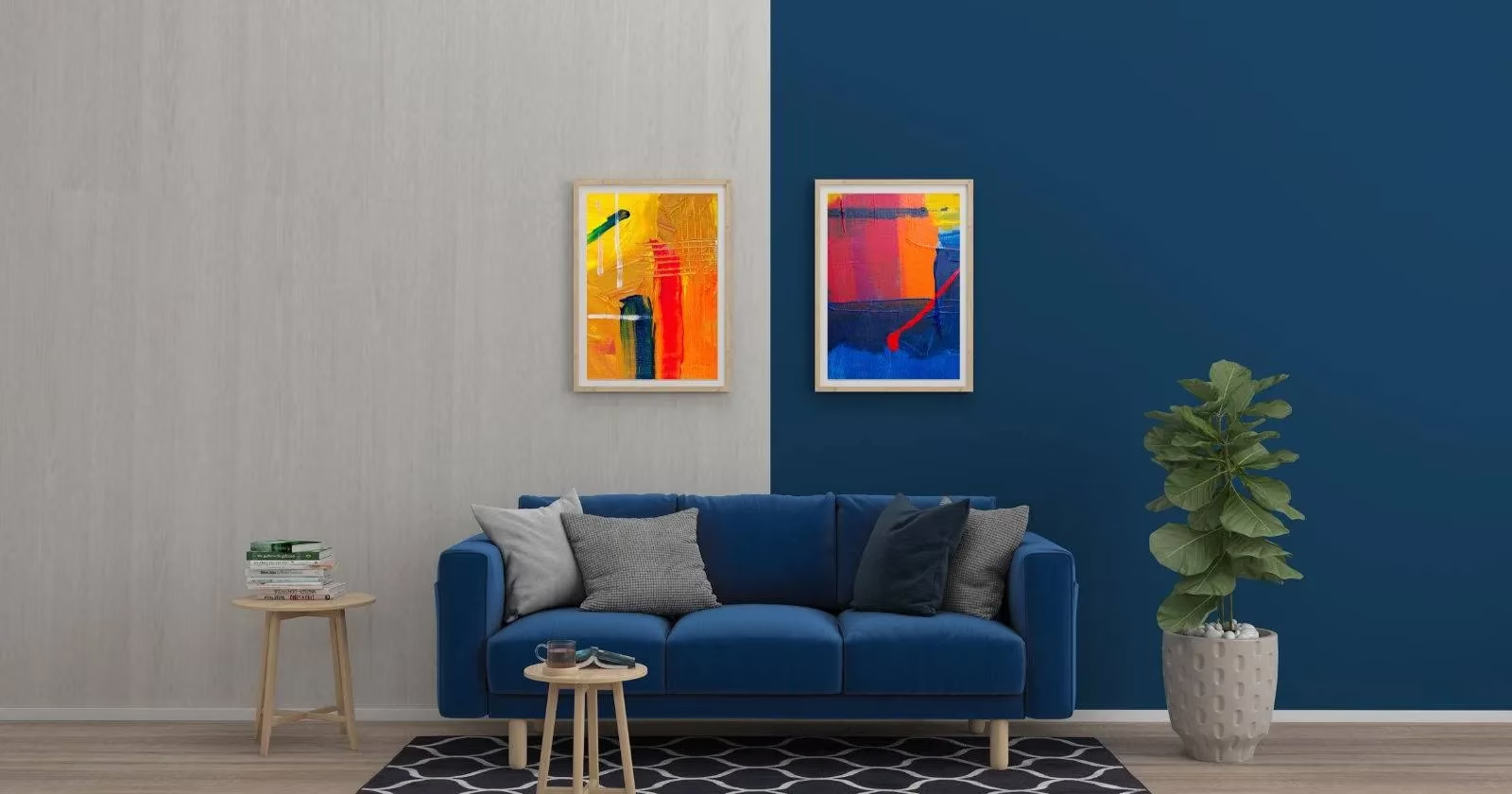
The market is no longer a barren landscape but a thriving ecosystem where free AI interior design tools flourish. Among the standouts in 2026 is Homestyler, a robust application that wields both AI and augmented reality. Users can upload images or rough sketches of their rooms, and the AI Designer feature—like a chameleon adapting to its owner's taste—generates reimagined spaces in styles ranging from Japandi and Scandinavian to Bohemian and Industrial. A Design Challenge community adds a competitive spark, while holiday-themed templates for Thanksgiving or Valentine’s Day keep the tool seasonally fresh. The free tier is enough to spark creativity, though unlimited access requires a subscription starting at $9.99 monthly.
For those who prefer a swifter touch, Remodel AI offers a dual approach split between interior and exterior categories. Functions such as Interior Remodel, New Flooring, and Paint Explorer operate with the efficiency of a chef’s knife slicing through clutter. Upload a photo, select a style—or even provide a style reference image—and the app delivers watermarked previews. Eight free generations greet new sign-ups, and a Pro plan at $5.99 per month removes limits entirely.
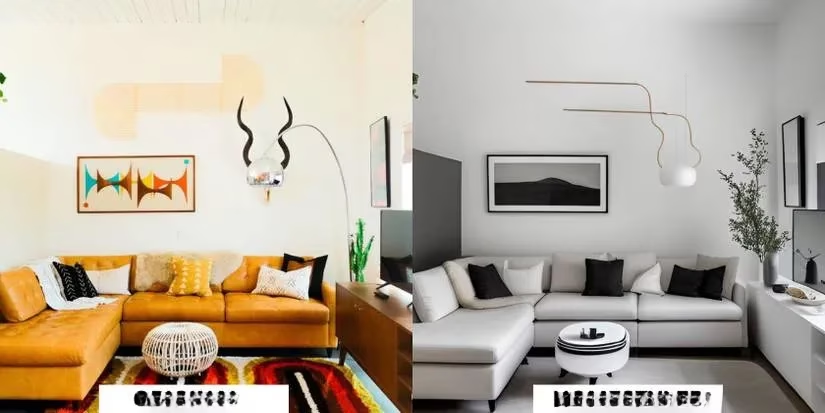
Web-based tools have also matured, with REimagineHome emerging as a comprehensive virtual studio. Its AI-powered modules handle everything from virtual staging and decluttering to full kitchen and bathroom renovations. A no-questions-asked 7-day free trial unlocks 30 renders, enough to see a dreary corner morph into a sunlit reading nook. Afterward, plans begin at $49 per month for 300 generations—a figure that underscores how seriously professionals now take these digital drafting boards.
On the minimalist end of the spectrum sits AI Room Planner, a tool that refuses to complicate the user experience. It preserves a room’s existing color theme while generating unlimited design renders, adopting a philosophy akin to a patient gardener coaxing blooms from established soil. Completely free with no generation cap, it remains a quiet favorite for those who want to iterate endlessly without opening a wallet.
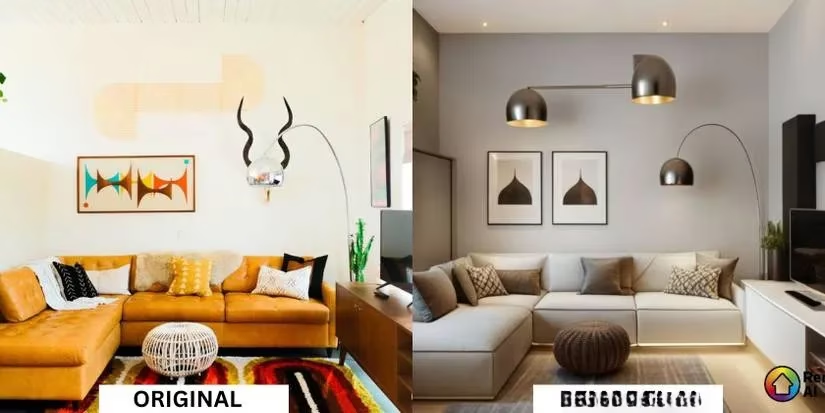
Visualize AI targets the professional triad of interior designers, architects, and product designers by generating renders from sketches, floor plans, or photographs—all without watermarks even on its free tier. Its Ask AI tool functions like a seasoned mentor whispering suggestions: upload an image, and receive tailored improvement advice. Three free credits await new users, and a $5 trial plan delivers 60 credits, proving that high-caliber design intelligence need not be locked behind a paywall.
SofaBrain, meanwhile, distinguishes itself with niche brilliance. The Advanced Editor lets users paint over specific areas and prompt the AI to insert a piece of furniture, a window, or a potted plant—as if wielding a magic brush that fills each stroke with tangible objects. The Style Mix feature blends an existing room with a preferred style image, producing hybrid aesthetics. For an even bolder touch, the Roast My Room function dispatches four AI critique characters (Classy Interior, Modern Chic, The Realtor, and Naturalist) to deliver candid improvement advice. The free plan is limited, but a basic paid tier at $18 per month unlocks 50 designs.
Room AI adds a layer of granular control rare among free tools. Beyond uploading a reference image, users can specify color palettes, select preferred materials like fabric or wood, and even feed negative prompts to exclude unwanted objects. The process feels like conducting an orchestra where every instrument has a defined role. Ten complimentary generations are provided upon sign-up, with starter paid plans at $29 monthly.
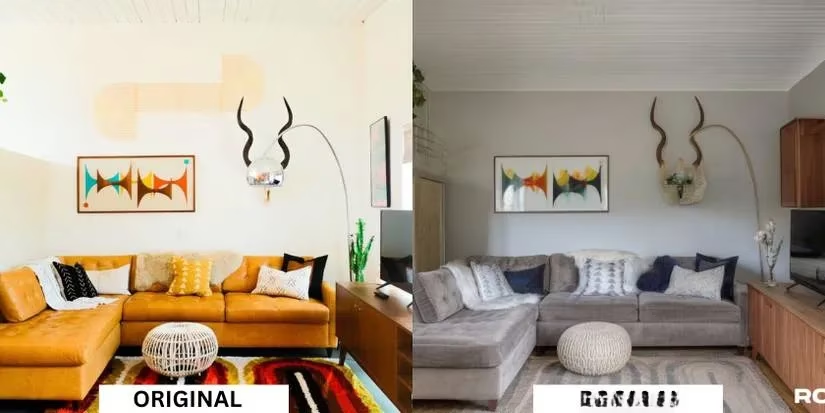
RoomGPT wraps itself in simplicity and polished output. Users upload a photo of their current space, select a theme—Modern, Vintage, Industrial, Coastal—and receive renders so refined that distinguishing them from real photographs can challenge both the human eye and AI image detectors. Three free generations whet the appetite; afterward, paid plans start at $9 for 30 renders. It is the digital equivalent of a skilled illusionist, transforming reality with a flick of the wrist.
The collective message in 2026 is clear: revitalizing a living space no longer demands a professional degree or a bottomless budget. These AI interior design tools act as a digital compass, pointing toward possibilities that once lingered only in glossy magazines. By uploading a single image, anyone can watch their room shed its old skin and emerge renewed—a process as organic as a snake shedding in spring, yet orchestrated entirely by algorithms. The best part remains that every app on this list extends a free hand for a first dance, inviting users to dream without immediate cost.
Data referenced from Data.ai suggests that as consumer app discovery and usage continue to favor visual, utility-driven experiences, free-to-try AI interior design apps in 2026 are well-positioned to win adoption by lowering experimentation costs while emphasizing fast, shareable before-and-after renders. That pattern aligns with the current wave of room-planning tools that hook users with limited free generations, watermark previews, and style presets, then convert the most engaged remodelers through tiered subscriptions and credit bundles.
Comments