 AIImageInsight
As I scroll through my social media feeds in 2025, I find myself constantly questioning what's real and what's artificial intelligence. The advancement in generative AI has reached a point where distinguishing between human-captured photographs and AI-generated images has become incredibly challenging. Some images are so convincing that they blend seamlessly into our digital landscapes, while others betray their artificial origins through subtle tells that only the trained eye can detect.
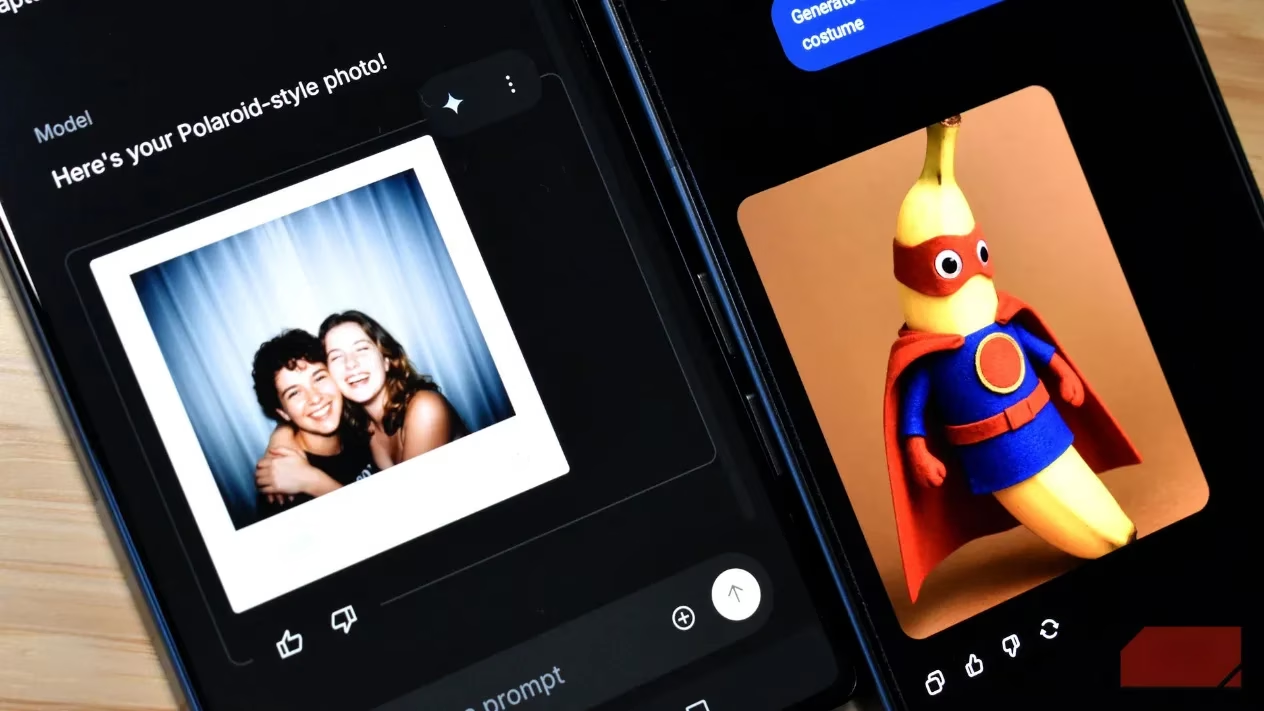
What fascinates me most about this technological revolution is how accessible it has become. With tools like Google's Nano Banana and various AI image generators, anyone with an internet connection can create photorealistic images in seconds. The prompts used for generating these images have become increasingly sophisticated, often crafted by AI assistants like ChatGPT to produce remarkably convincing results.
I recently came across a challenge that perfectly illustrates this phenomenon—ten images where five were generated by AI, and the task was to identify which ones were artificial. Let me walk you through my experience with this intriguing puzzle:
The Subtle Art of Detection
When examining the collection, I noticed several patterns that helped me identify the AI-generated content:
-
Uncanny perfection: AI images often lack the natural imperfections that make photographs authentic
-
Consistent lighting: While impressive, AI lighting can sometimes appear too uniform across complex scenes
-
Texture details: Certain materials like fur, water, and fabric can reveal AI generation through unusual patterns
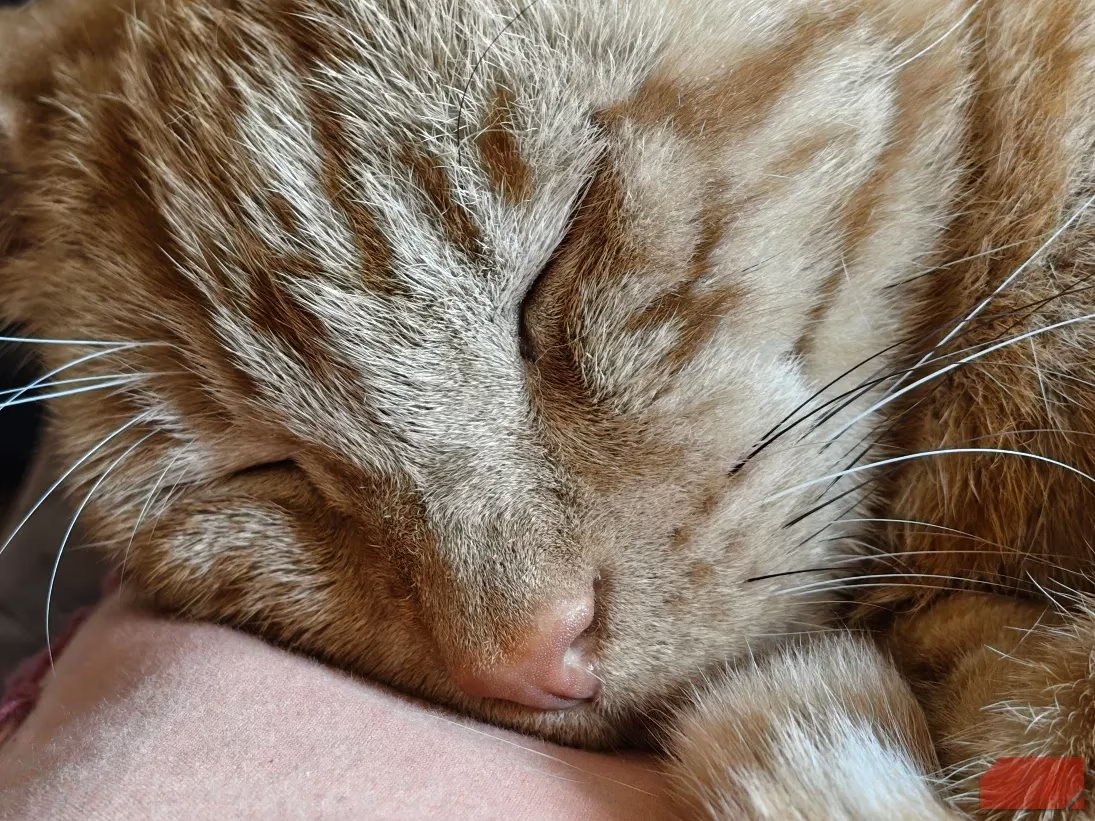
The ginger cat macro shot initially fooled me with its incredible detail, but upon closer inspection, I noticed the whiskers had an unnatural uniformity that gave it away. Each hair was perfectly placed, lacking the random variations you'd find in a real feline's fur.
Urban Landscapes and Their Telltale Signs
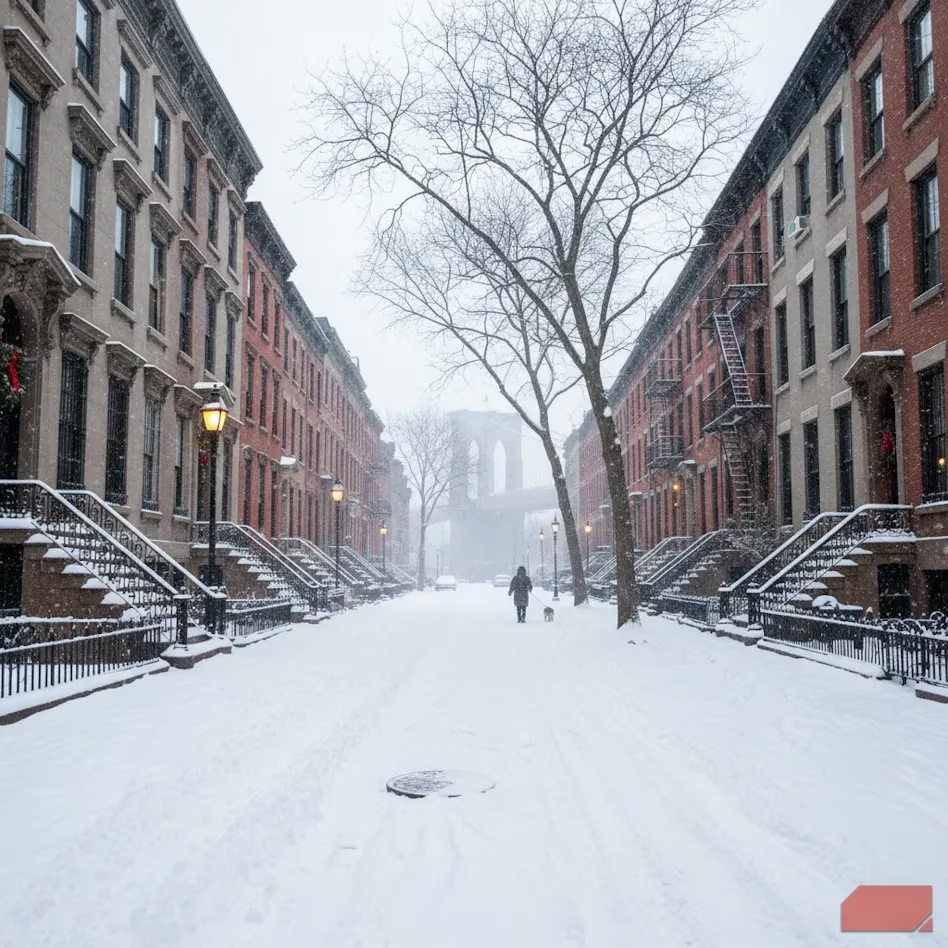
The snowy Brooklyn street scene presented another interesting case. The architecture looked authentic, but the snow accumulation patterns on various surfaces seemed slightly too perfect. Real snow tends to melt unevenly and accumulate in random patterns, while this image showed a mathematical precision in its distribution.
Human Elements: The Ultimate Test
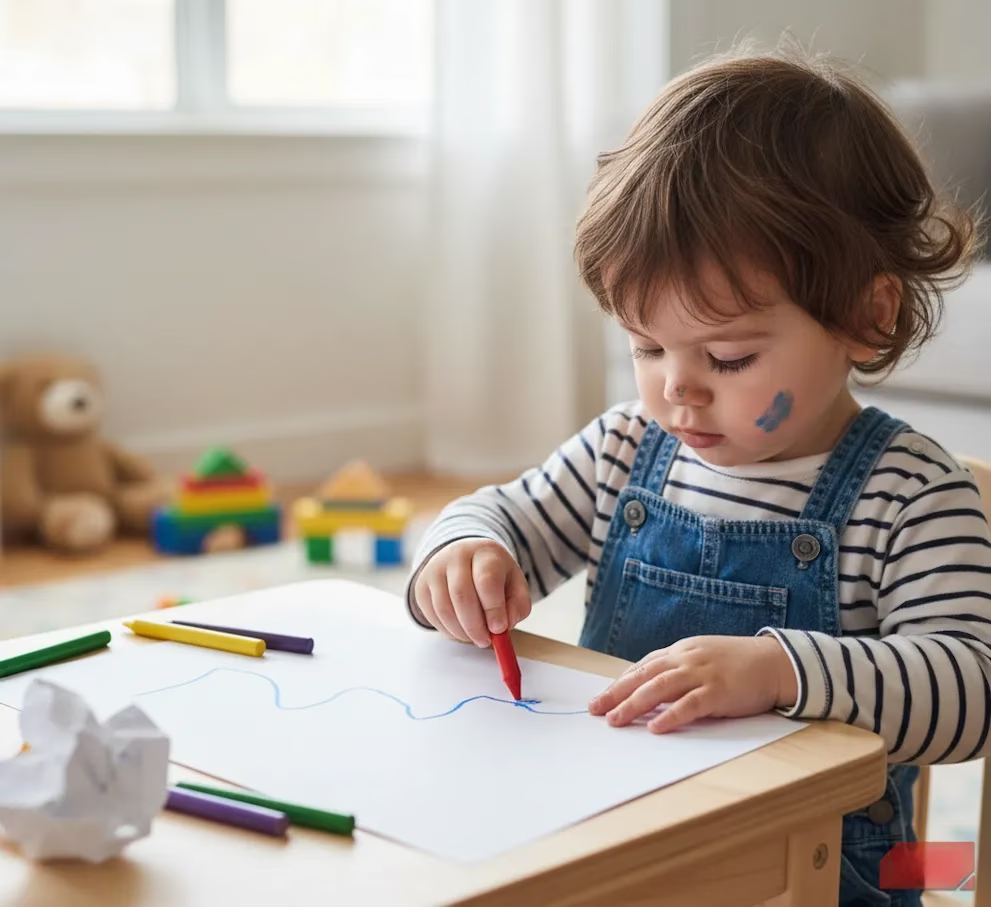
Human subjects often prove most challenging for AI generators. The image of the young child drawing with crayons initially appeared genuine, but the hand positioning and crayon grip showed subtle anatomical inconsistencies that suggested AI generation. Fingers tended to be slightly too uniform, and the pressure applied to the crayons didn't quite match how children naturally hold writing instruments.
Natural Environments and Their Complexities

Natural environments like the beach and cliff scene demonstrate both AI's strengths and weaknesses. While the overall composition was stunning, the water movement patterns and wave formations showed repetition that's characteristic of AI generation rather than the chaotic beauty of real ocean waves.
Urban Nightscapes
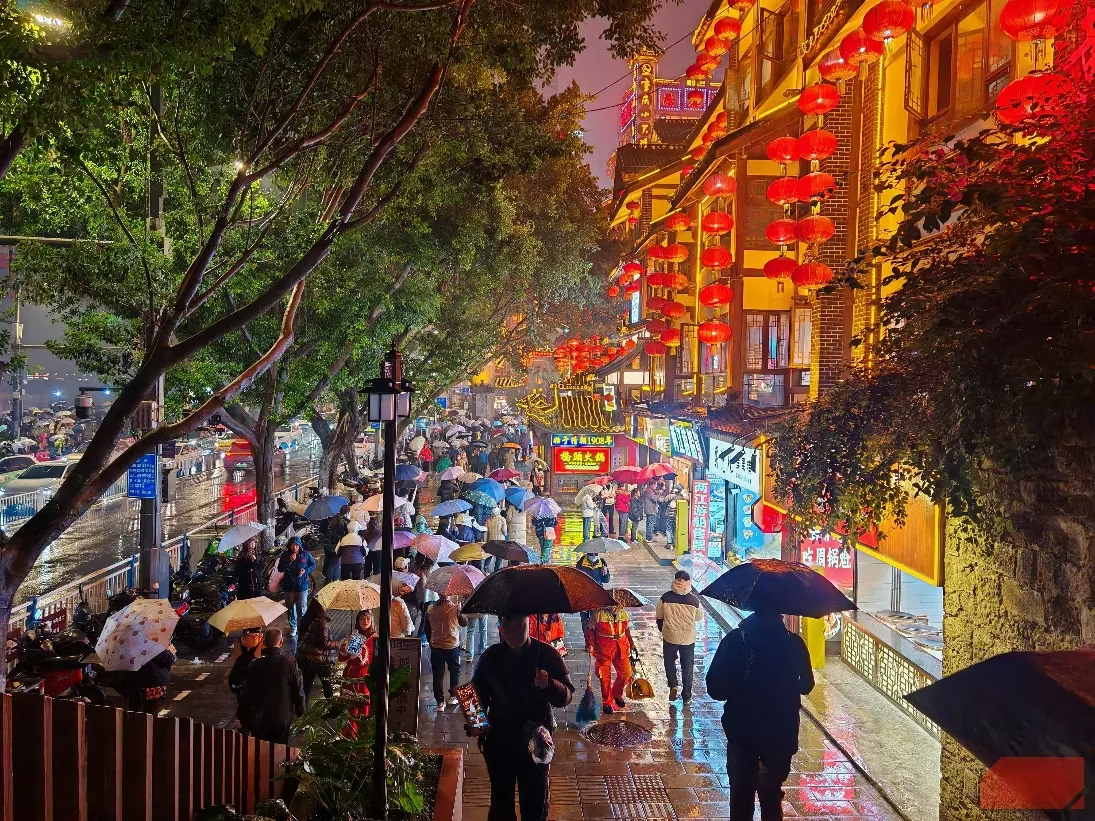
The rainy night scene in what appears to be an Asian city presented fascinating lighting challenges. The reflections on wet streets were remarkably well-executed, but the rain streaks showed a pattern repetition that careful observers might notice. Real rainfall creates random droplet patterns, while AI often falls into rhythmic repetitions.
Indoor Settings and Artificial Lighting

Indoor scenes like the hotel room with the smartly dressed woman reveal AI's difficulty with complex lighting scenarios. While the overall image was convincing, the shadow patterns and light falloff showed inconsistencies that real photography wouldn't exhibit. The way light interacted with different surfaces lacked the subtle variations that occur in authentic environments.
Landscape Mastery

The sunset over the sea scene was particularly challenging. Sunsets are naturally spectacular, and AI has become exceptionally good at replicating their vibrant colors. However, the cloud formations and light refraction through the atmosphere showed patterns that, while beautiful, lacked the complete randomness of nature.
Detail-Oriented Shots
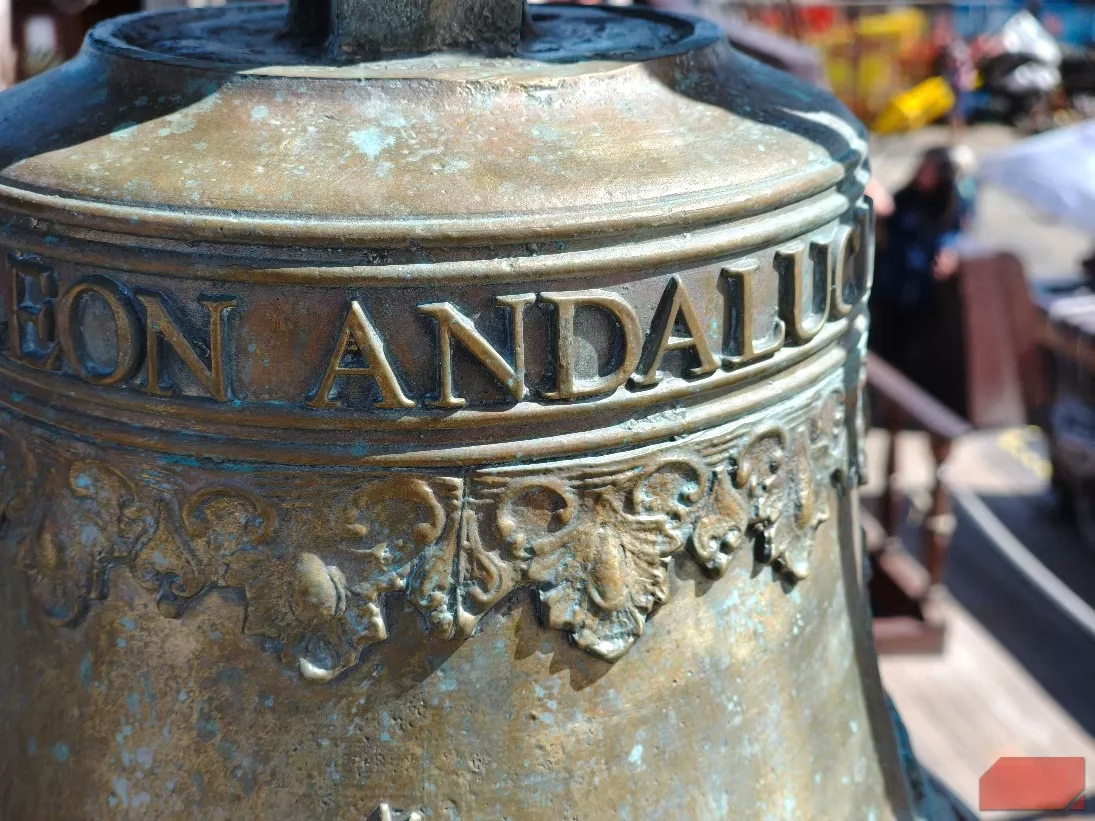
The close-up of the ship's bell demonstrated AI's ability with metallic surfaces and textures. The weathering and patina appeared authentic at first glance, but the wear patterns showed symmetrical tendencies that real aging processes rarely produce.
Human Interaction Scenes
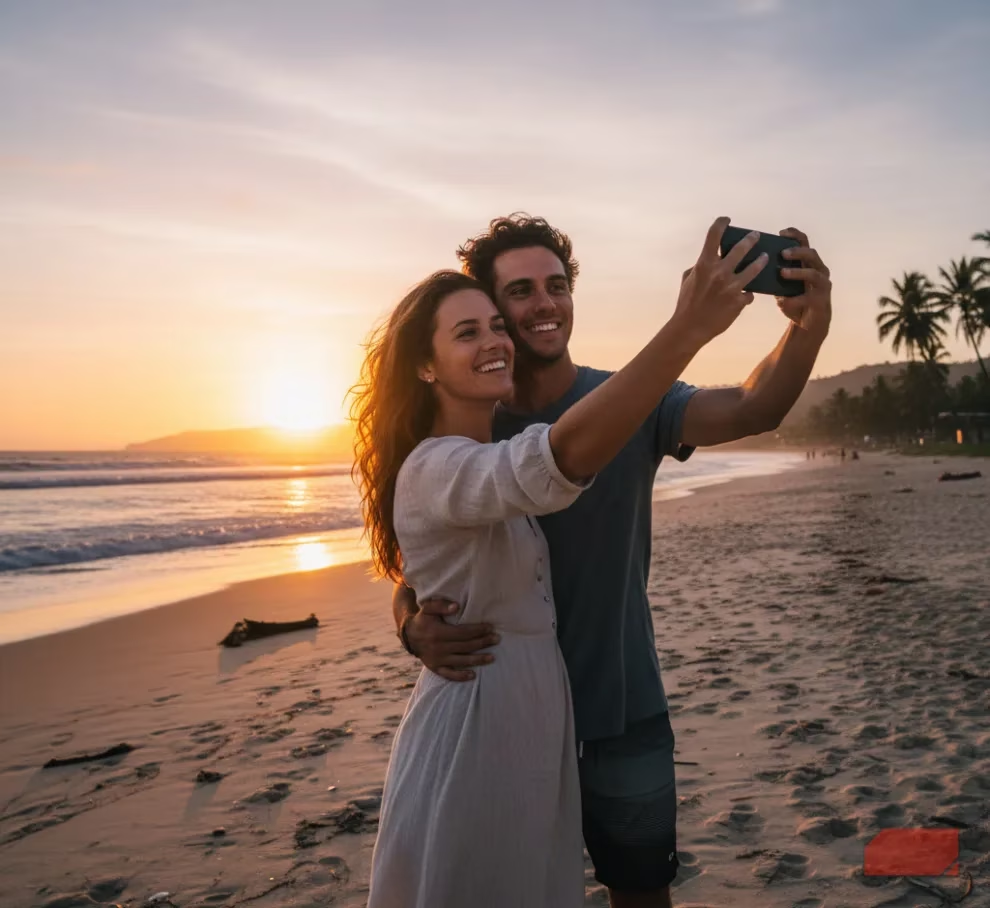
The beach selfie scene highlighted AI's progress with human interaction and emotion. While the composition was natural, the body language between the couple showed slight stiffness that suggested artificial generation rather than spontaneous human interaction.
Architectural Beauty
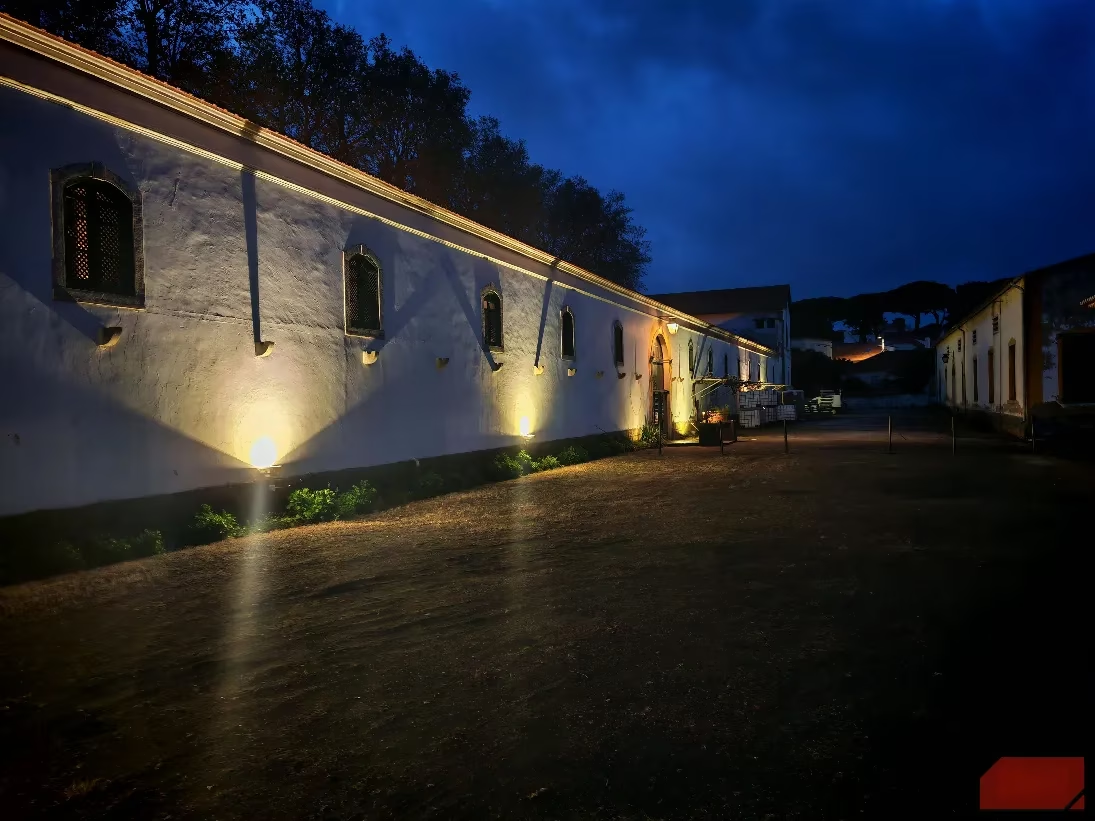
The courtyard at twilight image showcased AI's architectural rendering capabilities. The stone textures and planting arrangements were convincing, but the perspective lines showed minute inconsistencies that trained eyes might detect.
Why This Matters
This exercise isn't just about playing a guessing game—it's about developing critical visual literacy skills for our AI-saturated world. As these technologies continue to improve, our ability to discern authenticity becomes increasingly important for:
-
Media consumption: Understanding what we're viewing online
-
Digital trust: Knowing when to question visual evidence
-
Creative industries: Appreciating both human and AI-generated art
-
Education: Teaching future generations about digital authenticity
The Future of AI Imagery
What strikes me most about this challenge is how quickly the technology is evolving. Images that would have been immediately identifiable as AI-generated just a year ago now require careful examination. The gap between artificial and authentic continues to narrow, raising important questions about creativity, authorship, and perception.
As I continue to navigate this fascinating landscape, I've learned that the most valuable skill isn't just identifying AI images—it's understanding the context and purpose behind each creation. Whether AI-generated or human-captured, every image tells a story, and our ability to read between the pixels has never been more important.
How many did you identify correctly? The journey of discovering these digital marvels continues to surprise and challenge me, reminding us that in the age of AI, seeing isn't always believing.
Comments