 AIImageInsight
There is a veil that black and white lays over history, a membrane of time that keeps yesterday at a polite, monochromatic distance. I have always wondered what whispers would be released if that veil were lifted. So, in the year 2026, I turned to a digital alchemist—an AI colorizer—to perform a simple, profound act: to breathe chromatic life into a series of old, public domain photographs. What followed was not a mere technical exercise, but a poetic dialogue between silicon and silver halide, yielding a gallery of surprising successes and charming, human-like quirks.
My first canvas was a serene, monochrome farm scene, a slice of pastoral quiet. I fed it to the Image Colorizer tool by DeepAI, a system trained on millions of images to predict the hues that shadow and light might hide. In seconds, the transformation unfolded before me. The weathered wood of the barns took on a warm, sun-bleached brown. The endless fields awoke in muted, varied greens, and a soft, plausible blue stretched across the sky. It felt authentic, not garish—a plausible memory of a sun-drenched afternoon from a bygone era.
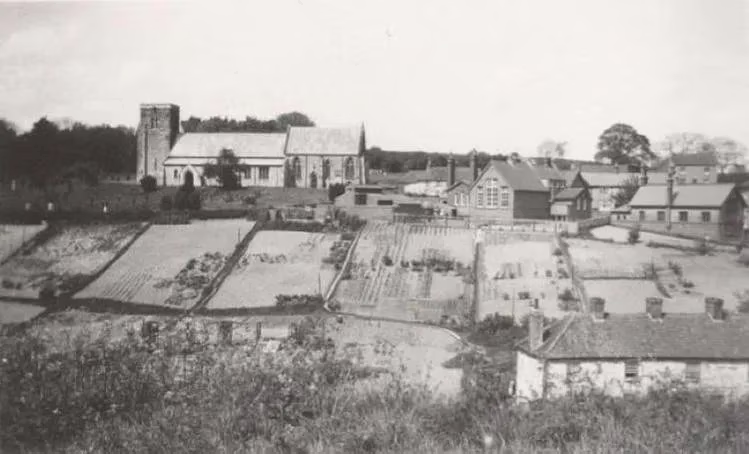
Yet, the AI's brushstrokes were not flawless. I noticed the grass subtly shifting in tone from left to right, as if painted by a hesitant hand. More pervasively, a gentle, sepia-like wash lay over the entire scene. It lent a nostalgic, almost too-perfect vintage quality, reminding me that this was an interpretation, not a resurrection. It was a beautiful lie, told with conviction.
Emboldened, I sought a more intimate subject: a gentleman in a bowler hat, his face a map of character lines waiting for color's contour. The AI performed admirably here. His skin gained lifelike warmth and subtle shading; the boutonniere on his lapel blossomed with distinct petals and leaves. His clothing was rendered in sober, period-appropriate dark tones.
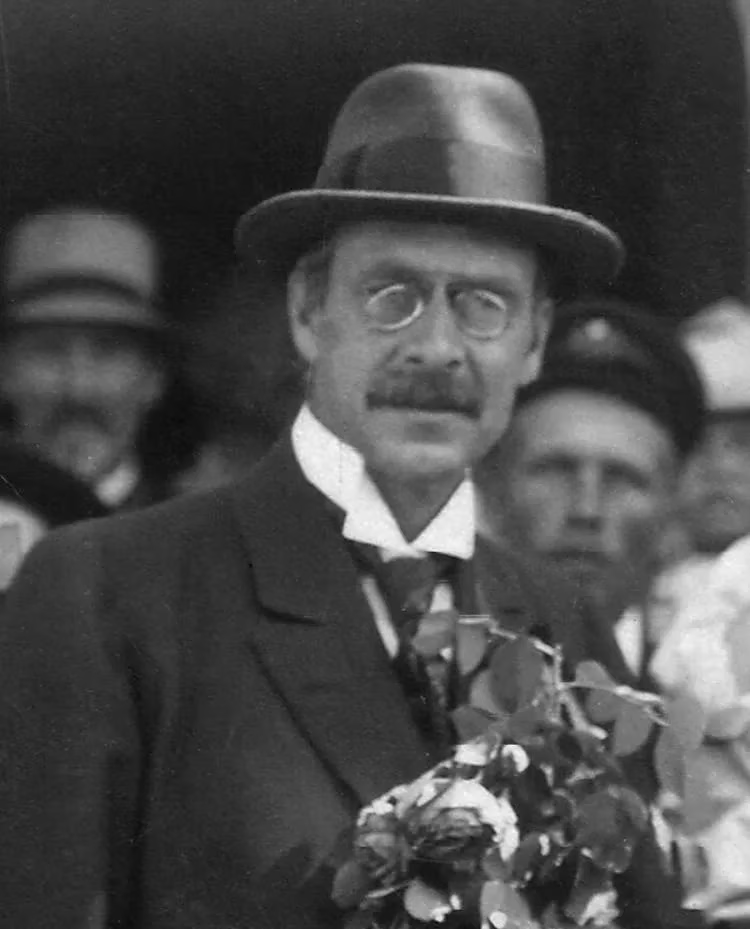
But the quirks persisted, like ghosts in the machine. A mysterious, bright orange spot bloomed inexplicably at the frame's edge. His hat took on a brownish hue while his suit was colored black—a sartorial guess that felt historically uncertain. And that sepia filter returned, draping the portrait in an antique glow that, while pleasant, whispered of artifice.
Then came my greatest surprise: two vintage cars resting before a weathered shack. I expected failure, given the intricate details of chrome, paint, and rust. What the AI returned was nothing short of astonishing.
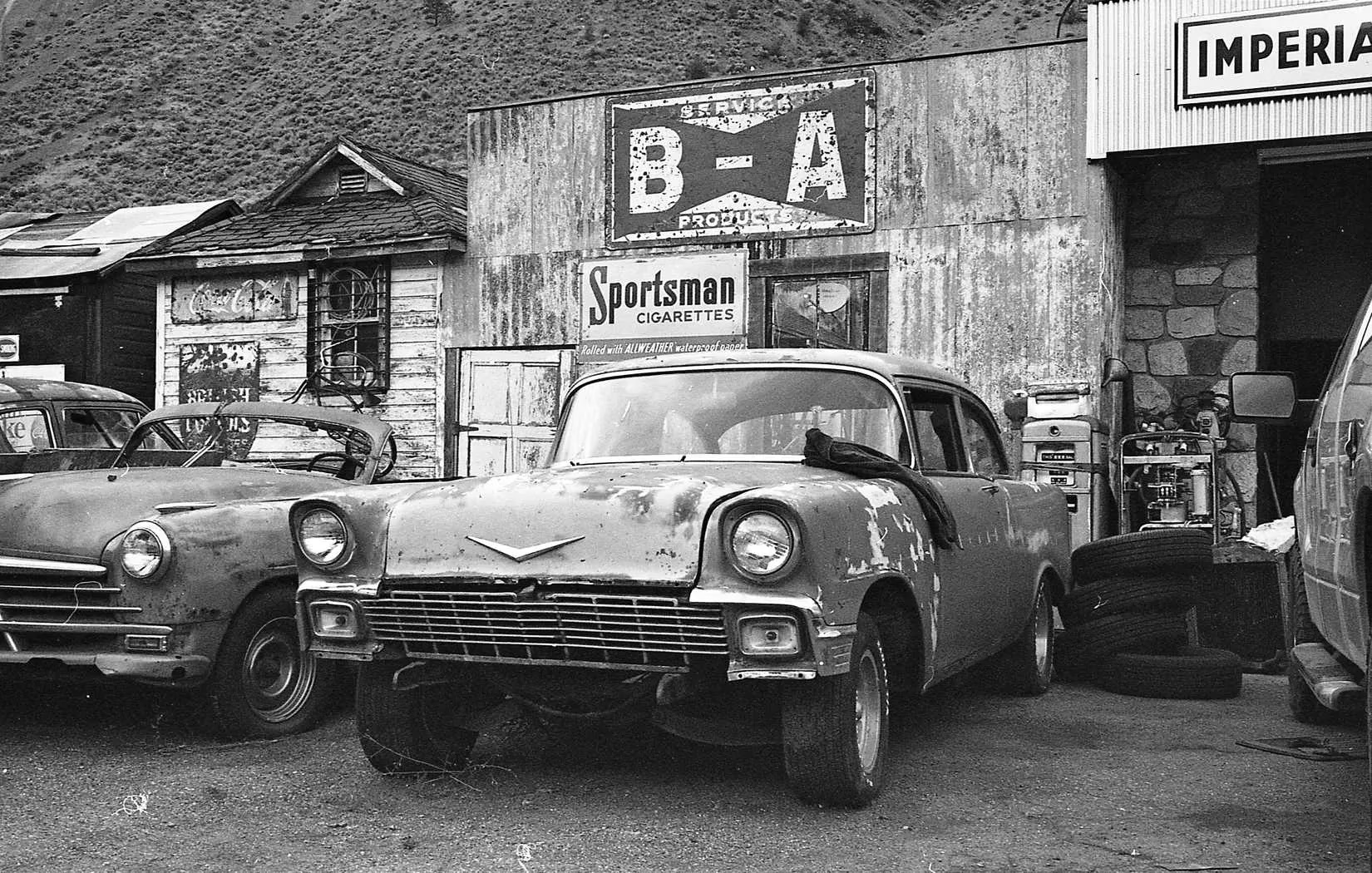
The result was strikingly realistic. The metal gleamed with a credible, rustic patina; the colors were crisp and believable. The background harmonized perfectly. For a moment, I forgot I was looking at an algorithmic recreation—it felt like discovering the original color slide. Of course, perfection remained elusive. There were subtle inconsistencies; the hood of one car didn't quite match its roof, a guess by the AI that felt just a step too imaginative. Yet, the overall effect was magical.
My experiments continued, each a new lesson:
-
The Fire Station: A charming brick building was colored with a natural reddish-brown, its textures preserved. Yet, the ever-present sepia filter softened it into a dreamy postcard, robbing it of the crisp realism I craved. It seems the AI defaults to this warm haze when details grow fuzzy, a safety net of nostalgia.
-
The Reverse Test: I took a color photo of an elderly man strolling, converted it to black and white, and let the AI restore it. The fidelity was impressive! Skin tones, clothing textures—it nearly matched the original. But then, hilarious flaws: a red Coca-Cola tent turned a serene blue, and the man's cane magically changed from silver to yellow mid-shaft. The AI had brilliantly reconstructed the world, then playfully redesigned a few details.
-
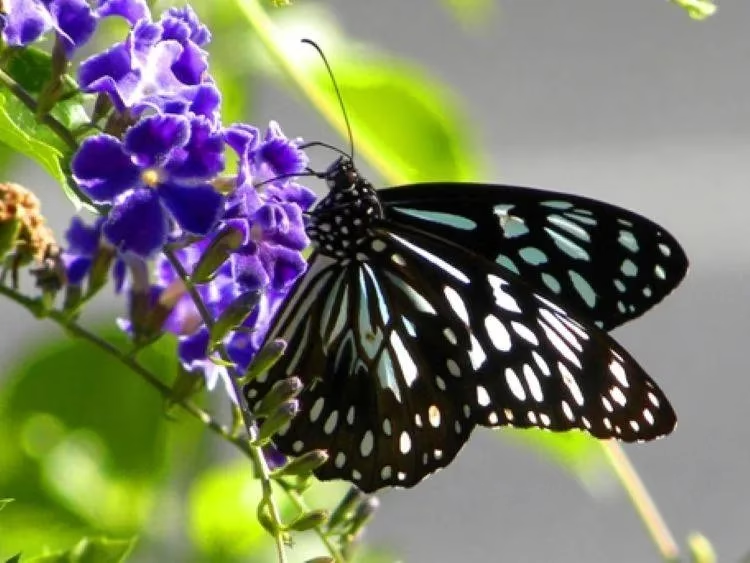
The Butterfly: For this abstract, natural subject, I set the AI free. It painted the butterfly's wings in a beautiful, plausible blend of colors and gave the flower rich, vibrant petals. It was a creation, not a reproduction, and in its artistic liberty, it felt perfectly valid.
This journey taught me that AI colorization in 2026 is a powerful, poetic, but imperfect tool. It is:
✅ Fast & Accessible – Reviving a photo takes seconds.
✅ Often Beautifully Convincing – Especially with clear, high-resolution images.
✅ A Creative Launchpad – It offers a new perspective on the past.
❌ Sometimes Historically Inaccurate – It guesses colors based on patterns, not knowledge.
❌ Prone to Quirks – Strange color spots and inconsistent hues can appear.
❌ Over-Reliant on 'Vintage' Filters – Sepia can replace true color realism.
If you wish to try this digital archaeology, heed this advice: seek out clear, high-resolution images with strong compositional elements. The AI needs clues—a face, a known landmark—to anchor its predictions. Avoid overly noisy or textured originals, as they often lead the algorithm astray into that soft, sepia safety net.
In the end, I found myself not just using a tool, but collaborating with a curious, slightly eccentric digital artist. We peered into the past together, and with a blend of silicon logic and poetic license, we invited history to step out of the shadows and sit with us awhile, in all its imperfect, colorful glory. The distance closed, not with the cold certainty of fact, but with the warm, suggestive whisper of what might have been.
Comments